

1 cent – Penang
Add to wishlist
Context
Material
References
KM: #
Numista: #21671
Obverse
Description:
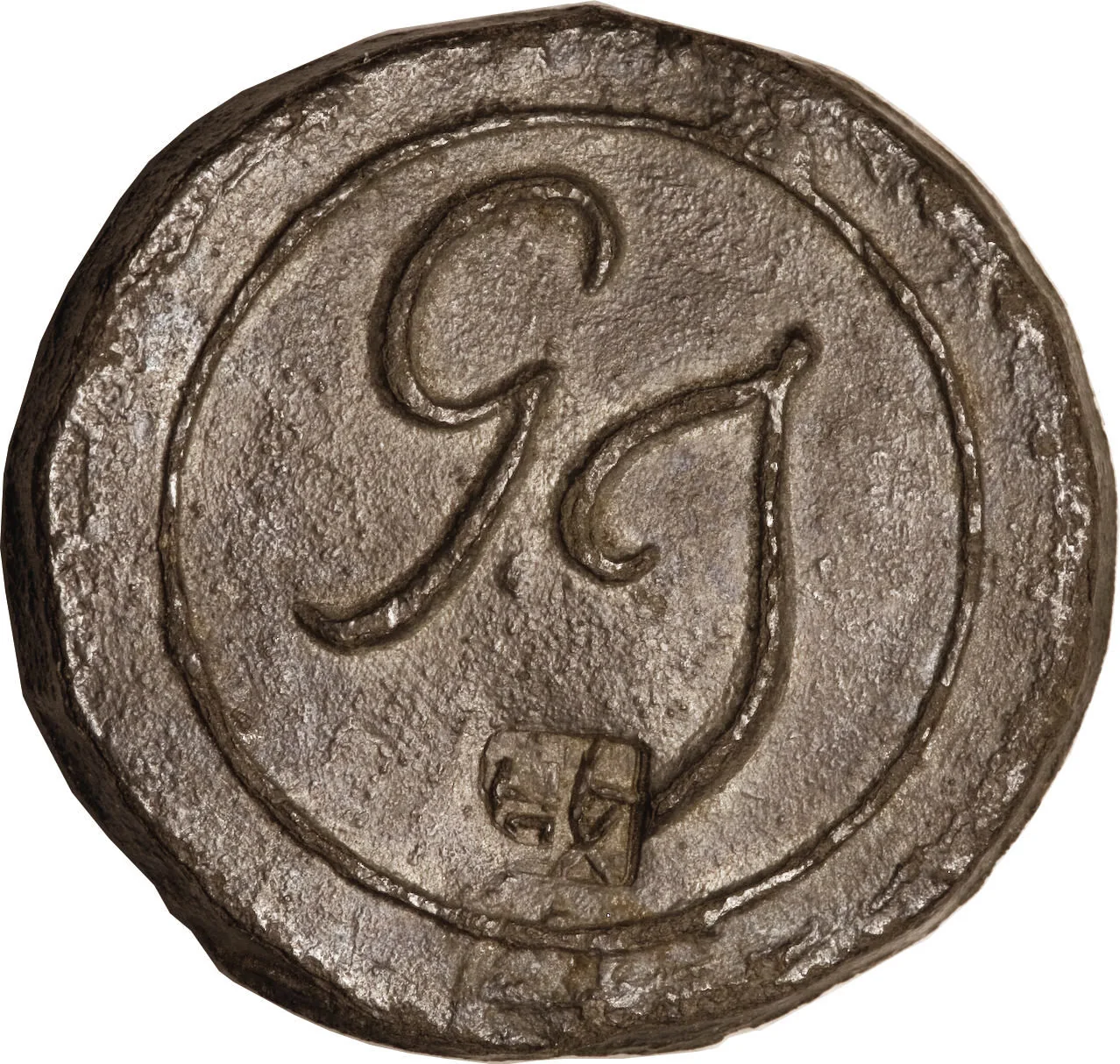
Cursive Latin initial in circle, countermarked with Chinese character.
Inscription:
GF
(啟)
(啟)
Translation:
Commencement.
Scripts: Chinese, Latin (cursive)
Language: Classical Chinese
Reverse
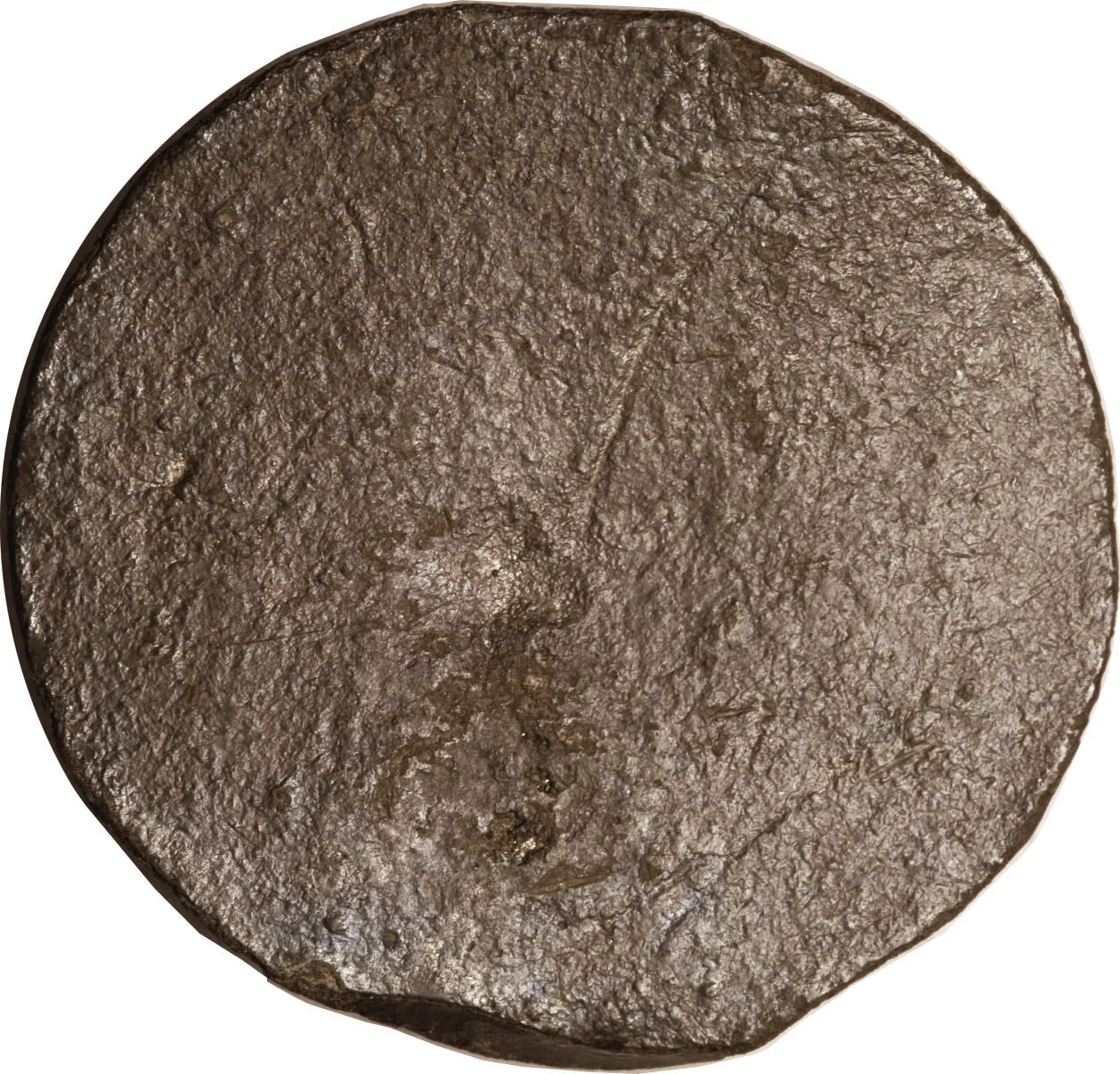
Description:
Simple.
Edge
Plain
Mintings
| Year | Mint Mark | Mintage | Quality | Collection |
|---|---|---|---|---|
| 1805 | — | — |
Historical background
In 1805, Penang, then known as Prince of Wales Island, was a young British trading outpost grappling with a chaotic and insufficient currency system. Officially ceded to the British East India Company in 1786, the island's economy operated within a complex monetary environment of the wider Straits of Malacca. The official currency of the Company's administration was the Indian rupee, but it circulated alongside a bewildering variety of other coins. These included Spanish silver dollars (the dominant trade coin of the region), Dutch guilders, Chinese copper cash, and various Malay and Sumatran gold and tin coins. This multiplicity created constant difficulties in trade and daily transactions, requiring merchants and officials to refer to published "currency manuals" that listed ever-fluctuating exchange rates.
The core problem was a chronic shortage of official, small-denomination coinage for local use. The valuable silver dollars were impractical for everyday market purchases, leading to a reliance on fragmented and often debased foreign coins. To alleviate this, the Company administration resorted to a common but problematic solution: issuing copper tokens. In 1805, these tokens, minted in Birmingham and bearing the image of King George III, were introduced as a fiduciary currency—their face value was higher than their intrinsic metal worth. They were declared legal tender for small transactions alongside the existing jumble of coins, with the aim of standardising the lower end of the monetary scale.
This intervention was only partially successful. While the copper tokens provided a needed medium for daily commerce, they did not resolve the fundamental hierarchy of currency, with the silver dollar remaining pre-eminent for larger trade. The system remained fragile, dependent on public confidence in the Company's tokens and subject to the ebb and flow of regional bullion. Thus, in 1805, Penang's currency situation was characterised by an official attempt to impose order through token coinage upon a deeply entrenched and diverse multi-currency reality, a challenge that would persist for decades in the Straits Settlements.
The core problem was a chronic shortage of official, small-denomination coinage for local use. The valuable silver dollars were impractical for everyday market purchases, leading to a reliance on fragmented and often debased foreign coins. To alleviate this, the Company administration resorted to a common but problematic solution: issuing copper tokens. In 1805, these tokens, minted in Birmingham and bearing the image of King George III, were introduced as a fiduciary currency—their face value was higher than their intrinsic metal worth. They were declared legal tender for small transactions alongside the existing jumble of coins, with the aim of standardising the lower end of the monetary scale.
This intervention was only partially successful. While the copper tokens provided a needed medium for daily commerce, they did not resolve the fundamental hierarchy of currency, with the silver dollar remaining pre-eminent for larger trade. The system remained fragile, dependent on public confidence in the Company's tokens and subject to the ebb and flow of regional bullion. Thus, in 1805, Penang's currency situation was characterised by an official attempt to impose order through token coinage upon a deeply entrenched and diverse multi-currency reality, a challenge that would persist for decades in the Straits Settlements.

✨ Legendary