

10000 Dinars – Iran
Non-circulating coins
Series: Special crown
Iran
Context
Year: 1848
Islamic (Hijri) Year: 1264
Issuer: Iran 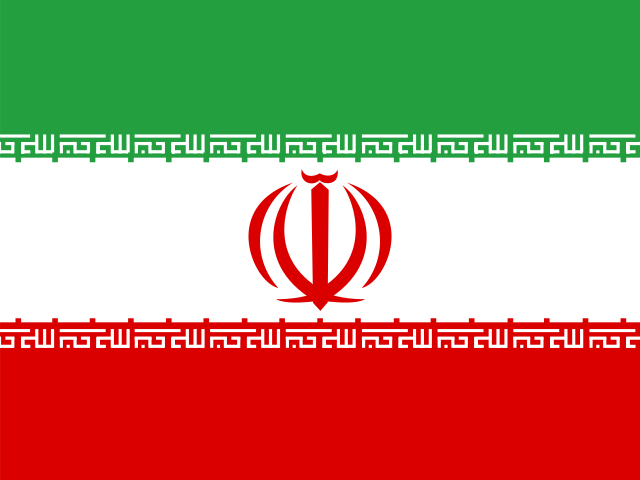
Ruler: Naser al-Din Shah
Currency:
(1825—1932)
Demonetized: Yes
Material
References
Numista: #215776
Value
Bullion value: $431.89
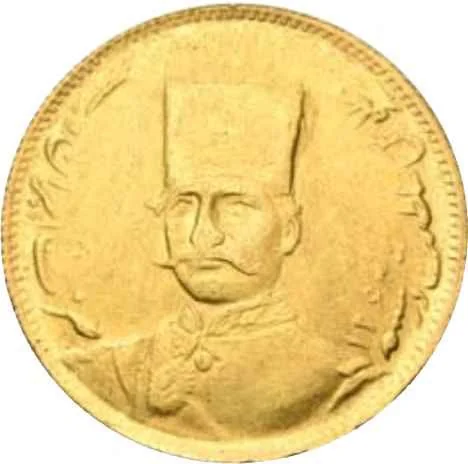
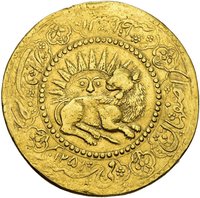
Obverse
Inscription:
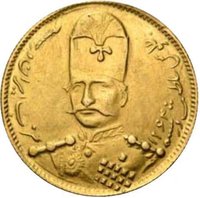
جلوس سلطنت در سنه ۱۲۶۴
ضرب ایران در سنه
ضرب ایران در سنه
Translation:
Accession to the throne in the year 1264;
Minted in Iran in the year
Minted in Iran in the year
Language: Persian
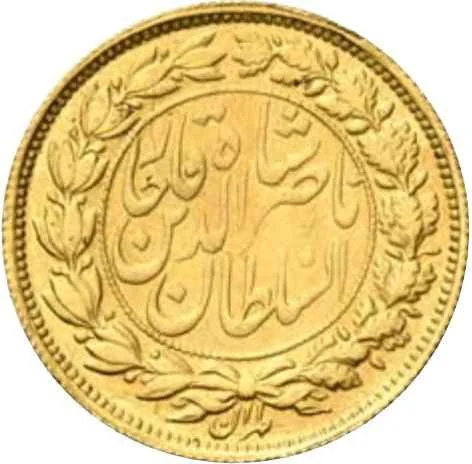
Reverse
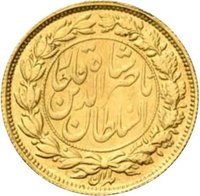
Inscription:
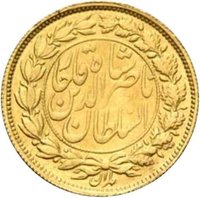
السُّلطان ناصرالدین شاه قاجار
طهران
طهران
Translation:
The Sultan Naser al-Din Shah Qajar
Tehran
Tehran
Language: Arabic
Edge
Mints
| Name | Mark |
|---|---|
| Tehran | طهران |
Mintings
| Year | Mint Mark | Mintage | Quality | Collection |
|---|---|---|---|---|
| 1848 | — | — |
Historical background
In 1848, Iran's currency system was a complex and fragmented reflection of its weak central authority and economic stagnation under the Qajar dynasty. The monetary landscape was dominated by silver, primarily the kran, a silver coin that served as the main unit of account. However, the actual coinage in circulation was notoriously debased, irregular in weight and purity, and issued from various provincial mints, leading to significant discrepancies in value between regions. Alongside this, copper puls were used for small transactions, and the gold toman (equal to 10 krans) was a unit of account for larger sums but was not commonly minted or circulated.
This period was marked by severe financial strain for the state. The costly wars with Russia earlier in the century had resulted in massive indemnity payments, draining the treasury of specie (gold and silver). Furthermore, the Qajar court's extravagant expenditures and a corrupt, inefficient tax farming system created chronic budget deficits. To raise immediate revenue, the state increasingly resorted to sarrāfī (selling governorships and offices), which only decentralized economic power and encouraged further exploitation and irregular taxation at the local level, exacerbating the currency's instability.
Consequently, the currency situation contributed to deep economic malaise. The lack of uniform, trusted coinage hindered trade and investment, while the scarcity of precious metals led to frequent devaluations and price inflation, particularly in urban centers. Foreign trade, increasingly influenced by British and Russian imperial interests, often bypassed this shaky system through bills of exchange and foreign currency. Thus, in 1848, Iran's monetary system was not only a symptom of administrative decay but also a significant barrier to any meaningful economic development or integration into the global economy.
This period was marked by severe financial strain for the state. The costly wars with Russia earlier in the century had resulted in massive indemnity payments, draining the treasury of specie (gold and silver). Furthermore, the Qajar court's extravagant expenditures and a corrupt, inefficient tax farming system created chronic budget deficits. To raise immediate revenue, the state increasingly resorted to sarrāfī (selling governorships and offices), which only decentralized economic power and encouraged further exploitation and irregular taxation at the local level, exacerbating the currency's instability.
Consequently, the currency situation contributed to deep economic malaise. The lack of uniform, trusted coinage hindered trade and investment, while the scarcity of precious metals led to frequent devaluations and price inflation, particularly in urban centers. Foreign trade, increasingly influenced by British and Russian imperial interests, often bypassed this shaky system through bills of exchange and foreign currency. Thus, in 1848, Iran's monetary system was not only a symptom of administrative decay but also a significant barrier to any meaningful economic development or integration into the global economy.
✨ Legendary