

5 toman – Iran
Add to wishlist
Iran
Context
Year: 1835
Islamic (Hijri) Year:: 1251
Issuer: Iran
Ruler: Mohammad Shah
Currency:
(1825—1932)
Demonetized: Yes
Material
Weight: 19.03 g
Gold Weight:: 19.03 g
Shape: Irregular round
Composition: Gold
Magnetic: No
Technique: Hammered
References
Numista: #412932
Value
Bullion value: $2935.43
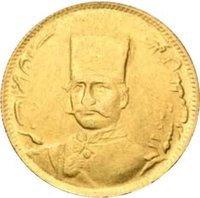
Obverse
Description:
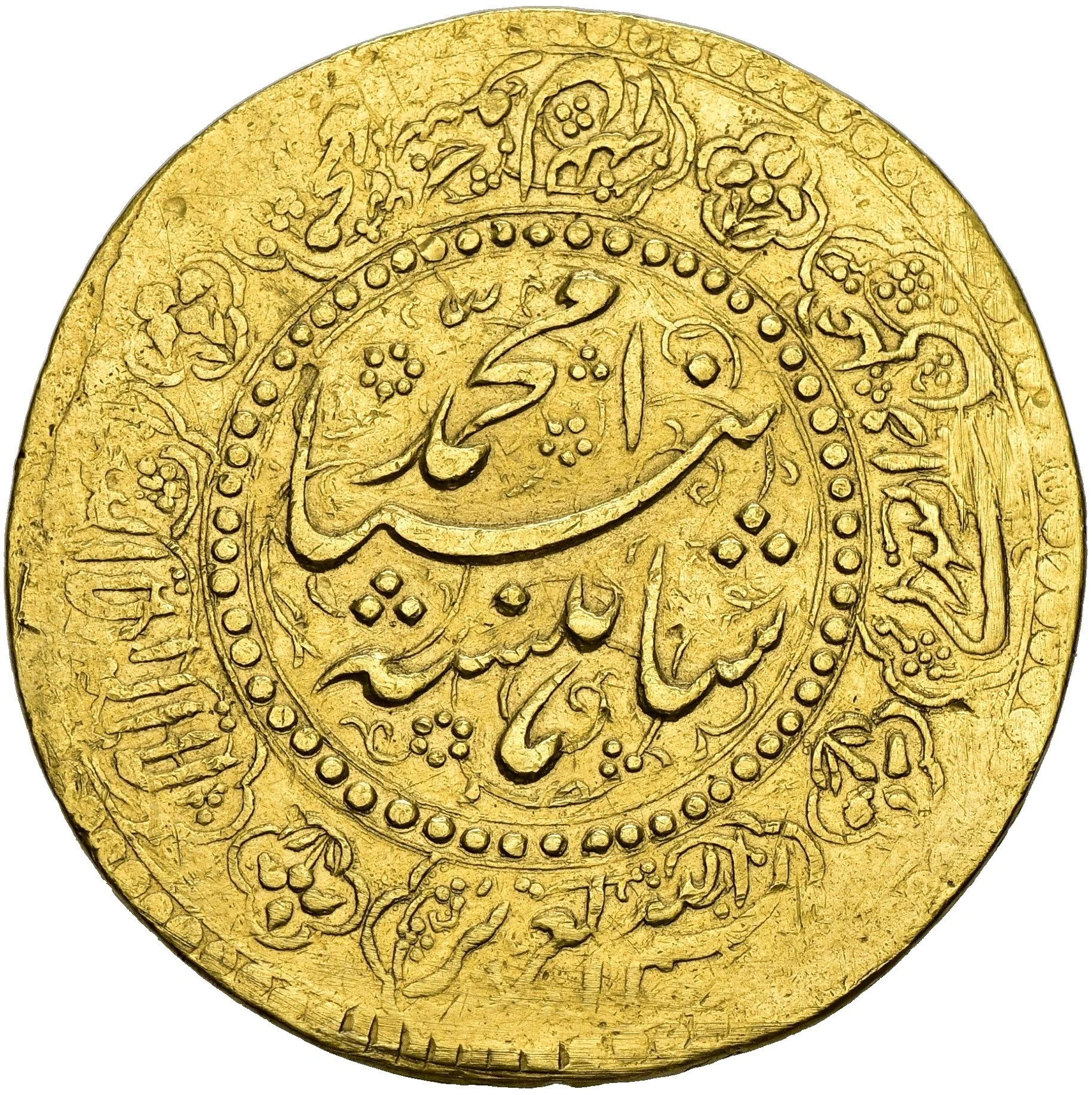
Muhammad (center) with the Kalimah encircling.
Inscription:
شاهنشه انبیا محمد
بسم الله العزیز/ لا اله الا الله/ محمد رسول الله/ علی و المهدی
بسم الله العزیز/ لا اله الا الله/ محمد رسول الله/ علی و المهدی
Translation:
In the name of God, the Mighty/ There is no god but God/ Muhammad is the Messenger of God/ Ali and the Mahdi
Script: Persian (nastaliq)
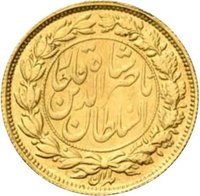
Reverse
Description:
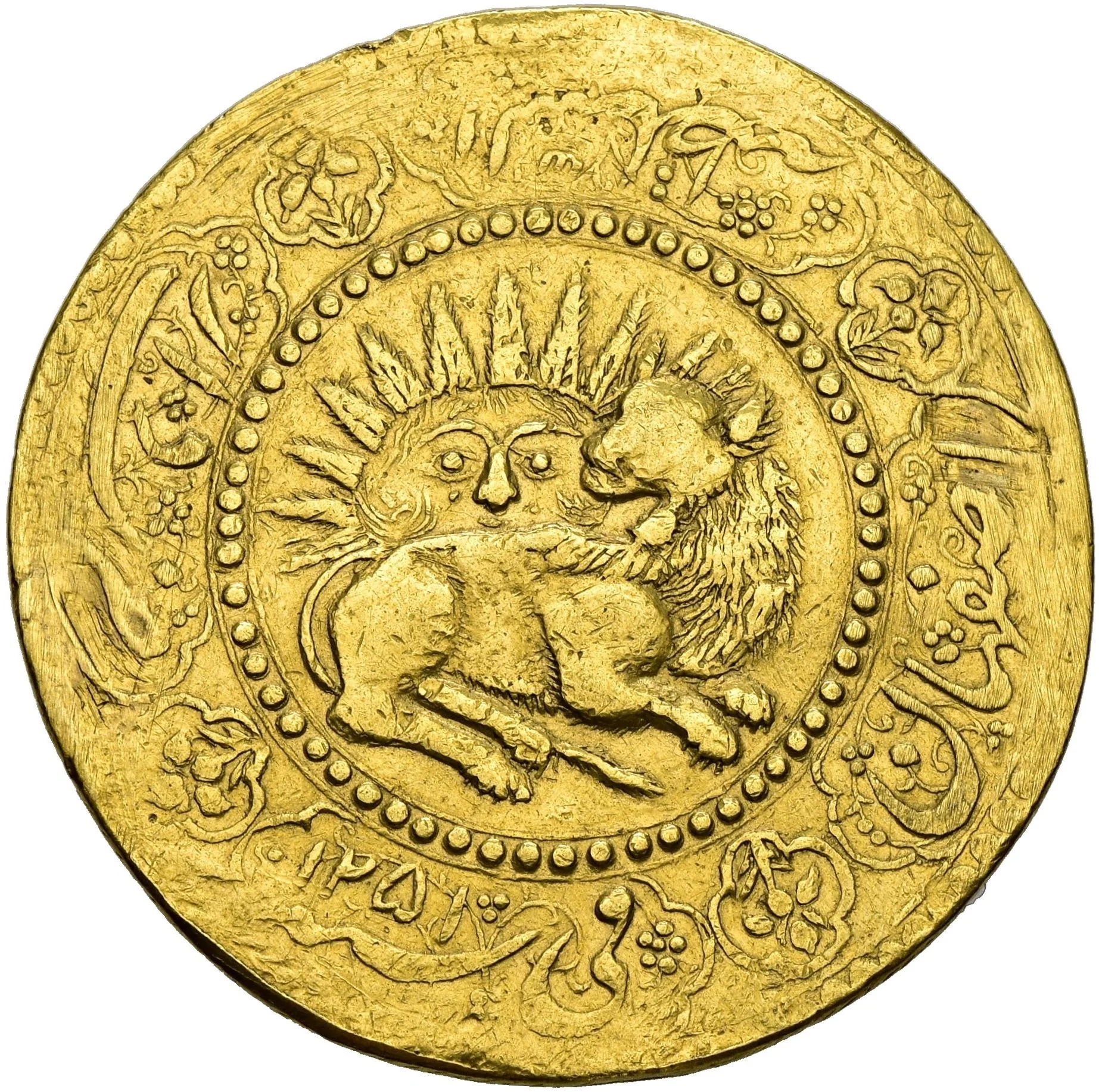
Roaring lion seated, sun behind. Date and mint around.
Inscription:
ضرب دارالسلطنه اصفهان فی سنه ۱۲۵۱
Translation:
Struck in the capital Isfahan in the year 1251
Script: Persian (nastaliq)
Language: Arabic
Edge
Plain
Mints
| Name | Mark |
|---|---|
| Isfahan | اصفهان |
Mintings
| Year | Mint Mark | Mintage | Quality | Collection |
|---|---|---|---|---|
| 1835 | — | — |
Historical background
In 1835, Iran under the Qajar dynasty undertook a significant monetary reform by introducing a new silver standard currency, the qiran (later called the rial). This move was a direct attempt to address a century of severe monetary chaos. The 18th century, particularly following the fall of the Safavid dynasty, had seen the proliferation of debased and counterfeit coins from various provincial mints, alongside a flood of foreign currencies like Russian rubles, British rupees, and Ottoman coins. This created a complex and unreliable monetary environment that hindered both domestic trade and international commerce.
The reform, decreed by Fath-Ali Shah and implemented by his grandson Mohammad Shah, centralized coinage at the mint in Tehran. The new qiran was modeled on the Austrian Maria Theresa thaler, a widely trusted trade coin in the region, and was valued at one-tenth of a toman. Crucially, it was minted in high-purity silver (.900 fine) to establish credibility. The immediate goal was to simplify transactions, drive out inferior coins, and project an image of sovereign stability by having a uniform national currency bearing the ruler's insignia.
However, the reform's long-term success was limited. While it temporarily improved the currency's reliability, the Qajar state's persistent fiscal weaknesses—including costly military campaigns, court extravagance, and an inefficient tax system—soon reasserted pressure. The government repeatedly resorted to debasing the silver content of the qiran to cover deficits, a practice that eroded public trust and led to renewed monetary instability in the following decades. Thus, the 1835 reform, while a landmark centralization effort, could not overcome the deeper structural economic problems of Qajar Iran.
The reform, decreed by Fath-Ali Shah and implemented by his grandson Mohammad Shah, centralized coinage at the mint in Tehran. The new qiran was modeled on the Austrian Maria Theresa thaler, a widely trusted trade coin in the region, and was valued at one-tenth of a toman. Crucially, it was minted in high-purity silver (.900 fine) to establish credibility. The immediate goal was to simplify transactions, drive out inferior coins, and project an image of sovereign stability by having a uniform national currency bearing the ruler's insignia.
However, the reform's long-term success was limited. While it temporarily improved the currency's reliability, the Qajar state's persistent fiscal weaknesses—including costly military campaigns, court extravagance, and an inefficient tax system—soon reasserted pressure. The government repeatedly resorted to debasing the silver content of the qiran to cover deficits, a practice that eroded public trust and led to renewed monetary instability in the following decades. Thus, the 1835 reform, while a landmark centralization effort, could not overcome the deeper structural economic problems of Qajar Iran.
✨ Legendary