

10 pence – Jersey
Add to wishlist
Context
Years: 1968–1980
Country: British Crown dependencies
Issuer: Jersey
Ruler: Elizabeth II
Currency:
(since 1971)
Demonetization: 1 July 1993
Total mintage: 3,529,800
Material
Diameter: 28.5 mm
Weight: 11.3 g
Thickness: 2.2 mm
Shape: Round
Composition: Copper-nickel
Technique: Milled
Alignment: Medal alignment
flip
References
KM: #
Numista: #4196
Value
Exchange value: 0.10 JEP
Obverse
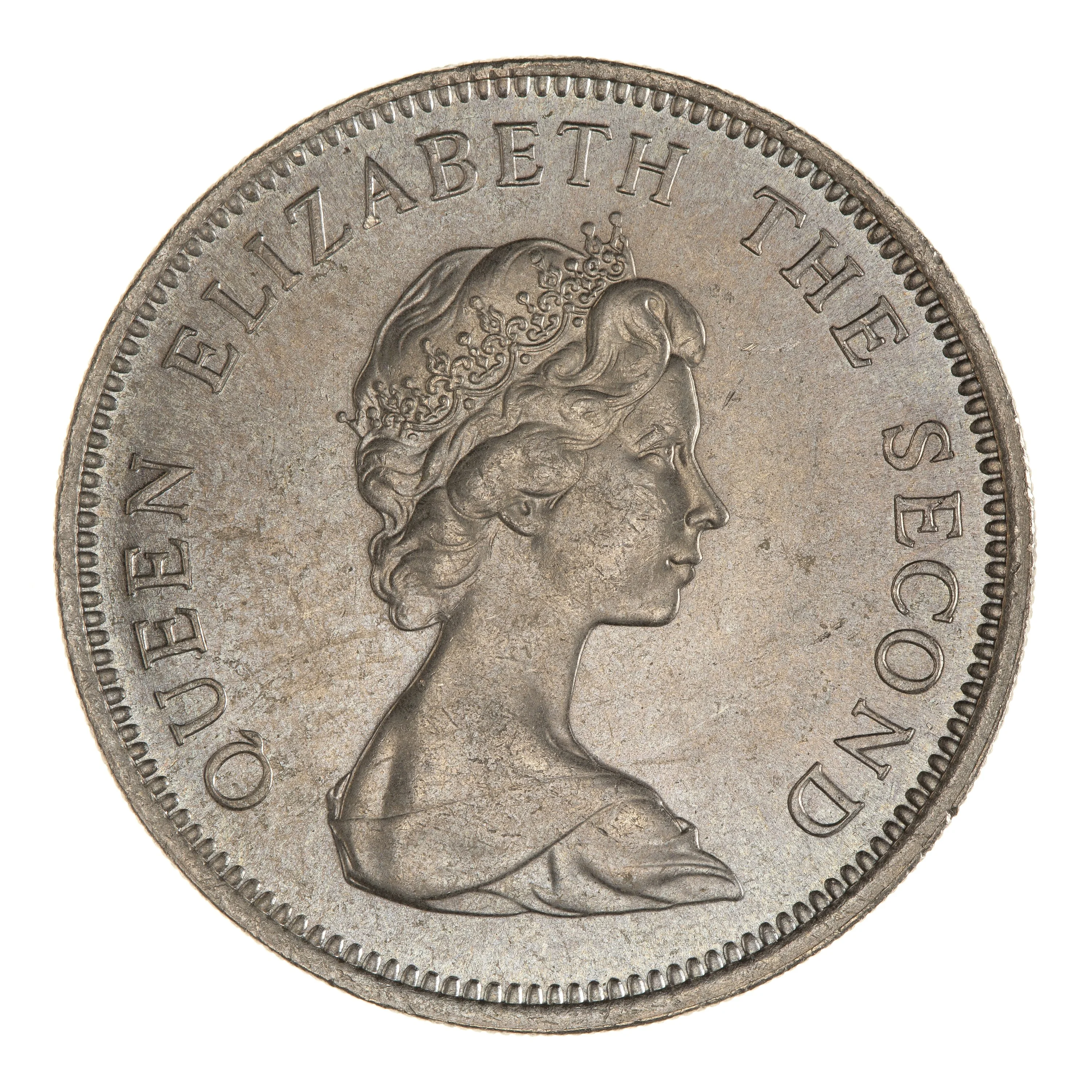
Description:
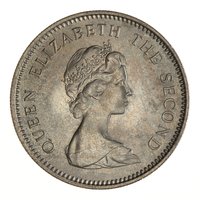
Queen Elizabeth II crowned, facing right.
Inscription:
QUEEN ELIZABETH THE SECOND
Script: Latin
Engraver: Arnold Machin
Reverse
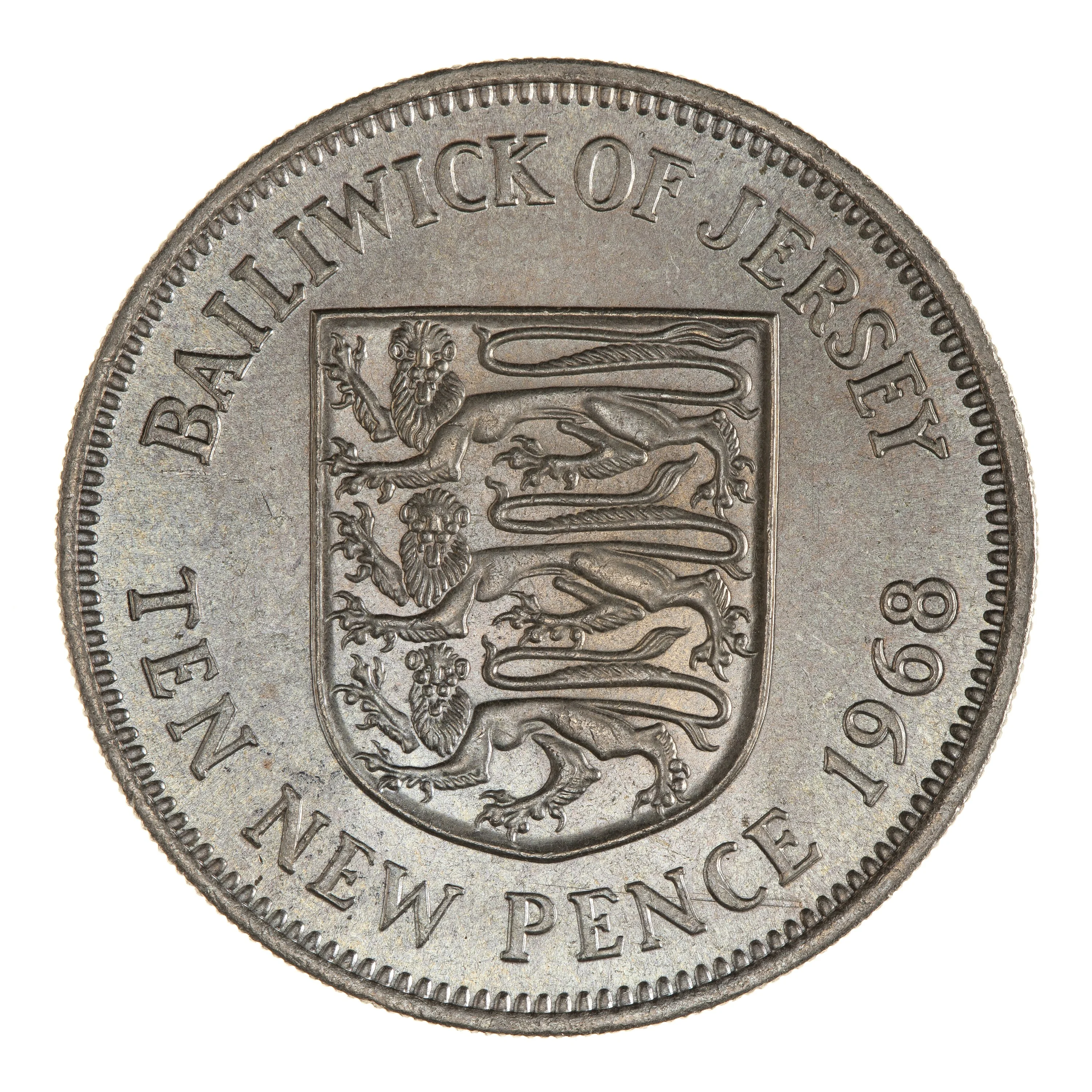
Description:
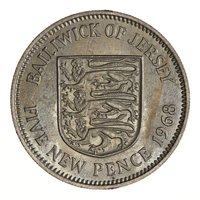
Shield with three lions; issuer above, value and date below.
Inscription:
BAILIWICK OF JERSEY
TEN NEW PENCE 1968
TEN NEW PENCE 1968
Script: Latin
Engraver: George Kruger Gray
Edge
Milled
Categories
| Symbols> Coat of Arms |
Mints
| Name | Mark |
|---|---|
| Royal Mint | — |
Mintings
| Year | Mint Mark | Mintage | Quality | Collection |
|---|---|---|---|---|
| 1968 | — | 1,500,000 | ||
| 1975 | — | 1,022,000 | ||
| 1980 | — | 1,000,000 | ||
| 1980 | — | 7,800 | Proof |
Historical background
In 1968, the currency situation in Jersey was one of transition and assertion of local identity. The island, a British Crown Dependency, had historically used a mixture of British sterling coinage and its own unique banknotes, issued by local commercial banks. However, British coins were the sole legal tender, and the island's notes were effectively promissory notes payable in sterling. This system functioned, but it lacked a distinct, official Jersey currency that fully reflected the island's constitutional autonomy and its need to control its own money supply for economic stability.
The pivotal change came with the Currency Notes (Jersey) Law 1959, which came into full practical effect in the early 1960s. This law granted the States of Jersey the right to issue its own official currency, pegged at par with Pound Sterling. By 1968, the transition was well underway: the States had introduced their own decimal coins (in advance of the UK's own decimalisation in 1971) and were progressively replacing the private banknotes with new, uniform States of Jersey notes. The old commercial banknotes were being withdrawn from circulation, centralising issuance under the Island's government.
Therefore, the background of 1968 is best characterised as a period of consolidation. Jersey was finalising its move from a fragmented system reliant on British coin and private bank paper to a modern, unified, and state-issued currency. This established the Jersey pound as a tangible symbol of the island's self-government, while maintaining the crucial sterling link that underpinned its trade and financial ties with the United Kingdom. The process was a quiet but significant step in defining Jersey's economic sovereignty.
The pivotal change came with the Currency Notes (Jersey) Law 1959, which came into full practical effect in the early 1960s. This law granted the States of Jersey the right to issue its own official currency, pegged at par with Pound Sterling. By 1968, the transition was well underway: the States had introduced their own decimal coins (in advance of the UK's own decimalisation in 1971) and were progressively replacing the private banknotes with new, uniform States of Jersey notes. The old commercial banknotes were being withdrawn from circulation, centralising issuance under the Island's government.
Therefore, the background of 1968 is best characterised as a period of consolidation. Jersey was finalising its move from a fragmented system reliant on British coin and private bank paper to a modern, unified, and state-issued currency. This established the Jersey pound as a tangible symbol of the island's self-government, while maintaining the crucial sterling link that underpinned its trade and financial ties with the United Kingdom. The process was a quiet but significant step in defining Jersey's economic sovereignty.
🌱 Very Common