

100 lire – Italy
Add to wishlist
Italy
Context
Years: 1910–1927
Issuer: Italy
Ruler: Vittorio Emanuele III
Currency:
(1861—2001)
Demonetized: Yes
Total mintage: 7,029
Material
References
KM: #
Numista: #21250
Value
Exchange value: 100 ITL
Bullion value: $4469.43
Obverse
Description:
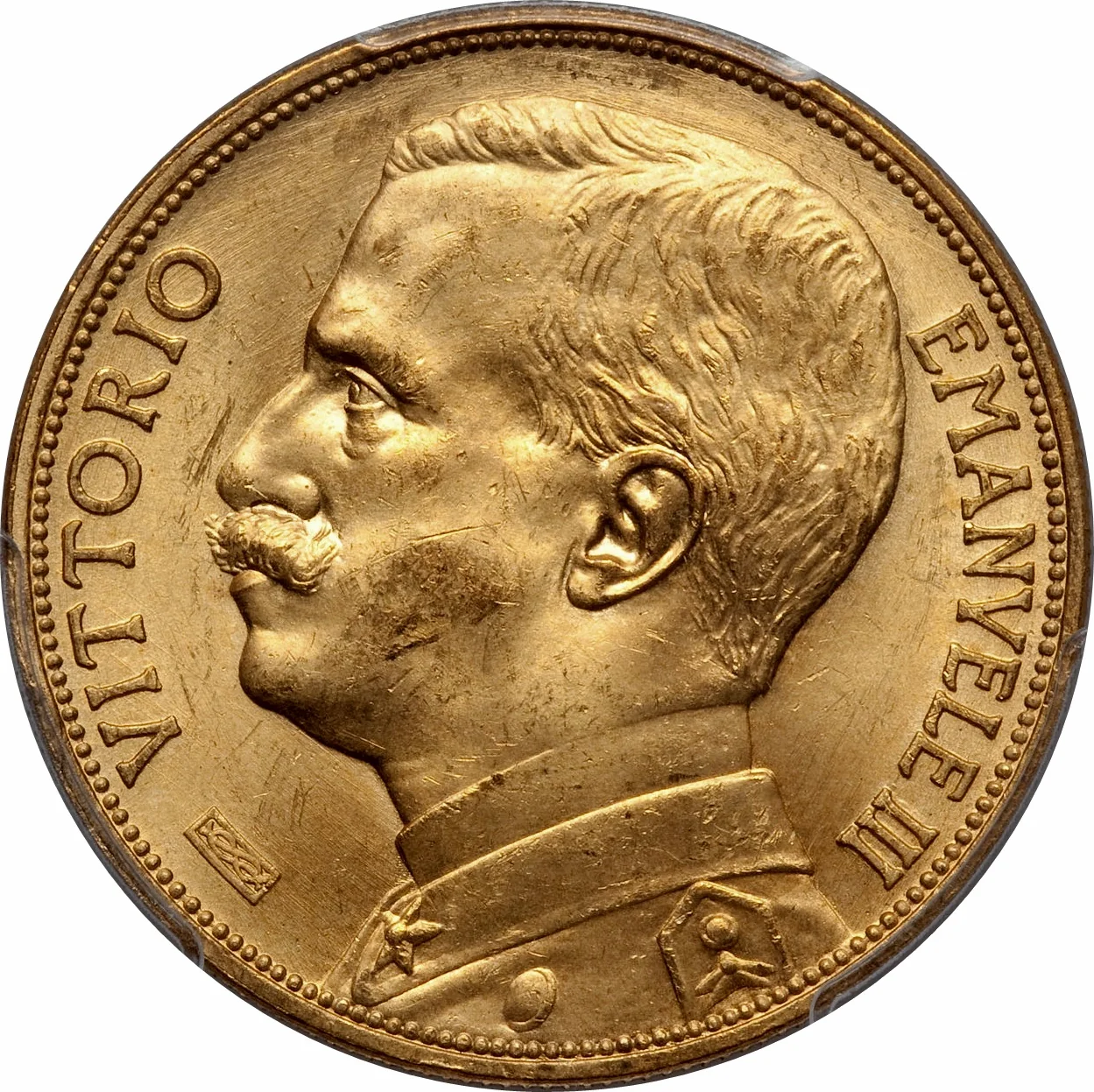
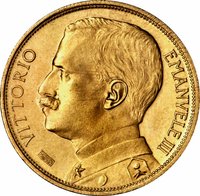
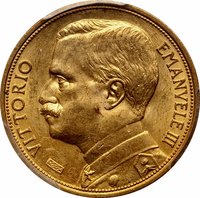
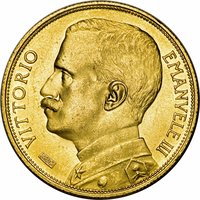
Bust of King Vittorio Emanuele III in uniform, with a knotted rectangle emblem at lower left.
Inscription:
VITTORIO EMANUELE III
Script: Latin
Engraver: Egidio Boninsegna
Reverse
Description:
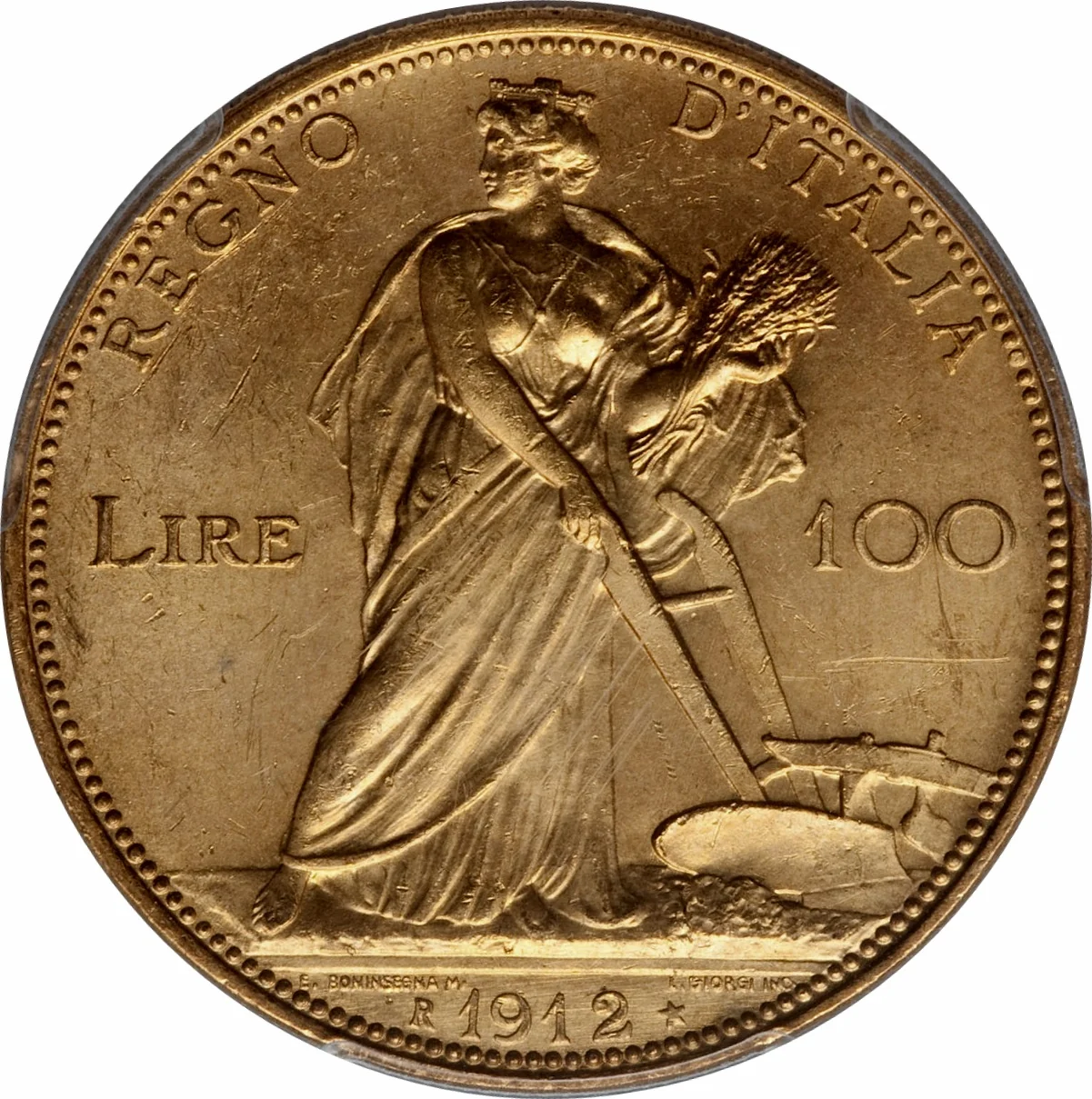
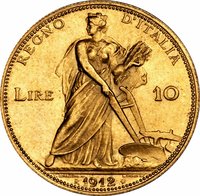
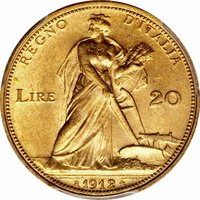
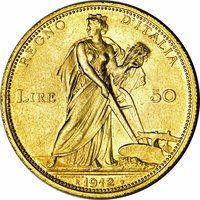
A female allegory of agricultural Italy holds a wheat sheaf and a plow. The value is on either side, with the engraver, author, date, mint mark, and Star of Italy in the exergue below.
Inscription:
REGNO D'ITALIA
LIRE 100
E. BONINSEGNA M. L. GIORGI INC
R 1912
LIRE 100
E. BONINSEGNA M. L. GIORGI INC
R 1912
Script: Latin
Engraver: Egidio Boninsegna
Edge
Reeded
Mints
| Name | Mark |
|---|---|
| Rome | R |
Historical background
In 1910, Italy's currency was firmly embedded within the Latin Monetary Union (LMU), a 19th-century European system akin to a forerunner of a monetary union. The country operated on a bimetallic standard based on the lira, which was legally defined as equivalent to the French franc. Coins in gold (marengo) and silver were minted to LMU specifications, ensuring they circulated freely alongside French, Belgian, and Swiss coins. This system provided a degree of monetary stability and facilitated international trade, but it also tied Italy's economic fortunes closely to its partners, particularly France.
However, this stability was somewhat superficial. Italy's public finances were chronically strained due to heavy military spending, colonial adventures, and ambitious infrastructure projects. The government ran persistent budget deficits, financing them through borrowing from the Bank of Italy and foreign lenders. This led to a growing disconnect between the value of the gold-backed lira in international circles and the inflated paper currency (biglietti di stato and banknotes) circulating domestically. Consequently, while Italy was officially on the gold standard, the convertibility of notes into gold was often suspended in practice, creating a system economists call a "gold exchange standard."
The situation was therefore one of fragile duality. Externally, Italy maintained the facade of a sound, union-backed currency crucial for its credibility. Internally, however, the economy was plagued by inflation, a burdensome public debt, and a vulnerable banking sector. This precarious balance made the Italian lira susceptible to speculative attacks and reliant on the tolerance of the LMU members. The underlying weaknesses would be dramatically exposed by the fiscal pressures of World War I, which ultimately ended Italy's adherence to the gold standard and the LMU.
However, this stability was somewhat superficial. Italy's public finances were chronically strained due to heavy military spending, colonial adventures, and ambitious infrastructure projects. The government ran persistent budget deficits, financing them through borrowing from the Bank of Italy and foreign lenders. This led to a growing disconnect between the value of the gold-backed lira in international circles and the inflated paper currency (biglietti di stato and banknotes) circulating domestically. Consequently, while Italy was officially on the gold standard, the convertibility of notes into gold was often suspended in practice, creating a system economists call a "gold exchange standard."
The situation was therefore one of fragile duality. Externally, Italy maintained the facade of a sound, union-backed currency crucial for its credibility. Internally, however, the economy was plagued by inflation, a burdensome public debt, and a vulnerable banking sector. This precarious balance made the Italian lira susceptible to speculative attacks and reliant on the tolerance of the LMU members. The underlying weaknesses would be dramatically exposed by the fiscal pressures of World War I, which ultimately ended Italy's adherence to the gold standard and the LMU.
Series: 1910 Italy circulation coins
💎 Extremely Rare