

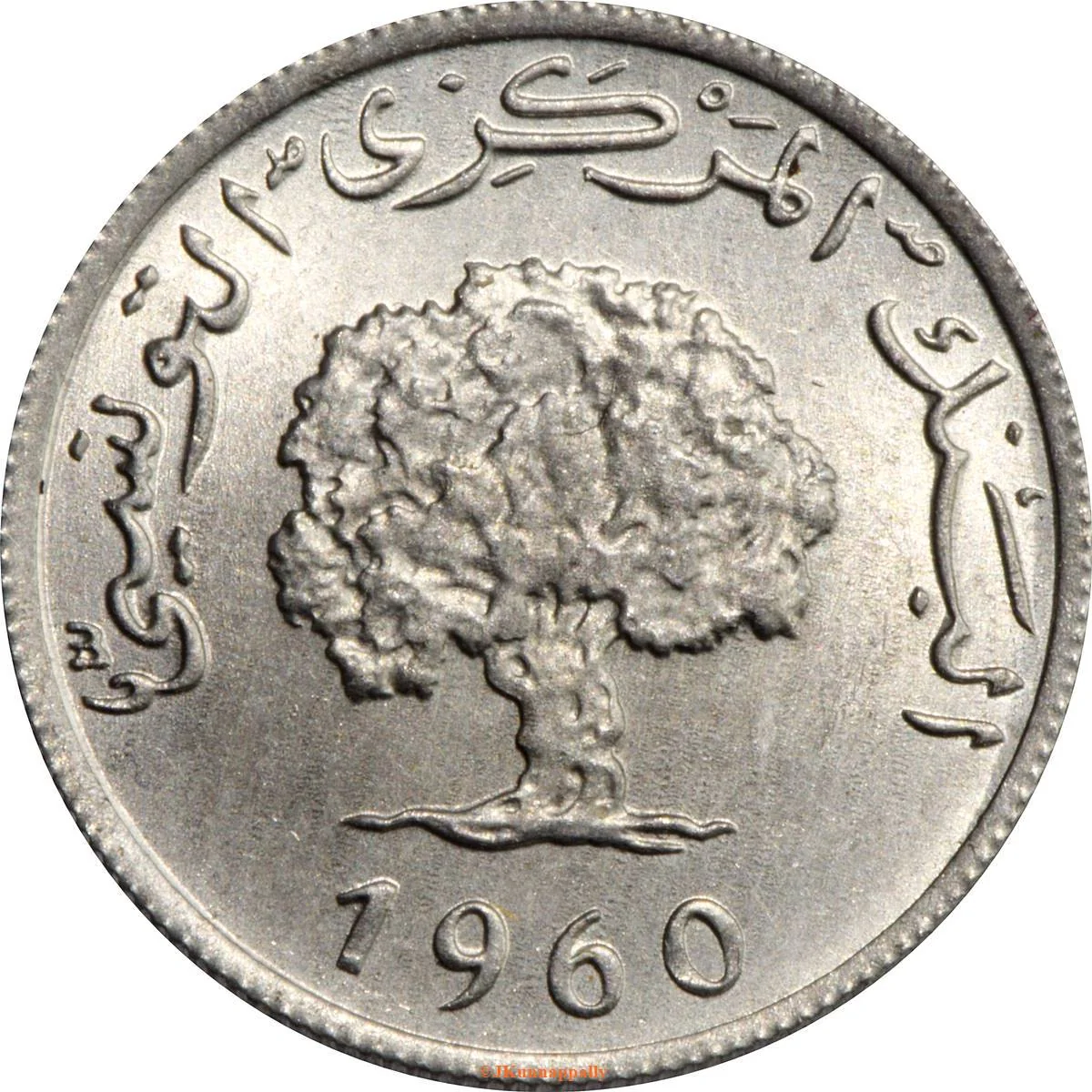
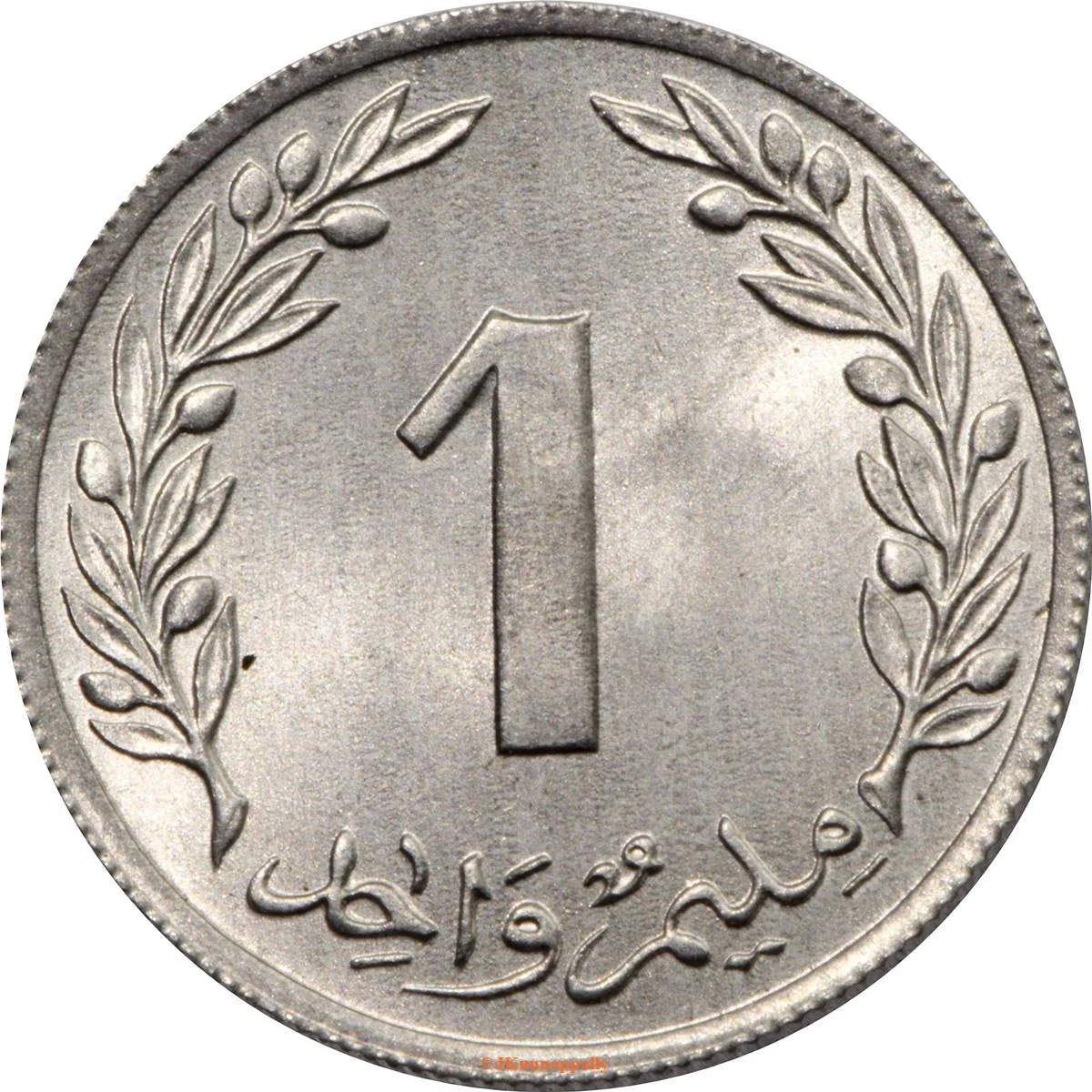
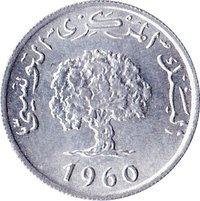
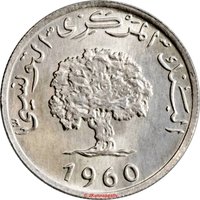
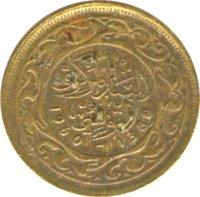
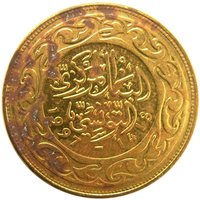
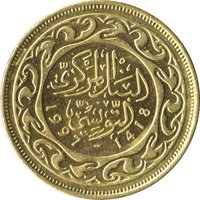
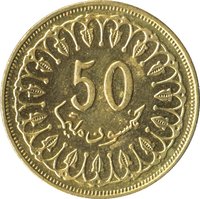
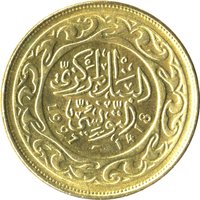
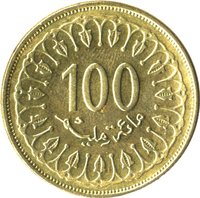
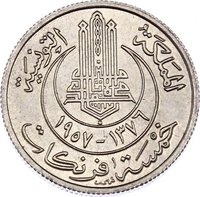
Obverse
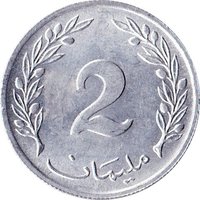
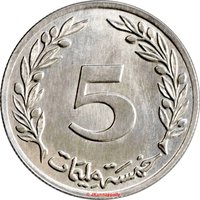
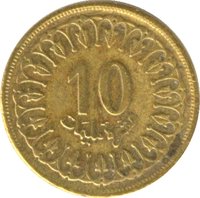
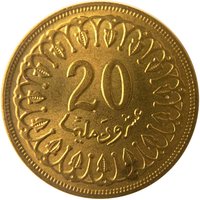
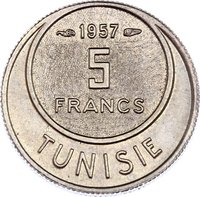
Reverse
Edge
Reeded
Mintings
| Year | Mint Mark | Mintage | Quality | Collection |
|---|---|---|---|---|
| 1960 | — | — |
Historical background
In 1960, Tunisia's currency situation was defined by its recent independence from France (achieved in 1956) and its ongoing efforts to establish economic sovereignty. The country remained within the Franc Zone, using the Tunisian franc, which was pegged at par to the French franc. This arrangement facilitated trade with France, the dominant economic partner, but also symbolized continued monetary dependence, limiting Tunisia's control over its own monetary policy and tying its economy closely to that of its former colonizer.
President Habib Bourguiba's government, pursuing a state-led development model, recognized the need for a distinct national currency as a cornerstone of full sovereignty. Consequently, 1960 was a year of active preparation for a significant monetary reform. The Banque Centrale de Tunisie was established in 1958 to replace the colonial-era issuing authority, and plans were finalized to introduce a new currency that would bear national symbols and facilitate greater economic autonomy.
Thus, the currency situation in 1960 was one of transition. While the Tunisian franc remained in circulation under the existing peg, the stage was set for a decisive change. This groundwork culminated on November 3, 1960, with the introduction of the Tunisian dinar, which replaced the franc at a rate of 1000 Tunisian francs = 1 dinar. The dinar was initially pegged to the US dollar, a move that marked Tunisia's first step toward a more independent monetary path while cautiously managing its vital economic links to Europe.
President Habib Bourguiba's government, pursuing a state-led development model, recognized the need for a distinct national currency as a cornerstone of full sovereignty. Consequently, 1960 was a year of active preparation for a significant monetary reform. The Banque Centrale de Tunisie was established in 1958 to replace the colonial-era issuing authority, and plans were finalized to introduce a new currency that would bear national symbols and facilitate greater economic autonomy.
Thus, the currency situation in 1960 was one of transition. While the Tunisian franc remained in circulation under the existing peg, the stage was set for a decisive change. This groundwork culminated on November 3, 1960, with the introduction of the Tunisian dinar, which replaced the franc at a rate of 1000 Tunisian francs = 1 dinar. The dinar was initially pegged to the US dollar, a move that marked Tunisia's first step toward a more independent monetary path while cautiously managing its vital economic links to Europe.
Series: 1960 Tunisia circulation coins
🌱 Very Common