

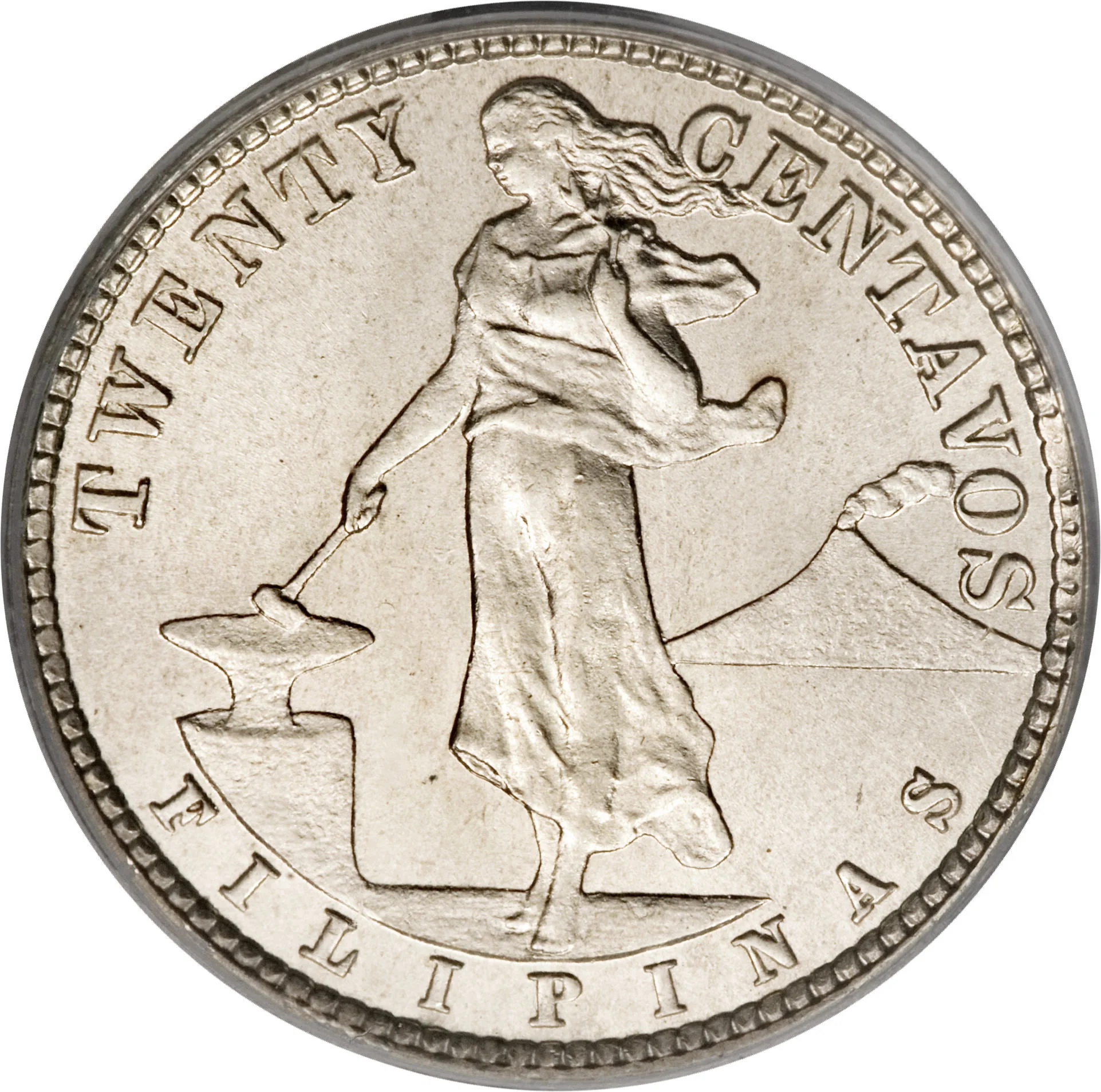
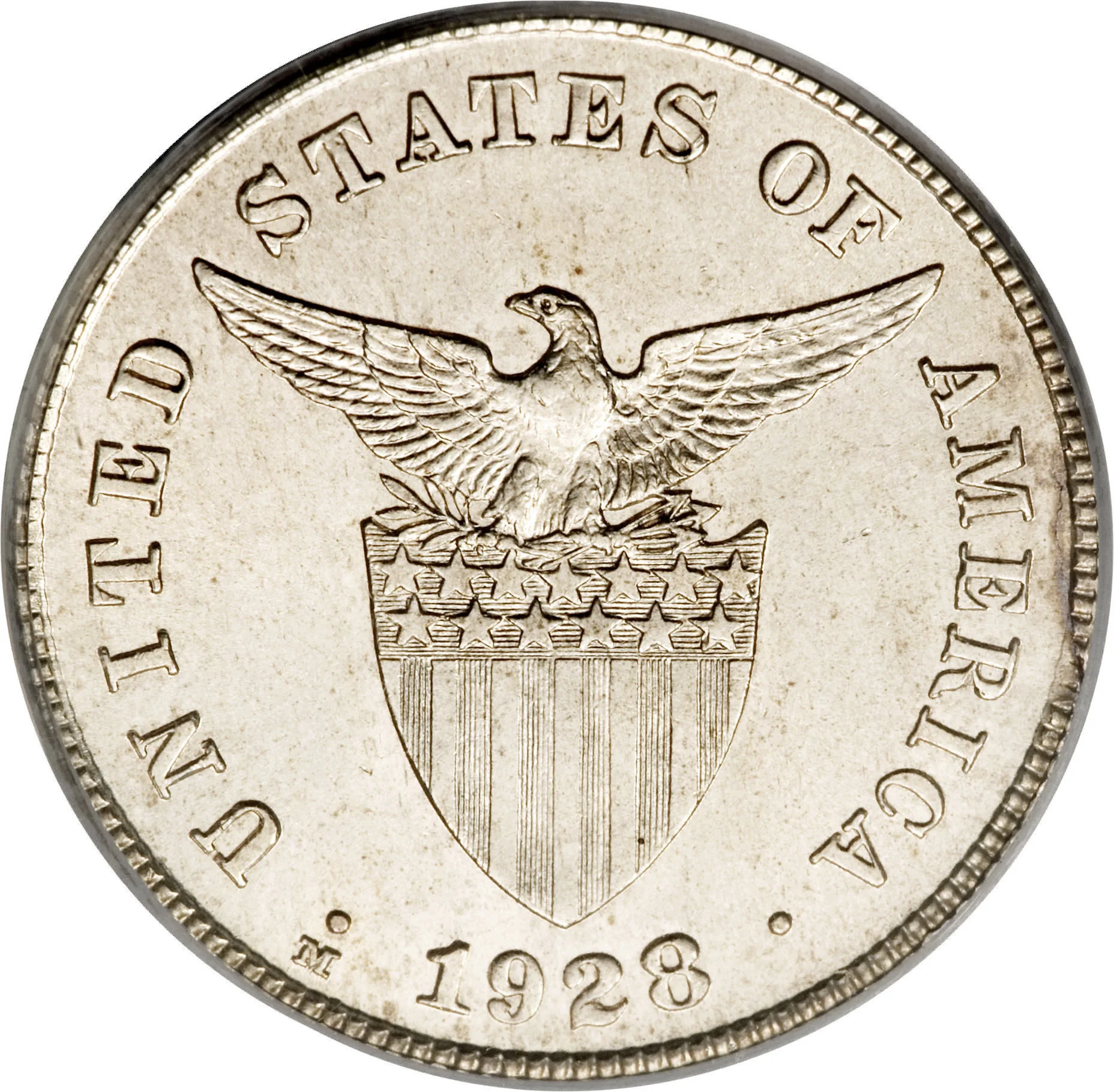
20 centavos – Philippines
Add to wishlist
Philippines
Context
Year: 1928
Issuer: Philippines
Period:
(1901—1935)
Currency:
(1857—1967)
Demonetized: Yes
Total mintage: 100,000
Material
References
KM: #
Numista: #21143
Value
Bullion value: $7.41
Obverse
Description:
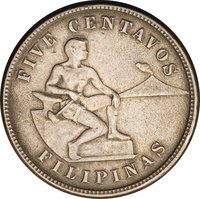
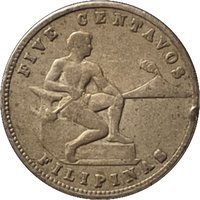
Woman standing, hammer on anvil, volcano smoking at right.
Inscription:
TWENTY CENTAVOS
FILIPINAS
FILIPINAS
Translation:
Twenty Centavos
Philippines
Philippines
Script: Latin
Designers: Melecio Figueroa, Charles Barber
Reverse
Inscription:
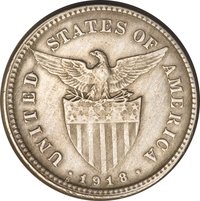
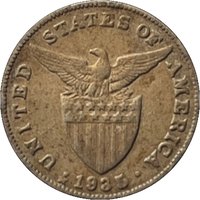
UNITED STATES OF AMERICA
·1928·
M
·1928·
M
Script: Latin
Designers: Melecio Figureoa, Charles Barber
Edge
Reeded
Mints
| Name | Mark |
|---|---|
| Manila | M |
Mintings
| Year | Mint Mark | Mintage | Quality | Collection |
|---|---|---|---|---|
| 1928 | M | 100,000 |
Historical background
In 1928, the Philippines operated under a unique and transitional currency system as a United States territory. The Philippine peso was pegged to the American dollar at a fixed rate of 2:1, a standard established by the Philippine Coinage Act of 1903. This "gold-exchange standard" meant the peso's value was directly backed by U.S. gold reserves held in Washington, not by physical gold in Manila. The currency in circulation consisted of U.S. Treasury-issued silver certificates (featuring English text and U.S. motifs) and distinctive Philippine silver coinage, creating a practical dual-currency environment where both U.S. dollars and Philippine pesos were legal tender.
This monetary regime provided notable stability and facilitated robust trade with the United States, the colony's dominant economic partner. However, it also tightly bound the Philippine economy to U.S. monetary policy, leaving it vulnerable to external shocks from American financial conditions. Furthermore, the fixed peg and the inflow of American capital were criticized by some Filipino nationalists and economists for inhibiting independent economic development and perpetuating a colonial economic structure. The system inherently prioritized the stability of the exchange rate over the flexibility needed to address local economic conditions.
The currency situation of 1928 existed within a broader political context, as the Philippines was moving toward greater self-governance under the Jones Law of 1916. Discussions about future independence inevitably included debates over monetary sovereignty. Consequently, the currency system was not just an economic arrangement but also a symbol of colonial dependence. This set the stage for future reforms, culminating in the establishment of the Central Bank of the Philippines in 1949, after independence, which finally ended the currency board system and placed monetary policy under full Filipino control.
This monetary regime provided notable stability and facilitated robust trade with the United States, the colony's dominant economic partner. However, it also tightly bound the Philippine economy to U.S. monetary policy, leaving it vulnerable to external shocks from American financial conditions. Furthermore, the fixed peg and the inflow of American capital were criticized by some Filipino nationalists and economists for inhibiting independent economic development and perpetuating a colonial economic structure. The system inherently prioritized the stability of the exchange rate over the flexibility needed to address local economic conditions.
The currency situation of 1928 existed within a broader political context, as the Philippines was moving toward greater self-governance under the Jones Law of 1916. Discussions about future independence inevitably included debates over monetary sovereignty. Consequently, the currency system was not just an economic arrangement but also a symbol of colonial dependence. This set the stage for future reforms, culminating in the establishment of the Central Bank of the Philippines in 1949, after independence, which finally ended the currency board system and placed monetary policy under full Filipino control.
⭐ Rare