

5 centavos – Philippines
Add to wishlist
Philippines
Context
Material
Diameter: 22 mm
Shape: Round
Composition: Copper-nickel
Technique: Milled
Alignment: Coin alignment
flip
References
KM: #
Numista: #21142
Obverse
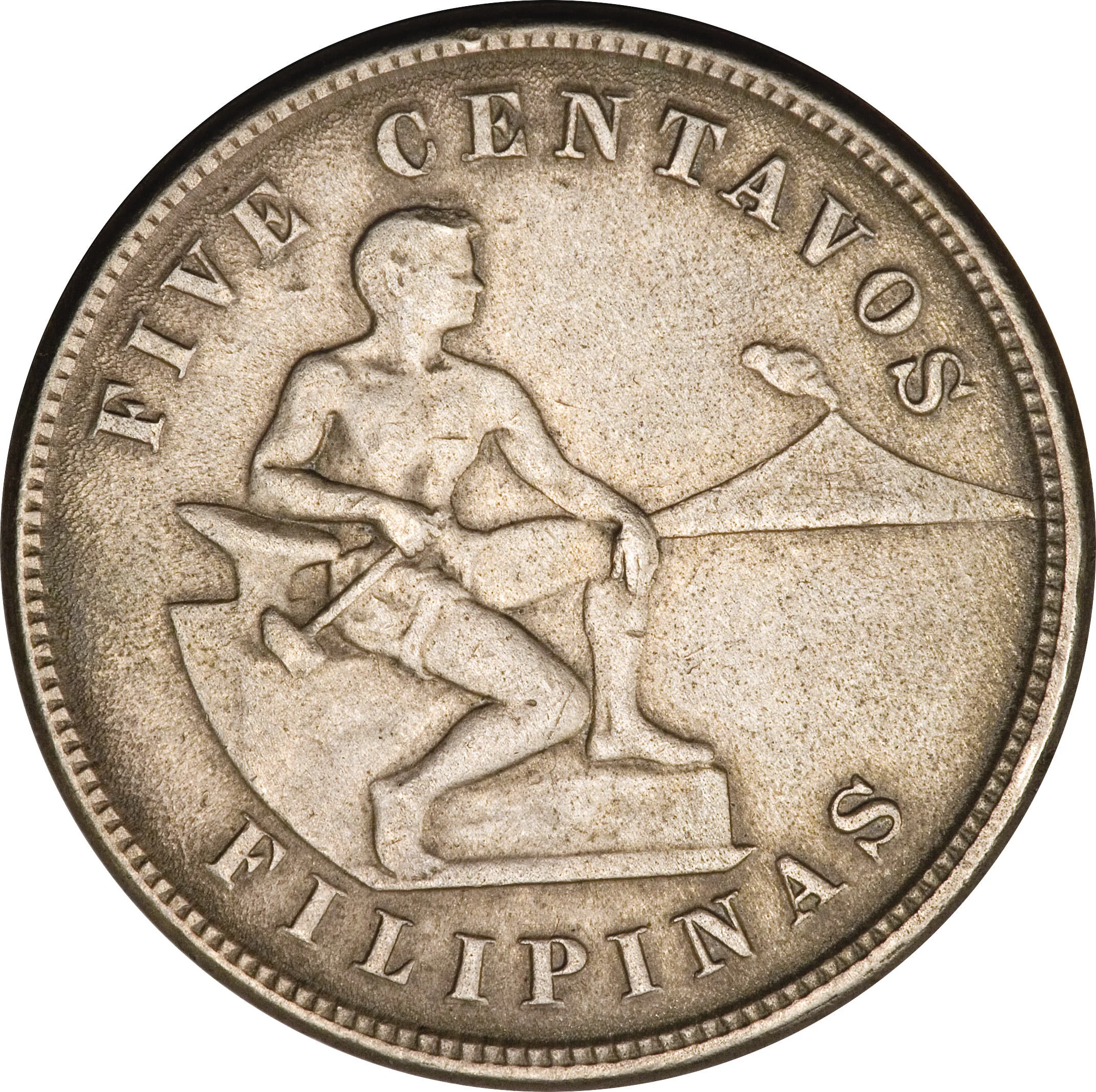
Description:
Man seated with hammer and anvil, volcano smoking at right.
Inscription:
FIVE CENTAVOS
FILIPINAS
FILIPINAS
Translation:
FIVE CENTAVOS
PHILIPPINES
PHILIPPINES
Script: Latin
Designers: Melicio Figueroa, Charles Barber
Reverse
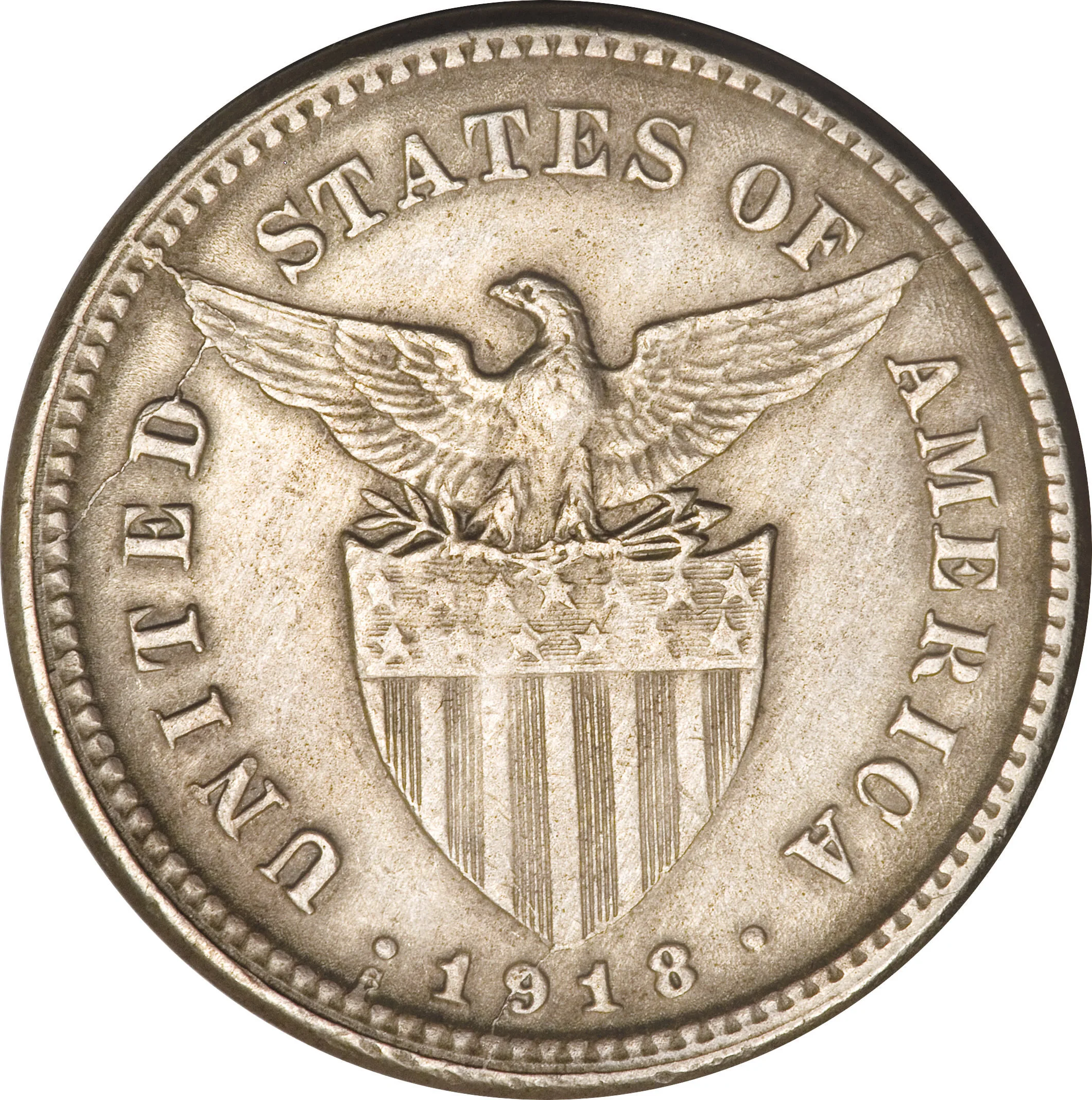
Description:
Eagle wings spread over shield.
Inscription:
UNITED STATES OF AMERICA
· 1918 ·
S
· 1918 ·
S
Script: Latin
Designers: Melicio Figueroa, Charles Barber
Edge
Mints
| Name | Mark |
|---|---|
| United States Mint of San Francisco | S |
Mintings
| Year | Mint Mark | Mintage | Quality | Collection |
|---|---|---|---|---|
| 1918 | S | — |
Historical background
In 1918, the Philippine currency system was in a state of transition, still operating under the direct monetary authority of the United States following the colonial transfer from Spain. The legal foundation was the Philippine Coinage Act of 1903, which established a gold-exchange standard pegged to the US dollar. The Philippine peso was defined as exactly 50 US cents (or 12.9 grains of gold), with the US dollar itself serving as legal tender alongside locally minted silver pesos and subsidiary coins. This fixed peg provided stability and facilitated trade with the United States, the islands' dominant economic partner, but it also meant Manila had no independent monetary policy, with its currency value entirely dependent on decisions made in Washington.
The period around World War I, however, introduced significant strain. Global demand for Philippine export commodities like sugar, coconut products, and hemp surged, leading to a large inflow of US dollars to pay for these goods. This created a peculiar phenomenon: an abundance of dollar exchange in Manila, but a relative scarcity of physical currency in circulation, especially small-denomination coins needed for daily transactions. The wartime disruption of global silver markets and shipping further complicated the minting and distribution of coinage. Consequently, a chronic "small change" shortage plagued the local economy, prompting the use of emergency tokens and coupons issued by merchants and municipal governments.
By 1918, these pressures led to concrete legislative action. The Philippine Legislature passed the Jones Law Amendment of 1918, which authorized the creation of the first government-backed paper money for general circulation—the Philippine National Bank (PNB) emergency circulating notes. These were not yet the familiar "Philippine peso" banknotes of a central bank (which did not exist until 1949), but they marked a critical step toward a more localized currency system. This move was a direct response to the coin shortage and the need for a more flexible currency supply, setting a precedent for greater Filipino administrative control over monetary affairs while still firmly operating within the US dollar peg framework.
The period around World War I, however, introduced significant strain. Global demand for Philippine export commodities like sugar, coconut products, and hemp surged, leading to a large inflow of US dollars to pay for these goods. This created a peculiar phenomenon: an abundance of dollar exchange in Manila, but a relative scarcity of physical currency in circulation, especially small-denomination coins needed for daily transactions. The wartime disruption of global silver markets and shipping further complicated the minting and distribution of coinage. Consequently, a chronic "small change" shortage plagued the local economy, prompting the use of emergency tokens and coupons issued by merchants and municipal governments.
By 1918, these pressures led to concrete legislative action. The Philippine Legislature passed the Jones Law Amendment of 1918, which authorized the creation of the first government-backed paper money for general circulation—the Philippine National Bank (PNB) emergency circulating notes. These were not yet the familiar "Philippine peso" banknotes of a central bank (which did not exist until 1949), but they marked a critical step toward a more localized currency system. This move was a direct response to the coin shortage and the need for a more flexible currency supply, setting a precedent for greater Filipino administrative control over monetary affairs while still firmly operating within the US dollar peg framework.
💎 Very Rare