

5 centavos – Philippines
Add to wishlist
Philippines
Context
Years: 1930–1935
Issuer: Philippines
Period:
(1901—1935)
Currency:
(1857—1967)
Demonetized: Yes
Total mintage: 15,246,000
Material
Diameter: 19 mm
Weight: 4.75 g
Shape: Round
Composition: Copper-nickel
Technique: Milled
Alignment: Coin alignment
flip
References
KM: #
Numista: #16639
Obverse
Description:
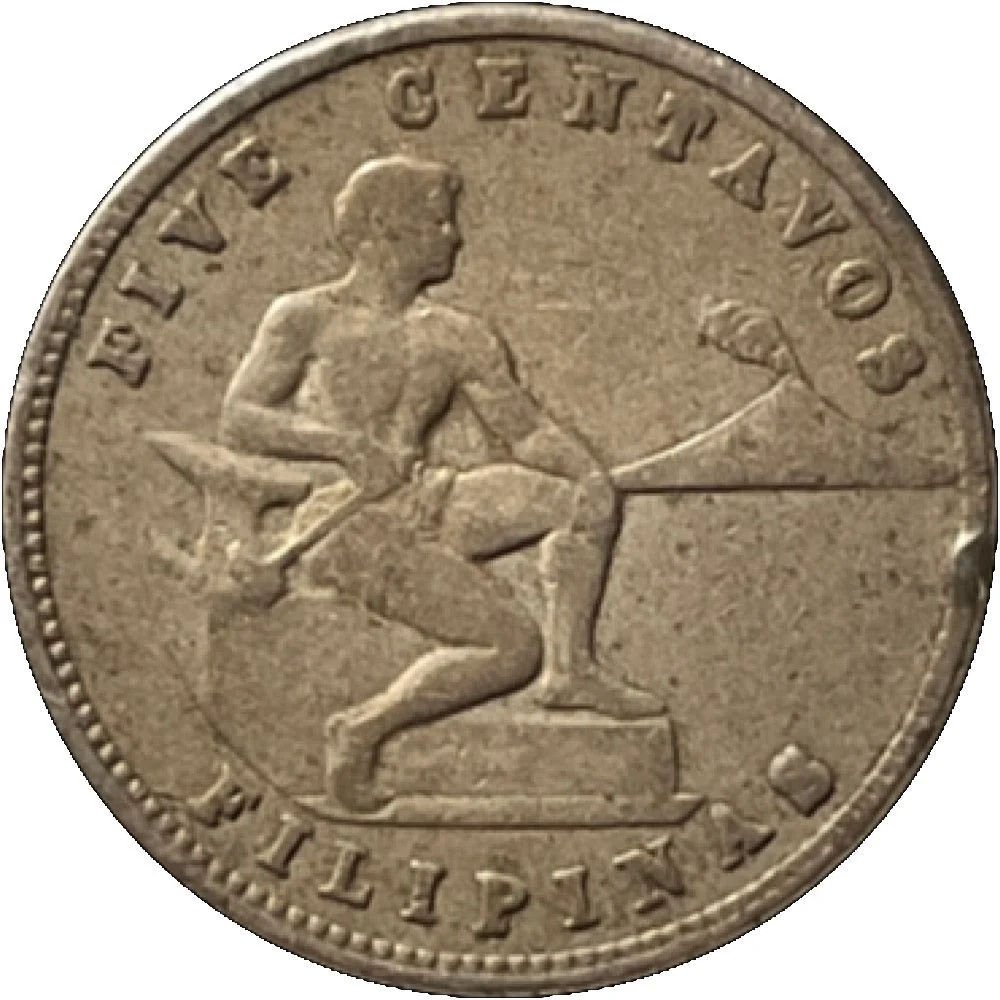
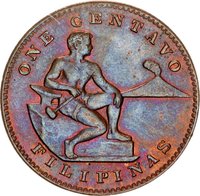
Man seated with hammer and anvil, volcano smoking at right.
Inscription:
FIVE CENTAVOS
FILIPINAS
FILIPINAS
Translation:
FIVE CENTAVOS
PHILIPPINES
PHILIPPINES
Script: Latin
Designers: Melicio Figueroa, Charles Barber
Reverse
Description:
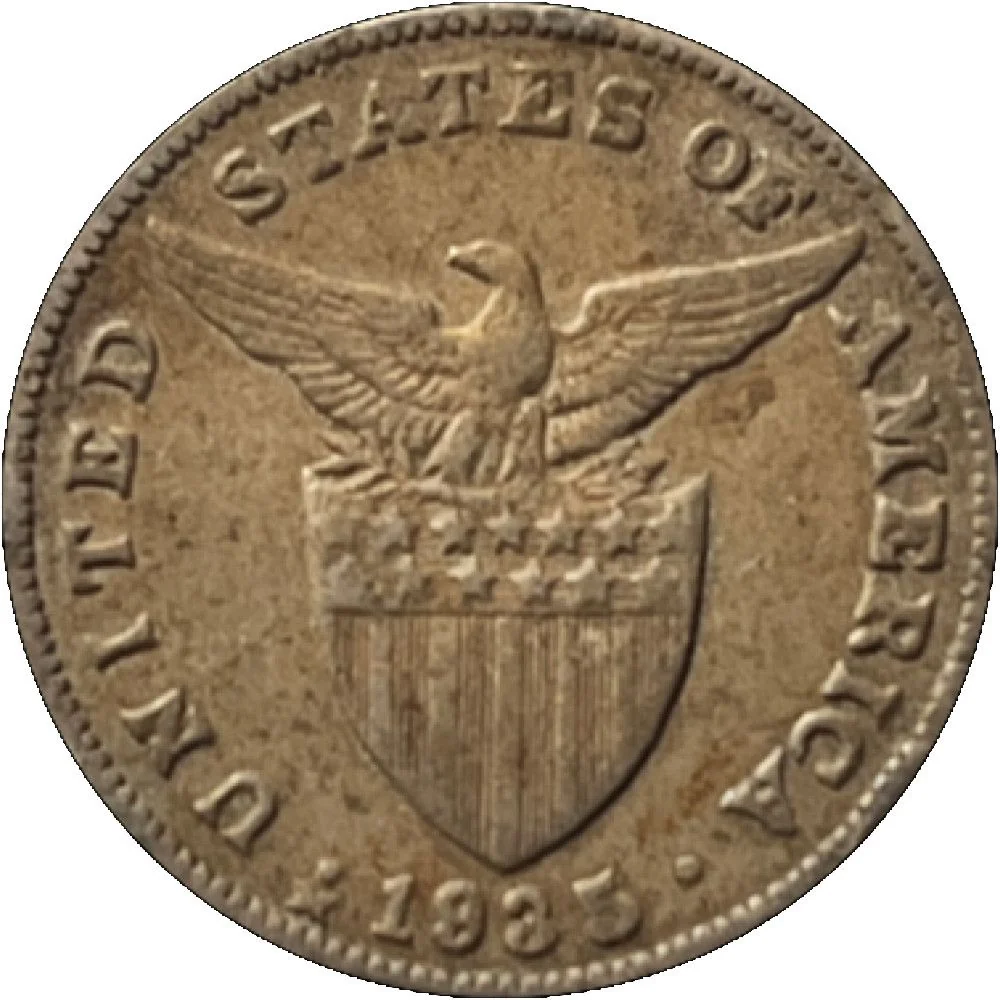
Eagle wings spread over shield.
Inscription:
UNITED STATES OF AMERICA
· 1935 ·
M
· 1935 ·
M
Script: Latin
Designers: Melicio Figueroa, Charles Barber
Edge
Plain
Mints
| Name | Mark |
|---|---|
| Manila | M |
Mintings
Historical background
In 1930, the Philippines operated under a unique currency system as a territory of the United States, having transitioned from the Spanish colonial peso. The foundation was the Philippine peso (₱), which was pegged at a fixed rate of 2:1 to the United States dollar. This peg was established by the Philippine Coinage Act of 1903, which placed the islands on a gold-exchange standard. The currency was issued by the Philippine Treasury and backed by gold and U.S. dollar reserves held in New York, ensuring stability and facilitating trade with the American mainland, the colony's dominant economic partner.
The global onset of the Great Depression in 1929 began to strain this system by 1930. A sharp collapse in the prices of key Philippine export commodities—particularly sugar, coconut products, and abacá (manila hemp)—led to a dramatic fall in export earnings. This created a balance of payments problem, as the value of imports began to outstrip the revenue from exports. Despite this economic shock, the fixed peg to the strong U.S. dollar remained intact, which had a dual effect: it maintained monetary stability and prevented capital flight, but it also made Philippine exports more expensive on the world market and did not allow for a devaluation that could have provided economic relief.
Consequently, the currency situation in 1930 was one of formal stability masking underlying economic distress. The peso remained firmly tied to the dollar, but the real economy was contracting severely. The fixed exchange rate, while a symbol of colonial monetary discipline, began to be questioned as it exacerbated deflationary pressures and limited policy tools to address the depression. This tension set the stage for the serious economic debates and hardships of the following years, which would eventually lead to the establishment of the Central Bank of the Philippines in 1949 to manage an independent monetary policy.
The global onset of the Great Depression in 1929 began to strain this system by 1930. A sharp collapse in the prices of key Philippine export commodities—particularly sugar, coconut products, and abacá (manila hemp)—led to a dramatic fall in export earnings. This created a balance of payments problem, as the value of imports began to outstrip the revenue from exports. Despite this economic shock, the fixed peg to the strong U.S. dollar remained intact, which had a dual effect: it maintained monetary stability and prevented capital flight, but it also made Philippine exports more expensive on the world market and did not allow for a devaluation that could have provided economic relief.
Consequently, the currency situation in 1930 was one of formal stability masking underlying economic distress. The peso remained firmly tied to the dollar, but the real economy was contracting severely. The fixed exchange rate, while a symbol of colonial monetary discipline, began to be questioned as it exacerbated deflationary pressures and limited policy tools to address the depression. This tension set the stage for the serious economic debates and hardships of the following years, which would eventually lead to the establishment of the Central Bank of the Philippines in 1949 to manage an independent monetary policy.
🌱 Common