

2 cents – Seychelles
Add to wishlist
Seychelles
Context
Years: 1959–1969
Issuer: Seychelles
Ruler: Elizabeth II
Currency:
(since 1914)
Demonetized: Yes
Total mintage: 145,000
Material
References
KM: #
Numista: #4892
Value
Exchange value: 0.02 SCR
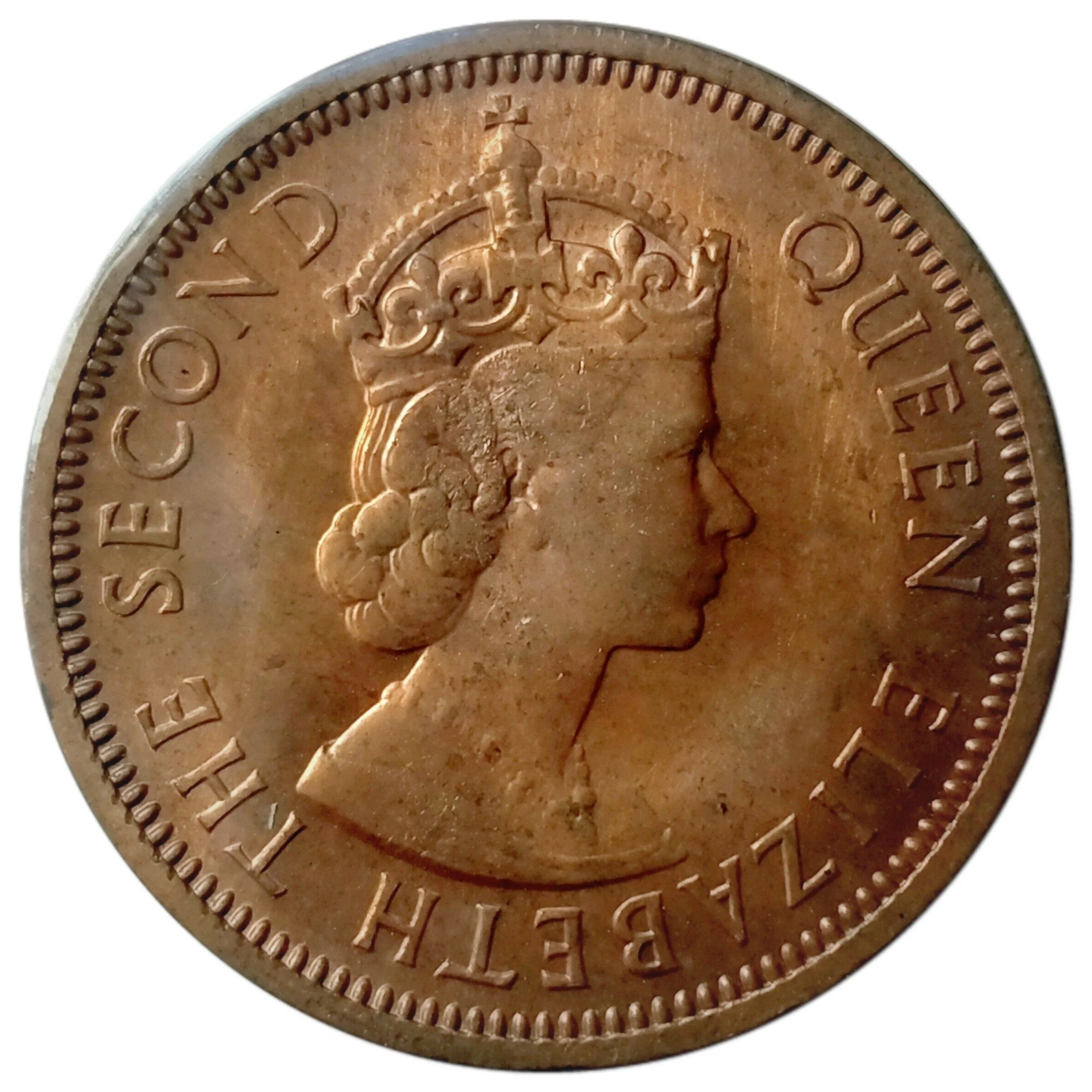
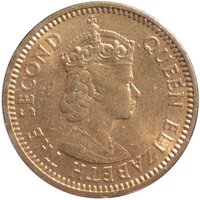
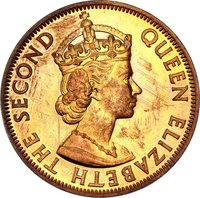
Obverse
Description:
Queen Elizabeth II facing right
Inscription:
QUEEN ELIZABETH THE SECOND
Script: Latin
Engraver: Cecil Thomas
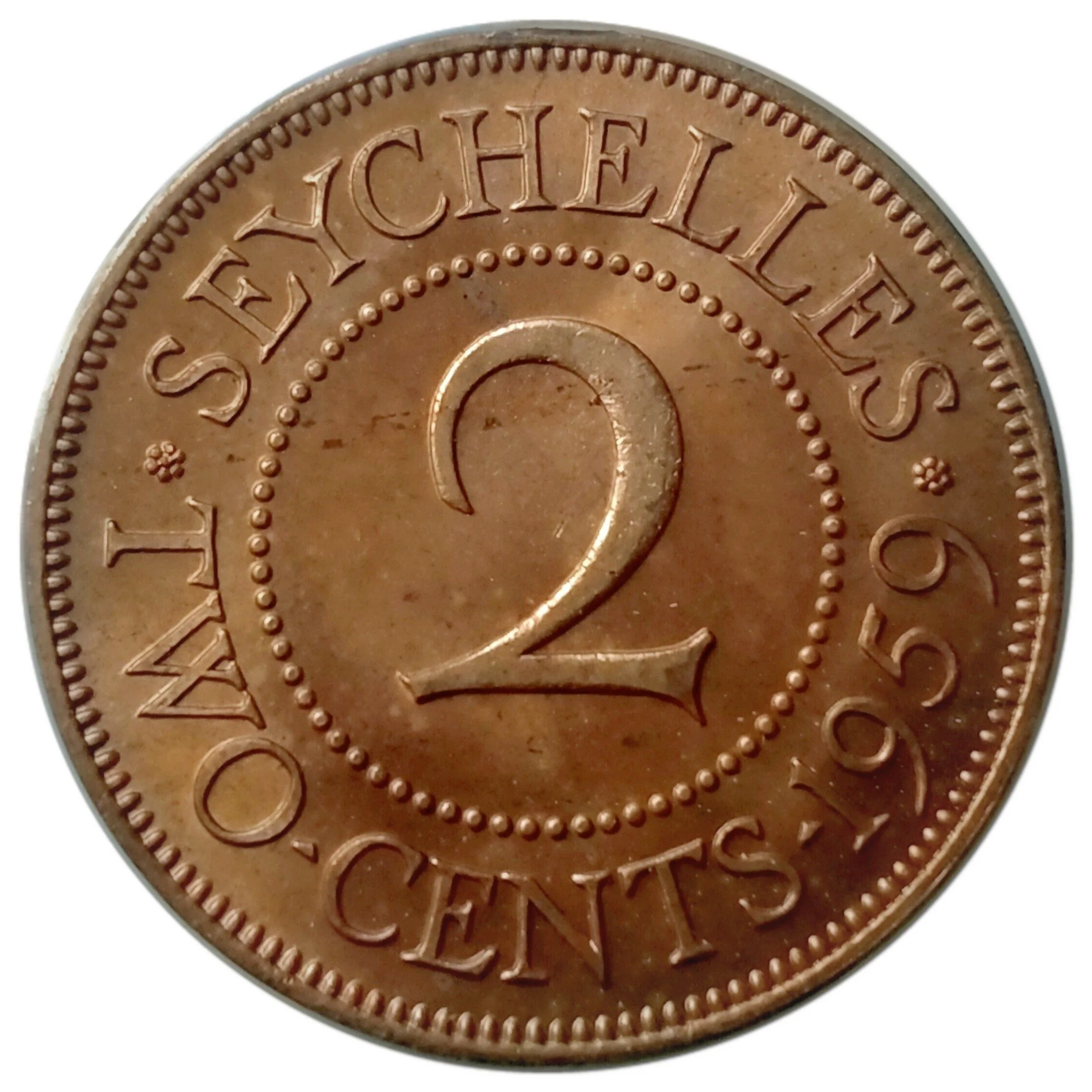
Reverse
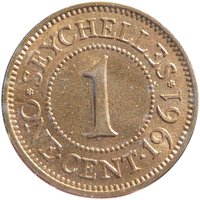
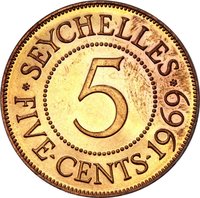
Description:
Legend encircles the beaded circle.
Inscription:
*SEYCHELLES*
2
TWO CENTS·1961
2
TWO CENTS·1961
Script: Latin
Engraver: George Kruger Gray
Edge
Plain
Mints
| Name | Mark |
|---|---|
| Royal Mint (Tower Hill) | — |
Mintings
| Year | Mint Mark | Mintage | Quality | Collection |
|---|---|---|---|---|
| 1959 | — | 30,000 | ||
| 1959 | — | — | Proof | |
| 1961 | — | 30,000 | ||
| 1961 | — | — | Proof | |
| 1963 | — | 40,000 | ||
| 1963 | — | — | Proof | |
| 1965 | — | 20,000 | ||
| 1968 | — | 20,000 | ||
| 1969 | — | 5,000 | Proof |
Historical background
In 1959, Seychelles was a British Crown Colony, and its currency situation was a direct reflection of its colonial economic and administrative ties. The official currency was the Seychelles Rupee (SCR), which had been introduced in 1914, replacing the Mauritian rupee. However, this rupee was not an independent currency; it was pegged at par to the Indian Rupee (INR). This peg was a historical legacy of the region's trade and administrative links within the British Empire, particularly through the Bombay Presidency earlier in its history.
The colony's monetary system was managed by the East African Currency Board (EACB), based in Nairobi. The EACB issued the specific banknotes and coins for Seychelles, which were legal tender only within the colony. This arrangement meant Seychelles had no central bank or independent monetary policy. The currency's value and stability were entirely derivative, relying on the EACB's reserves held in sterling and the fixed peg to the Indian Rupee, which itself was pegged to the British Pound Sterling.
By the late 1950s, this system was becoming increasingly anachronistic. The Indian Rupee had been decimalized in 1957, while Seychelles still used a non-decimal system (100 cents = 1 rupee). More importantly, India's economic challenges were causing international confidence in the INR to wane. Consequently, in 1959, plans were being formulated for a significant change. The colonial administration was preparing to sever the link to the Indian Rupee and instead peg the Seychelles Rupee directly to the British Pound Sterling (GBP) at a rate of 1 SCR = 1 shilling 6 pence (or 13.33 rupees to £1), a move that would be formally enacted in 1960. This shift aimed to stabilize the colony's currency by anchoring it to a stronger and more reliable international reserve currency as the winds of political change began to stir.
The colony's monetary system was managed by the East African Currency Board (EACB), based in Nairobi. The EACB issued the specific banknotes and coins for Seychelles, which were legal tender only within the colony. This arrangement meant Seychelles had no central bank or independent monetary policy. The currency's value and stability were entirely derivative, relying on the EACB's reserves held in sterling and the fixed peg to the Indian Rupee, which itself was pegged to the British Pound Sterling.
By the late 1950s, this system was becoming increasingly anachronistic. The Indian Rupee had been decimalized in 1957, while Seychelles still used a non-decimal system (100 cents = 1 rupee). More importantly, India's economic challenges were causing international confidence in the INR to wane. Consequently, in 1959, plans were being formulated for a significant change. The colonial administration was preparing to sever the link to the Indian Rupee and instead peg the Seychelles Rupee directly to the British Pound Sterling (GBP) at a rate of 1 SCR = 1 shilling 6 pence (or 13.33 rupees to £1), a move that would be formally enacted in 1960. This shift aimed to stabilize the colony's currency by anchoring it to a stronger and more reliable international reserve currency as the winds of political change began to stir.
🌱 Fairly Common