

10 Cents – British Honduras
Belize
Context
Years: 1918–1936
Country: Belize 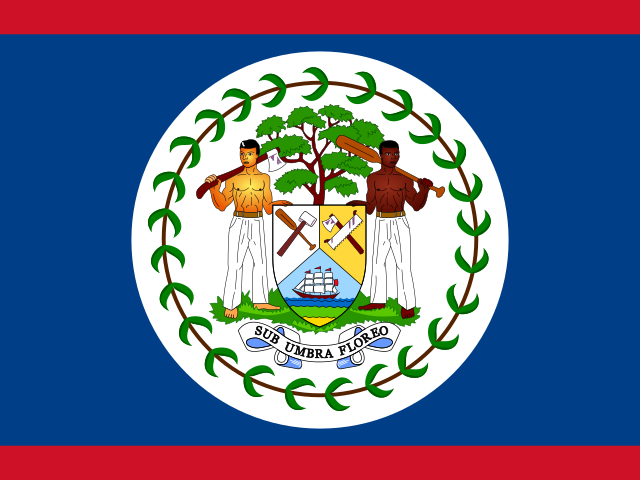
Issuer: British Honduras
Ruler: George V
Currency:
(1885—1973)
Total mintage: 50,050
Material
References
KM: #Click to copy to clipboard20
Numista: #20557
Value
Bullion value: $6.10
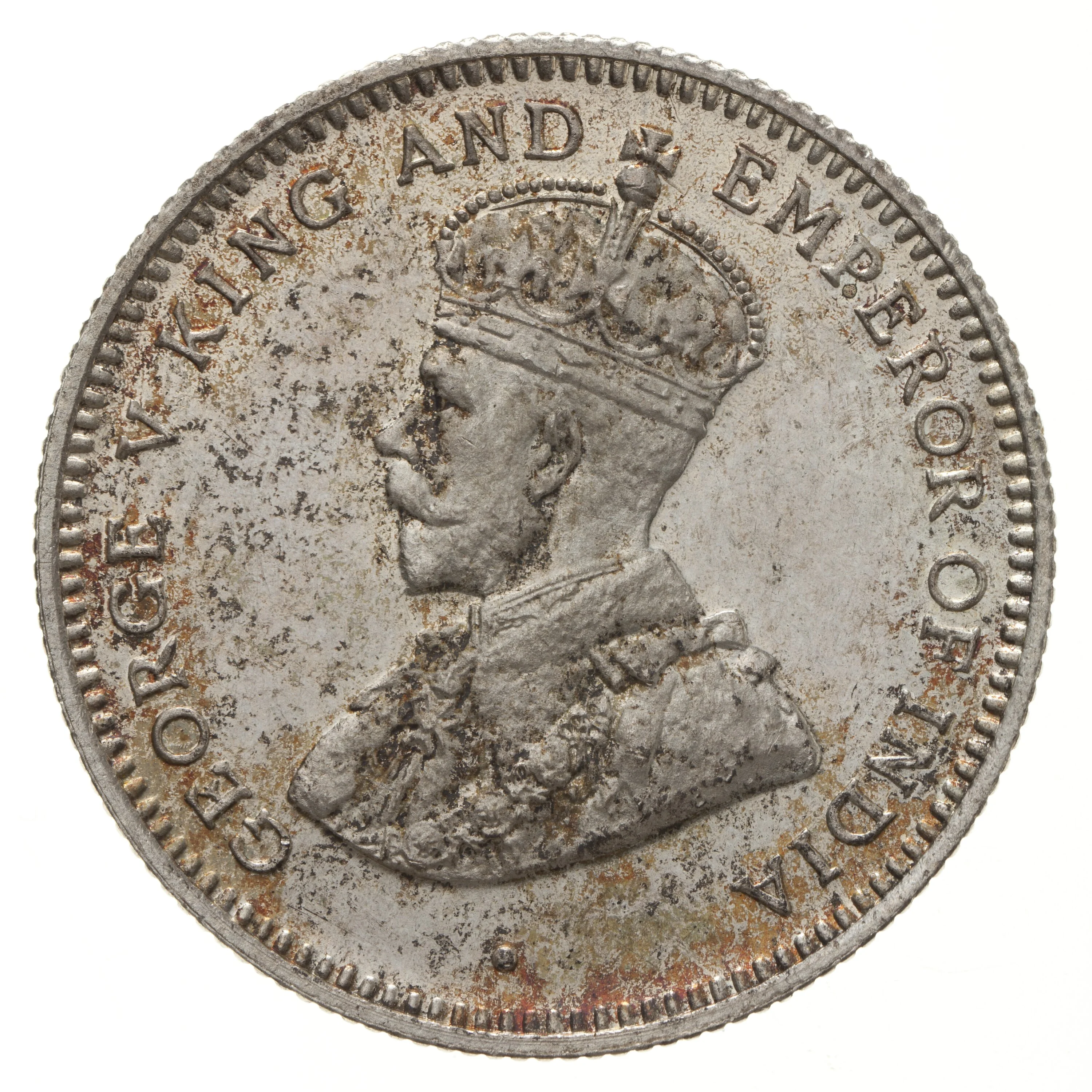
Obverse
Description:
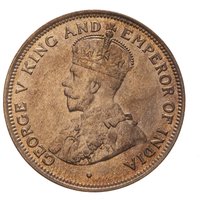
George V left-facing crowned bust.
Inscription:
· GEORGE V KING AND EMPEROR OF INDIA
B.M.
B.M.
Translation:
GEORGE V KING AND EMPEROR OF INDIA
B.M.
B.M.
Script: Latin
Language: English
Engraver: Edgar Bertram MacKennal
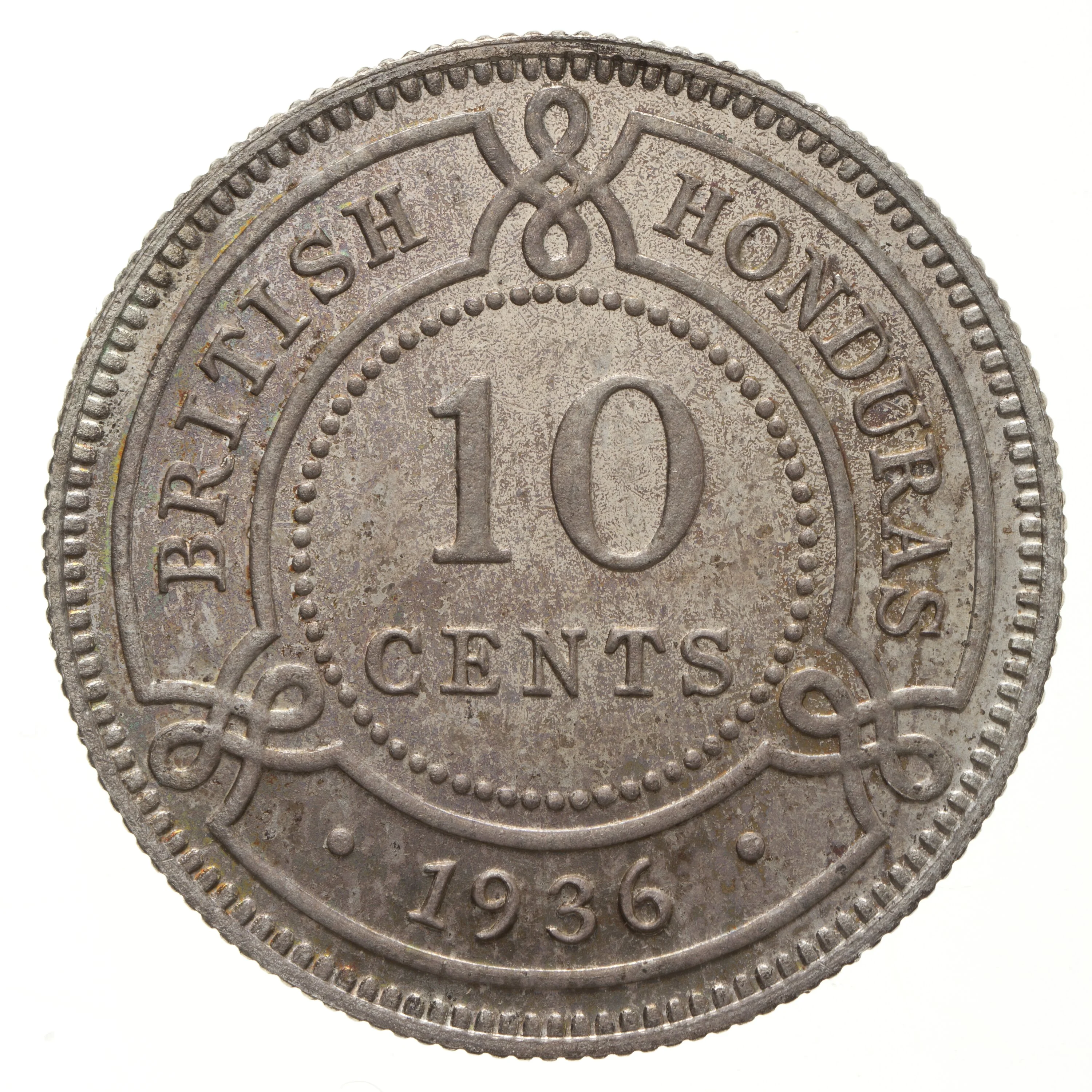
Reverse
Description:
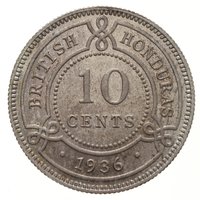
Central beaded circle, toothed rim.
Inscription:
BRITISH HONDURAS
10
CENTS
· 1936 ·
10
CENTS
· 1936 ·
Script: Latin
Edge
Reeded
Categories
| Person> Monarch |
| Mustache/Beard |
| Symbol> Crown |
Mints
| Name | Mark |
|---|---|
| Royal Mint (Tower Hill) | — |
Mintings
| Year | Mint Mark | Mintage | Quality | Collection |
|---|---|---|---|---|
| 1918 | — | 10,000 | ||
| 1919 | — | 10,000 | ||
| 1936 | — | 50 | Proof | |
| 1936 | — | 30,000 |
Historical background
In 1918, the currency situation in British Honduras (modern-day Belize) was characterized by a complex and often unstable system reliant on a foreign medium of exchange. The official currency was the British Honduran dollar, pegged at a fixed rate of 4 shillings 2 pence sterling. However, this unit existed primarily as a unit of account; the physical currency in daily circulation consisted almost entirely of Mexican silver pesos and, to a lesser extent, US dollars. This dependency on Mexican coinage, a legacy of extensive regional trade, created a vulnerable monetary system subject to external fluctuations.
The colony's economy faced significant strain during World War I, which exacerbated the currency's instability. A critical problem was the outflow of silver coins to Mexico, where their intrinsic metal value sometimes exceeded their face value in British Honduras, leading to hoarding and shortages. This scarcity of physical cash hampered local commerce and government finances. Attempts by the colonial government to introduce low-denomination paper notes in 1913 had seen limited success and public distrust, failing to fully resolve the circulation crisis.
Consequently, 1918 found the colony in a protracted monetary dilemma. The administration was caught between the practical necessity of a foreign circulating medium and the need for a stable, controlled currency. This untenable situation would ultimately lead to a major monetary reform the following year, with the introduction of a new, distinct British Honduras dollar in 1919, backed by a newly established Board of Commissioners of Currency and finally replacing the Mexican peso as the physical circulating medium.
The colony's economy faced significant strain during World War I, which exacerbated the currency's instability. A critical problem was the outflow of silver coins to Mexico, where their intrinsic metal value sometimes exceeded their face value in British Honduras, leading to hoarding and shortages. This scarcity of physical cash hampered local commerce and government finances. Attempts by the colonial government to introduce low-denomination paper notes in 1913 had seen limited success and public distrust, failing to fully resolve the circulation crisis.
Consequently, 1918 found the colony in a protracted monetary dilemma. The administration was caught between the practical necessity of a foreign circulating medium and the need for a stable, controlled currency. This untenable situation would ultimately lead to a major monetary reform the following year, with the introduction of a new, distinct British Honduras dollar in 1919, backed by a newly established Board of Commissioners of Currency and finally replacing the Mexican peso as the physical circulating medium.
⭐ Somewhat Rare