

1 Cent – British Honduras
Belize
Context
Years: 1914–1936
Country: Belize 
Issuer: British Honduras
Ruler: George V
Currency:
(1885—1973)
Total mintage: 530,050
Material
References
KM: #Click to copy to clipboard19
Numista: #19837
Obverse
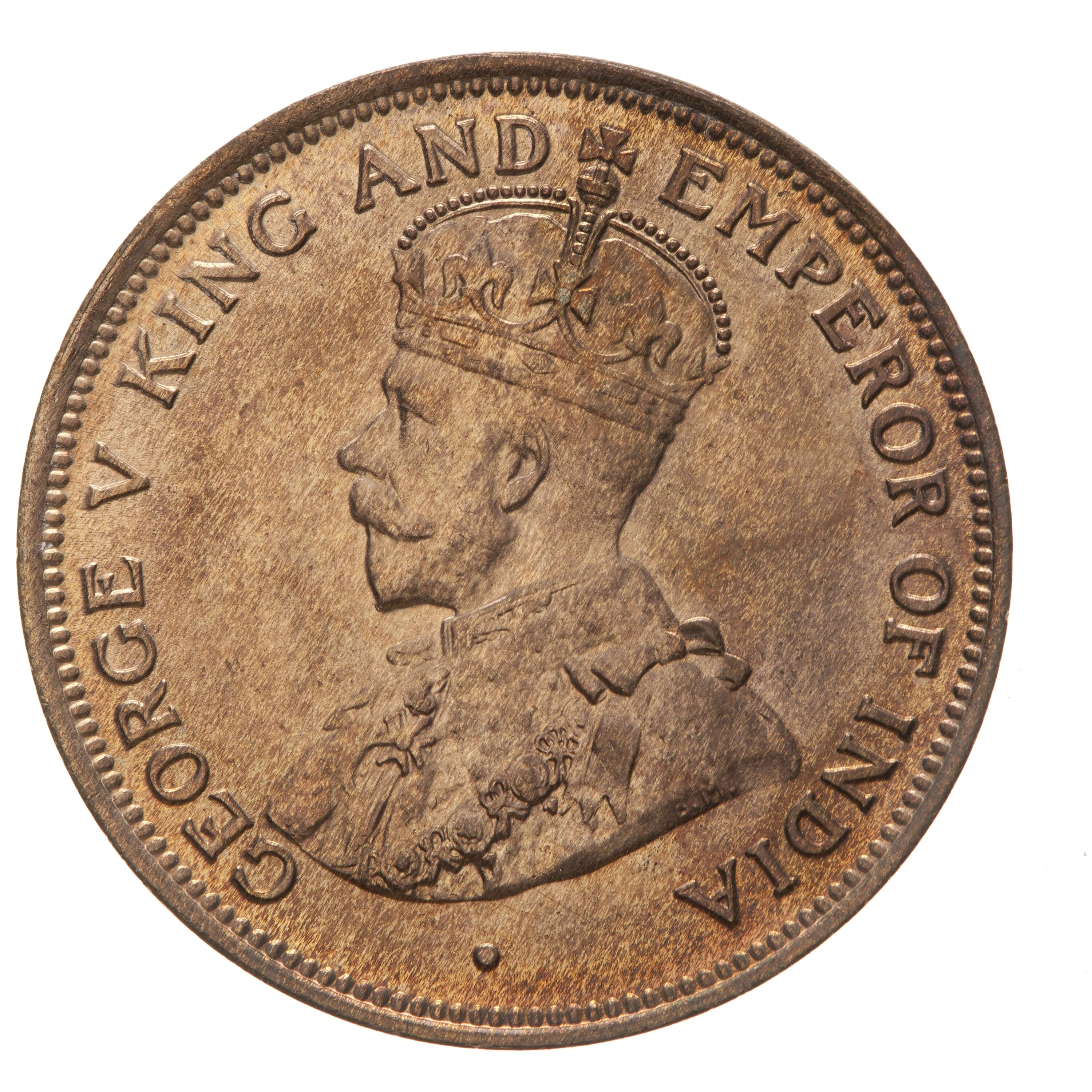
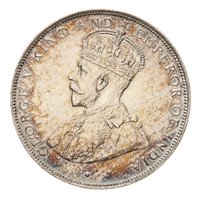
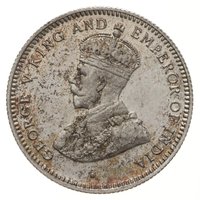
Description:
King George V crowned bust left.
Inscription:
GEORGE V KING AND EMPEROR OF INDIA ·
B.M.
B.M.
Translation:
GEORGE V KING AND EMPEROR OF INDIA ·
B.M.
B.M.
Script: Latin
Language: English
Engraver: Edgar Bertram MacKennal
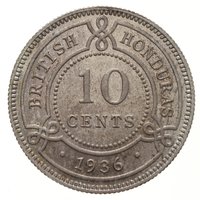
Reverse
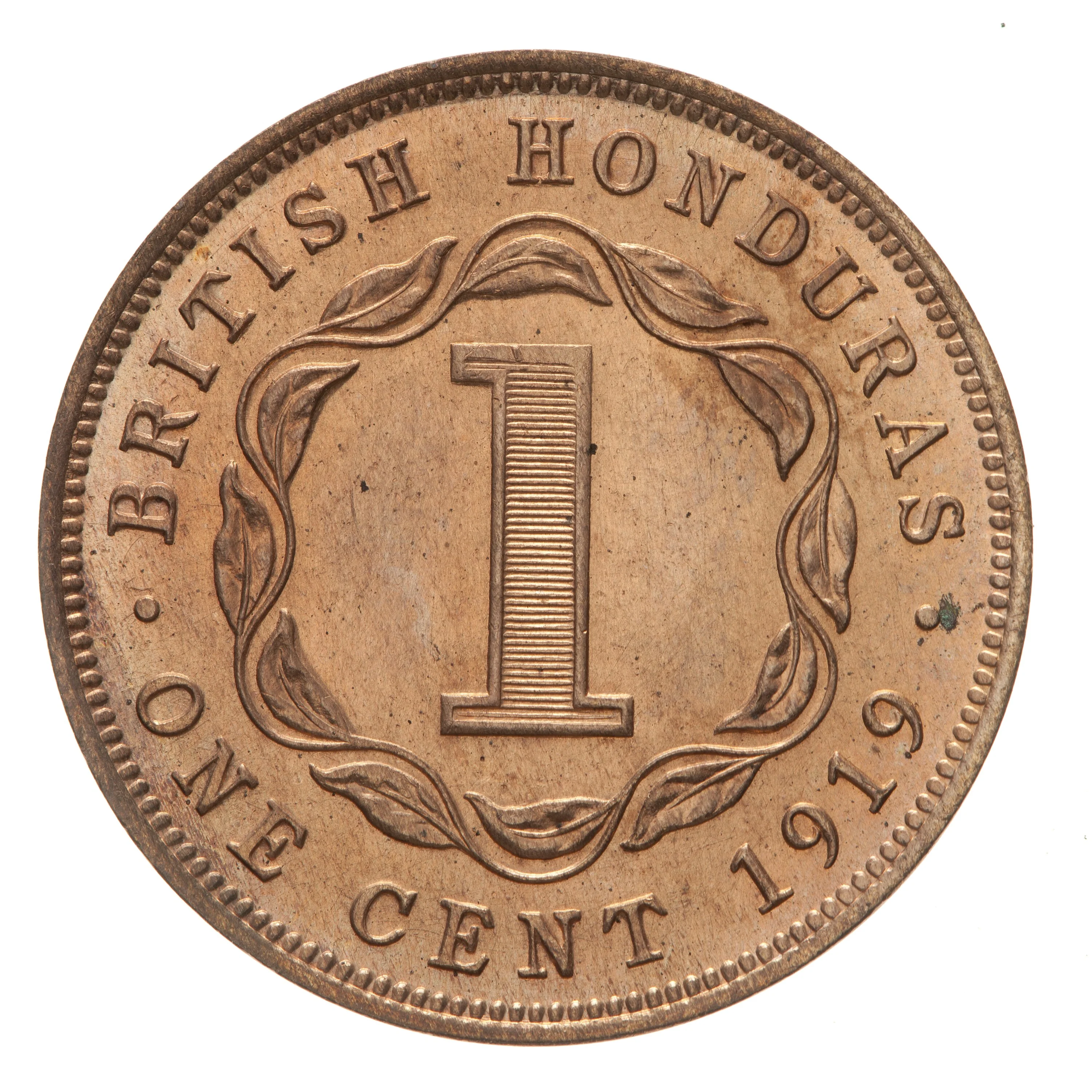
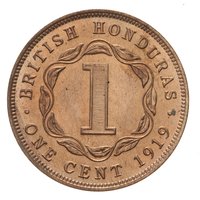
Description:
Scalloped circle with value, denomination and date below.
Inscription:
BRITISH HONDURAS
1
· ONE CENT 1936 ·
1
· ONE CENT 1936 ·
Script: Latin
Edge
Plain
Categories
| Person> Monarch |
| Mustache/Beard |
| Symbol> Crown |
Mints
| Name | Mark |
|---|---|
| Royal Mint (Tower Hill) | — |
| Heaton and Sons / The Mint Birmingham | H |
Mintings
| Year | Mint Mark | Mintage | Quality | Collection |
|---|---|---|---|---|
| 1914 | — | 175,000 | ||
| 1916 | H | 125,000 | ||
| 1918 | — | 40,000 | ||
| 1919 | — | 50,000 | ||
| 1924 | — | 50,000 | ||
| 1924 | — | — | Proof | |
| 1926 | — | 50,000 | ||
| 1926 | — | — | Proof | |
| 1936 | — | 40,000 | ||
| 1936 | — | 50 | Proof |
Historical background
In 1914, the currency situation in British Honduras (modern-day Belize) was characterized by a complex and somewhat informal system dominated by the British Honduran dollar. This currency, pegged at a fixed rate of four shillings two pence sterling, was not a government-issued coin or note but a unit of account maintained by the colony's banks, primarily the Bank of British Honduras. Physical circulation consisted almost entirely of British gold sovereigns and half-sovereigns, along with Mexican and other foreign silver coins, which were accepted at officially decreed rates relative to the dollar unit. This created a system where daily transactions used tangible foreign specie, but bookkeeping and official contracts were calculated in the local dollar.
The system was precarious and often inconvenient. The reliance on a limited supply of imported British gold coin, supplemented by fluctuating volumes of silver from neighbouring countries, led to frequent shortages of physical currency, especially small change. This hindered commerce and prompted the government to periodically authorise the importation of specific foreign coins. Furthermore, the British Honduran dollar's value was not universally recognised outside the colony, complicating regional trade. While sterling was the imperial standard, the local economy functioned on this hybrid practical arrangement.
This monetary landscape reflected the colony's economic position and administrative constraints. As a small, forestry-based export economy (centred on mahogany and chicle), British Honduras was integrated into the sterling area but remained pragmatically connected to the currency flows of the wider Caribbean and Central America. The situation in 1914 highlighted an absence of a formal, state-issued currency, a issue that would eventually lead to the establishment of a Board of Commissioners of Currency in 1894, which first issued government paper notes, and later to the full introduction of a distinctive British Honduras dollar coinage and note issue in 1885.
The system was precarious and often inconvenient. The reliance on a limited supply of imported British gold coin, supplemented by fluctuating volumes of silver from neighbouring countries, led to frequent shortages of physical currency, especially small change. This hindered commerce and prompted the government to periodically authorise the importation of specific foreign coins. Furthermore, the British Honduran dollar's value was not universally recognised outside the colony, complicating regional trade. While sterling was the imperial standard, the local economy functioned on this hybrid practical arrangement.
This monetary landscape reflected the colony's economic position and administrative constraints. As a small, forestry-based export economy (centred on mahogany and chicle), British Honduras was integrated into the sterling area but remained pragmatically connected to the currency flows of the wider Caribbean and Central America. The situation in 1914 highlighted an absence of a formal, state-issued currency, a issue that would eventually lead to the establishment of a Board of Commissioners of Currency in 1894, which first issued government paper notes, and later to the full introduction of a distinctive British Honduras dollar coinage and note issue in 1885.
🌱 Fairly Common