

1 Cent – British Honduras
Belize
Context
Years: 1937–1947
Country: Belize 
Issuer: British Honduras
Ruler: George VI
Currency:
(1885—1973)
Total mintage: 610,000
Material
References
KM: #Click to copy to clipboard21
Numista: #19838
Obverse
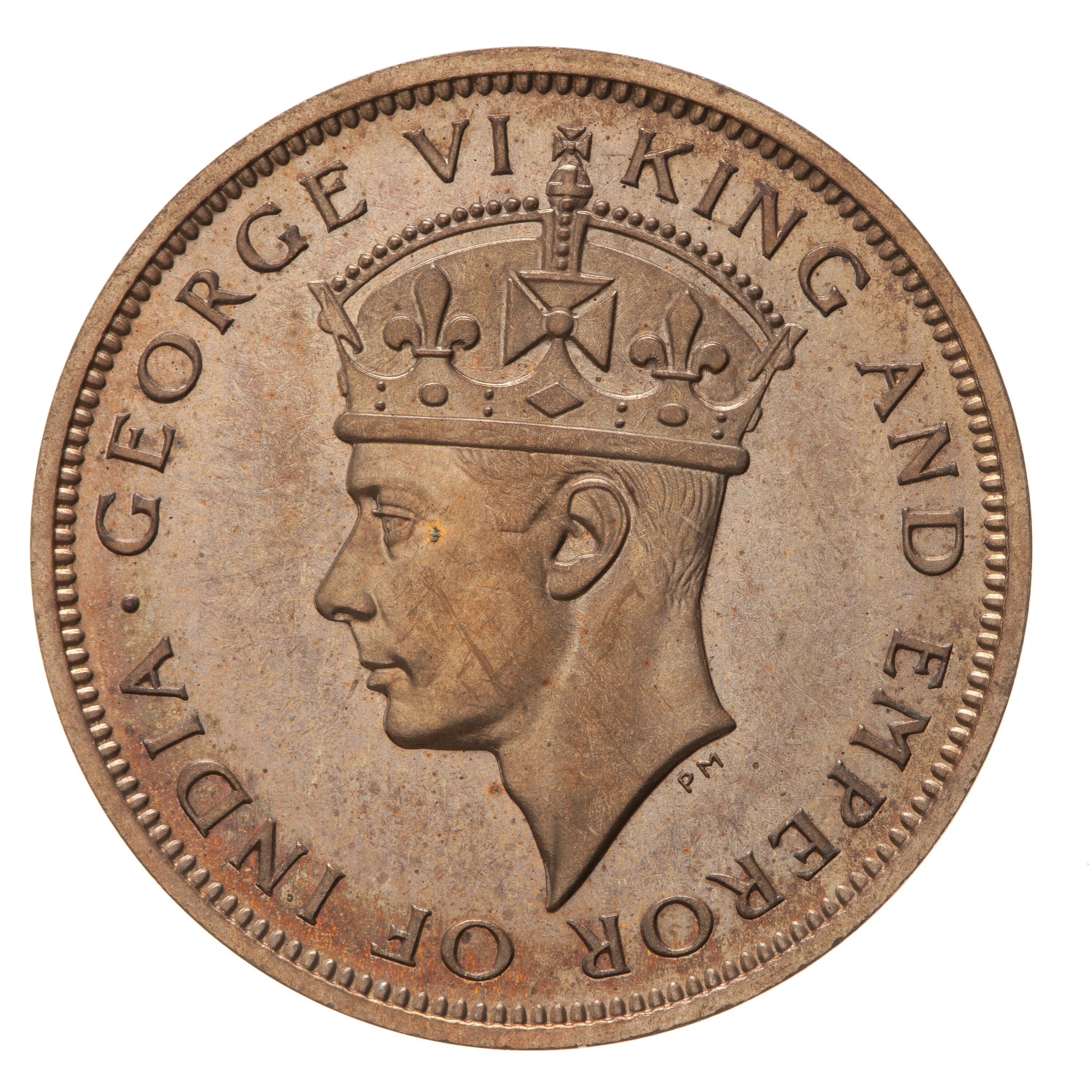
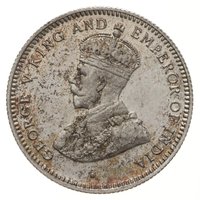
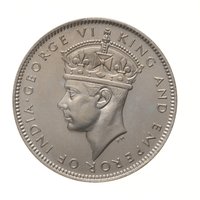
Description:
King George VI facing left.
Inscription:
· GEORGE VI KING AND EMPEROR OF INDIA
PM
PM
Translation:
GEORGE VI KING AND EMPEROR OF INDIA
Script: Latin
Language: English
Engraver: Percy Metcalfe
Reverse
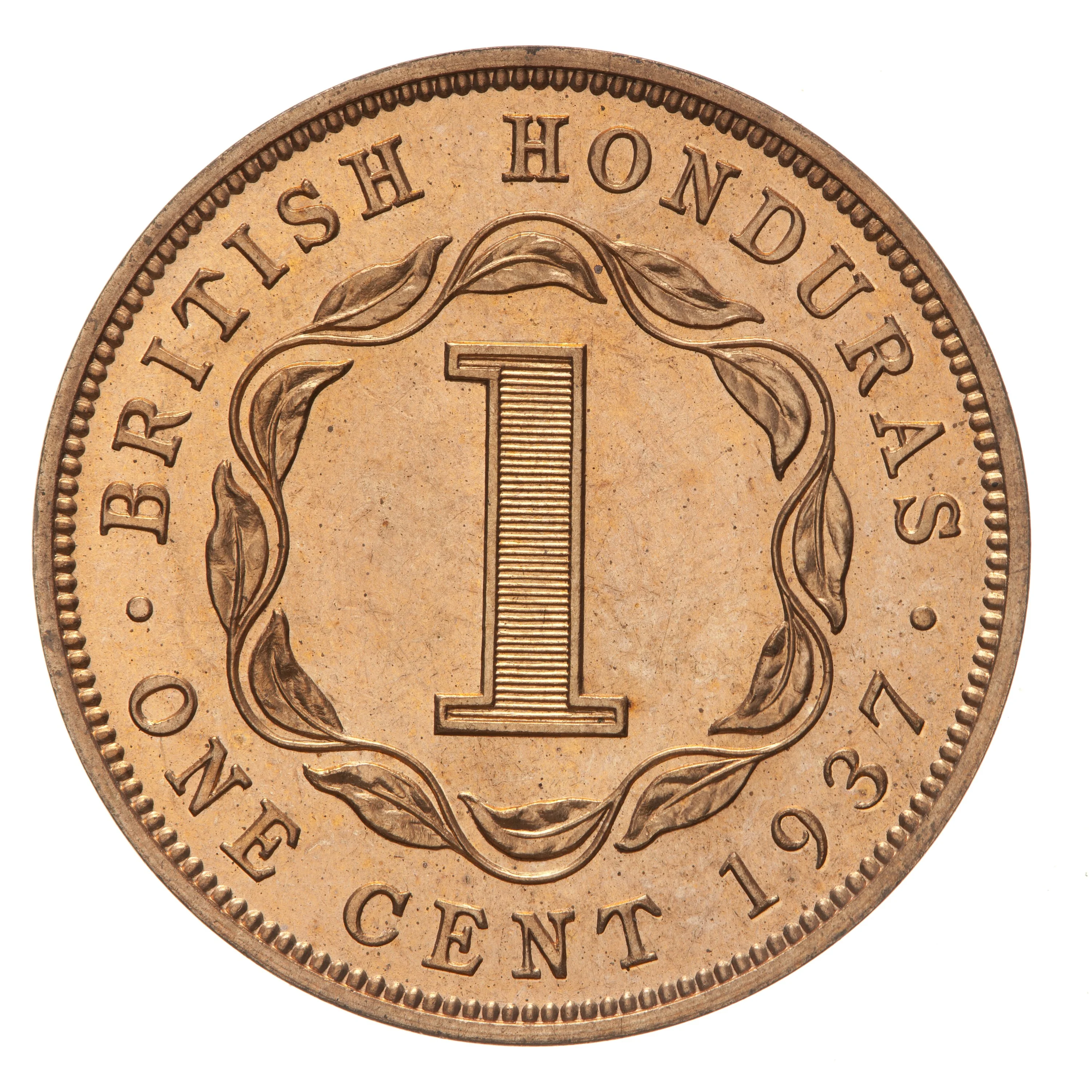
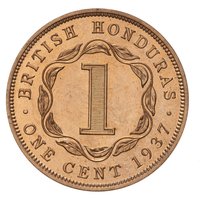
Description:
Denomination in scalloped circle, date beneath.
Inscription:
BRITISH HONDURAS
1
· ONE CENT 1939 ·
1
· ONE CENT 1939 ·
Script: Latin
Edge
Plain
Mints
| Name | Mark |
|---|---|
| Royal Mint (Tower Hill) | — |
Mintings
| Year | Mint Mark | Mintage | Quality | Collection |
|---|---|---|---|---|
| 1937 | — | 80,000 | ||
| 1937 | — | — | Proof | |
| 1939 | — | 50,000 | ||
| 1939 | — | — | Proof | |
| 1942 | — | 50,000 | ||
| 1942 | — | — | Proof | |
| 1943 | — | 100,000 | ||
| 1943 | — | — | Proof | |
| 1944 | — | — | Proof | |
| 1944 | — | 100,000 | ||
| 1945 | — | 130,000 | ||
| 1945 | — | — | Proof | |
| 1947 | — | 100,000 | ||
| 1947 | — | — | Proof |
Historical background
In 1937, the currency situation in British Honduras (modern-day Belize) was defined by its colonial dependency and the lingering effects of the Great Depression. The official currency was the British Honduras dollar, which was pegged at a fixed rate of 4 shillings 2 pence sterling. This peg, established in 1894, firmly tied the colony's monetary system to the British pound sterling, making its economy highly susceptible to decisions made in London and fluctuations in the United Kingdom's own financial health.
The local economy remained heavily reliant on forestry, particularly mahogany and chicle, and a struggling sugar industry. The Depression had severely depressed global demand for these exports, leading to widespread unemployment and a constricted money supply. While the currency peg provided a measure of stability, it also limited the government's ability to pursue independent monetary policy to stimulate the local economy. There was little to no local banking development; financial services were dominated by a few British commercial banks and the colonial government itself.
Notably, British Honduras was an outlier in the region, as most surrounding Central American republics and Mexico operated on a silver dollar standard or their own independent systems. Furthermore, despite the official sterling peg, U.S. dollars and Mexican pesos circulated freely and were widely accepted in border areas and for certain trades, reflecting the colony's practical economic connections with its neighbors. Thus, the currency situation in 1937 was one of formal colonial rigidity superimposed on a local reality of economic hardship and informal monetary pluralism.
The local economy remained heavily reliant on forestry, particularly mahogany and chicle, and a struggling sugar industry. The Depression had severely depressed global demand for these exports, leading to widespread unemployment and a constricted money supply. While the currency peg provided a measure of stability, it also limited the government's ability to pursue independent monetary policy to stimulate the local economy. There was little to no local banking development; financial services were dominated by a few British commercial banks and the colonial government itself.
Notably, British Honduras was an outlier in the region, as most surrounding Central American republics and Mexico operated on a silver dollar standard or their own independent systems. Furthermore, despite the official sterling peg, U.S. dollars and Mexican pesos circulated freely and were widely accepted in border areas and for certain trades, reflecting the colony's practical economic connections with its neighbors. Thus, the currency situation in 1937 was one of formal colonial rigidity superimposed on a local reality of economic hardship and informal monetary pluralism.
🌱 Common