

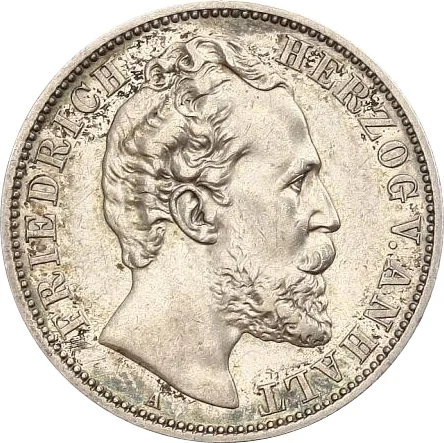
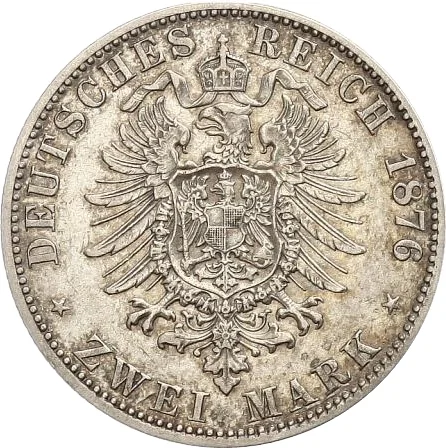
2 marks – Anhalt-Dessau
Add to wishlist
Germany
Context
Year: 1876
Country: Germany
Issuer: Anhalt-Dessau
Ruler: Frederick I
Currency:
Demonetized: Yes
Total mintage: 200,000
Material
References
KM: #
Numista: #20518
Value
Bullion value: $25.45
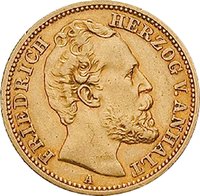
Obverse
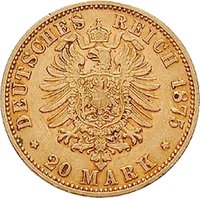
Reverse
Edge
Reeded.
Mints
| Name | Mark |
|---|---|
| Berlin | A |
Mintings
| Year | Mint Mark | Mintage | Quality | Collection |
|---|---|---|---|---|
| 1876 | A | 200,000 |
Historical background
In 1876, the currency situation in the Duchy of Anhalt-Dessau (and the unified Anhalt duchies) was one of transition and integration within the broader framework of the new German Empire. Following the unification of Germany in 1871, the Reichstag passed the Coinage Act of 1873, which established the Goldmark as the sole imperial currency, replacing the myriad of regional thalers, gulden, and kreuzers that had previously circulated. As a constituent state of the Empire, Anhalt-Dessau was legally obligated to adopt this new standard, phasing out its own Anhalt Vereinsthaler which had been pegged to the Prussian Thaler.
The transition, however, was not instantaneous. While the new gold coins were issued by the central Reichsbank, older silver thalers remained legal tender until a final withdrawal date, which would be set later (ultimately in 1907). Consequently, in 1876, both the new imperial Goldmark and the older Anhalt and North German Thaler coins circulated side-by-side at the fixed exchange rate of 3 Marks = 1 Thaler. This created a practical, if temporary, bimetallic system in daily commerce, requiring merchants and citizens to be conversant with both units.
Therefore, the background for Anhalt-Dessau in 1876 is characterized not by monetary crisis but by administrative compliance and gradual change. The duchy’s monetary sovereignty had been ceded to Berlin, and its economic focus shifted to aligning its banking and accounting practices with the imperial standard. This move was part of a deliberate policy to foster economic and political unity across Germany, reducing transaction costs and tying Anhalt-Dessau's economy more tightly into the burgeoning national market.
The transition, however, was not instantaneous. While the new gold coins were issued by the central Reichsbank, older silver thalers remained legal tender until a final withdrawal date, which would be set later (ultimately in 1907). Consequently, in 1876, both the new imperial Goldmark and the older Anhalt and North German Thaler coins circulated side-by-side at the fixed exchange rate of 3 Marks = 1 Thaler. This created a practical, if temporary, bimetallic system in daily commerce, requiring merchants and citizens to be conversant with both units.
Therefore, the background for Anhalt-Dessau in 1876 is characterized not by monetary crisis but by administrative compliance and gradual change. The duchy’s monetary sovereignty had been ceded to Berlin, and its economic focus shifted to aligning its banking and accounting practices with the imperial standard. This move was part of a deliberate policy to foster economic and political unity across Germany, reducing transaction costs and tying Anhalt-Dessau's economy more tightly into the burgeoning national market.
💎 Extremely Rare