

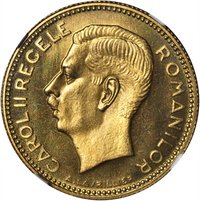
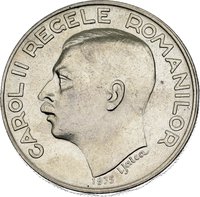
Obverse
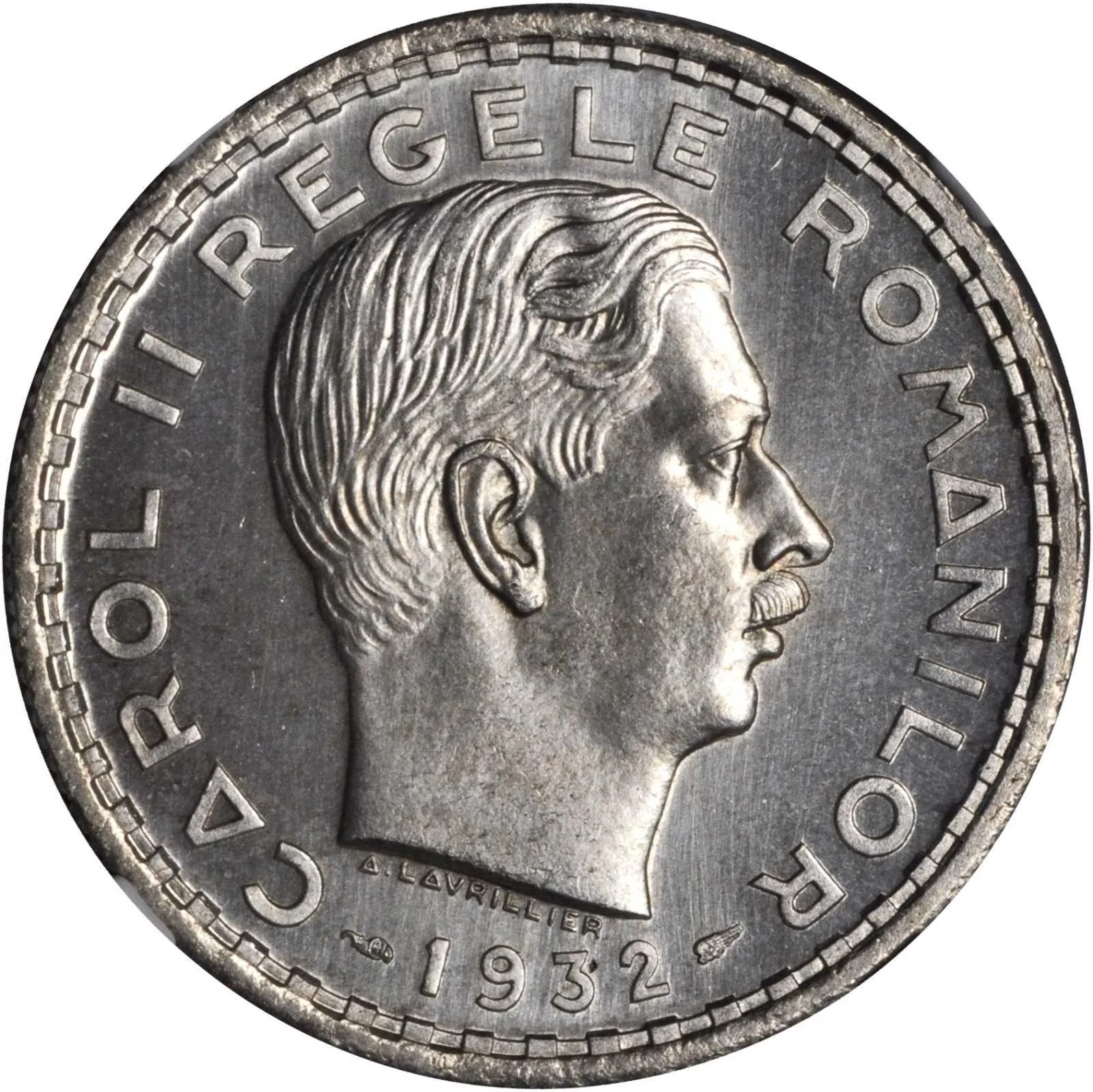
Description:
Go right
Inscription:
CAROL II REGELE ROMANILOR
A. LAVRILLIER
1932
A. LAVRILLIER
1932
Translation:
CAROL II KING OF THE ROMANIANS
A. LAVRILLIER
1932
A. LAVRILLIER
1932
Script: Latin
Engraver: André-Henri Lavrillier
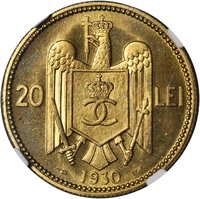
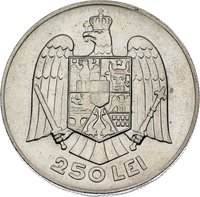
Reverse
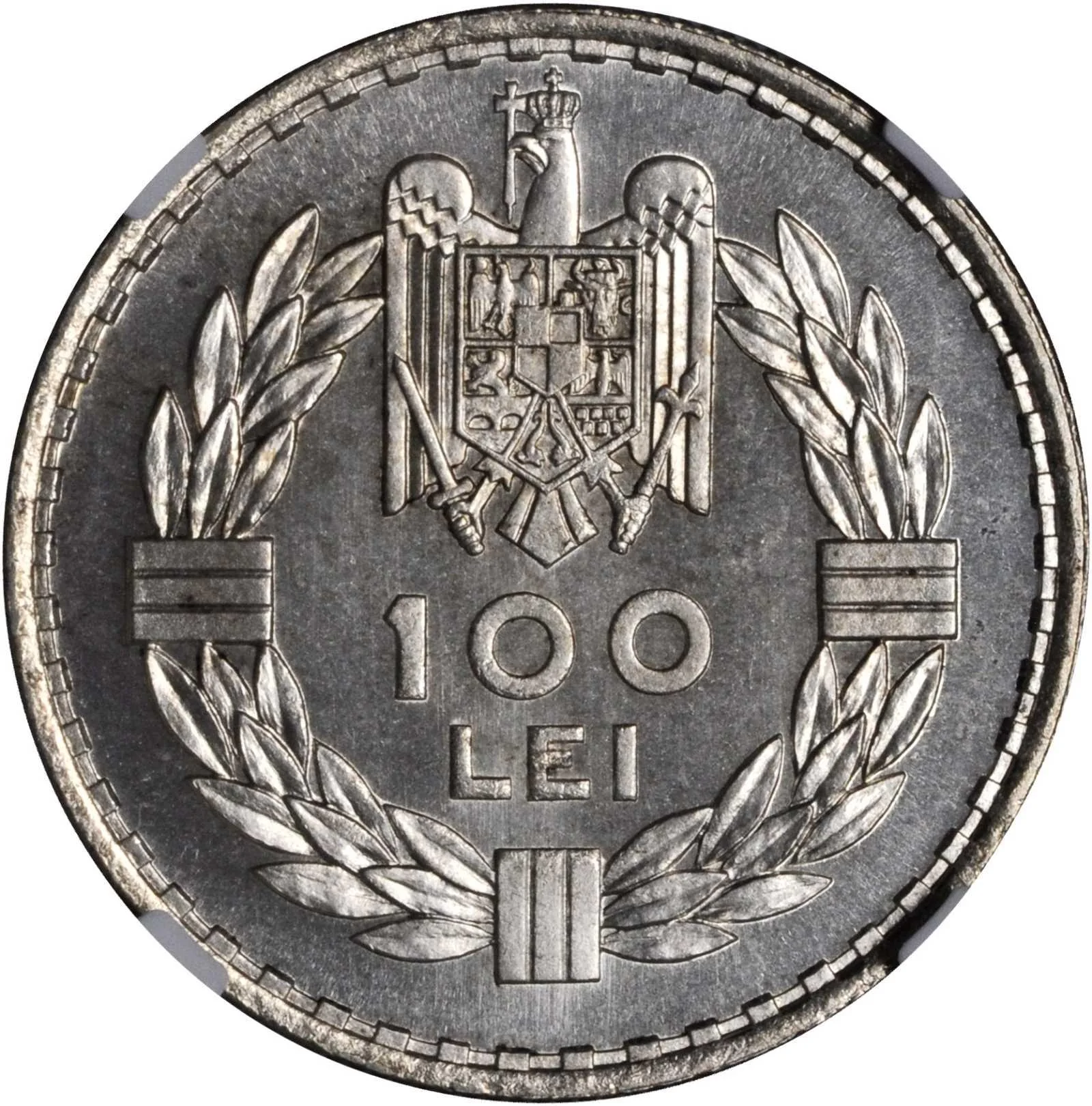
Description:
Crowned eagle holding a wreath with value inside.
Inscription:
100
LEI
LEI
Script: Latin
Engraver: André-Henri Lavrillier
Edge
Reeded
Mintings
| Year | Mint Mark | Mintage | Quality | Collection |
|---|---|---|---|---|
| 1932 | — | 2,000,000 | ||
| 1932 | — | — | Proof |
Historical background
In 1932, Romania was grappling with the severe economic repercussions of the Great Depression, which had fully engulfed the agrarian nation by 1930. The crisis caused a catastrophic collapse in global agricultural prices, devastating Romania's primary export sector and leading to a massive trade deficit. This resulted in a critical shortage of foreign currency (especially gold, French francs, and British pounds), essential for servicing the substantial external debts contracted during the prosperous 1920s. The National Bank of Romania's reserves were under immense strain, forcing the government to implement strict exchange controls and prioritize debt payments over domestic economic needs.
The domestic currency, the leu, was under intense pressure, but its official gold parity was artificially maintained through deflationary policies. This "defend the leu at all costs" approach, championed by Governor Mihail Manoilescu of the National Bank, came at a tremendous social cost. To conserve gold, the government slashed spending, raised taxes, and restricted imports, plunging the country into a deep deflationary spiral. Prices and wages fell dramatically, credit evaporated, and industrial production slumped, leading to widespread business failures and severe urban unemployment.
This rigid monetary policy created significant political and economic tensions. While it preserved Romania's international creditworthiness for a time, it exacerbated the depression's impact on the population and fueled social unrest. The situation laid bare the fundamental vulnerability of Romania's economy and set the stage for a shift in policy. By the mid-1930s, the strategy would be abandoned in favor of managed devaluation, industrial protectionism, and closer economic ties with Nazi Germany to secure markets and resources.
The domestic currency, the leu, was under intense pressure, but its official gold parity was artificially maintained through deflationary policies. This "defend the leu at all costs" approach, championed by Governor Mihail Manoilescu of the National Bank, came at a tremendous social cost. To conserve gold, the government slashed spending, raised taxes, and restricted imports, plunging the country into a deep deflationary spiral. Prices and wages fell dramatically, credit evaporated, and industrial production slumped, leading to widespread business failures and severe urban unemployment.
This rigid monetary policy created significant political and economic tensions. While it preserved Romania's international creditworthiness for a time, it exacerbated the depression's impact on the population and fueled social unrest. The situation laid bare the fundamental vulnerability of Romania's economy and set the stage for a shift in policy. By the mid-1930s, the strategy would be abandoned in favor of managed devaluation, industrial protectionism, and closer economic ties with Nazi Germany to secure markets and resources.
🌱 Fairly Common