

¼ Dollar – British West Indies
Context
Years: 1820–1822
Issuer: British West Indies
Ruler: George IV
Currency:
Demonetized: Yes
Total mintage: 100,000
Material
References
KM: #Click to copy to clipboard3
Numista: #20290
Value
Bullion value: $17.42
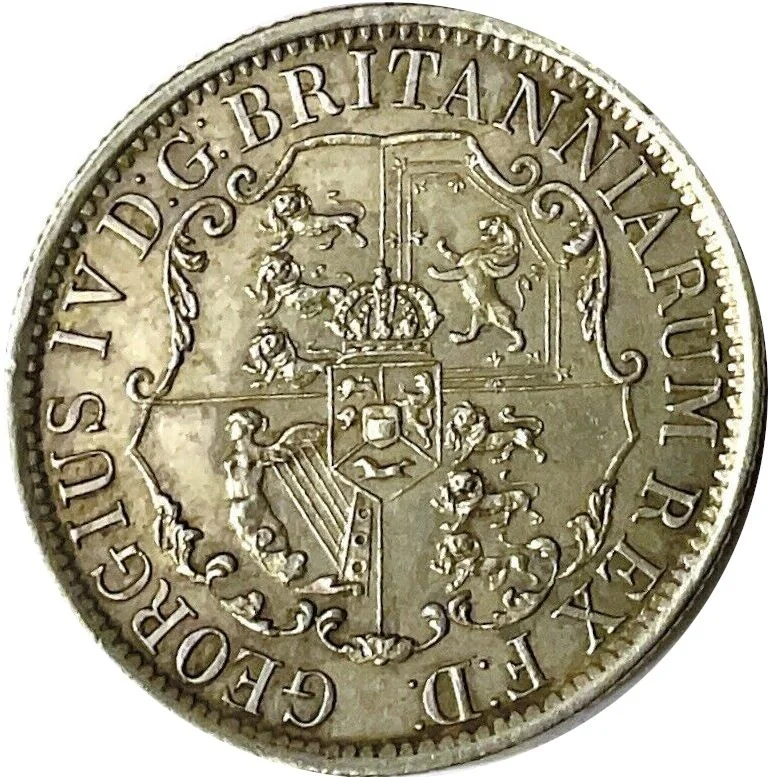
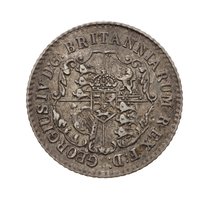
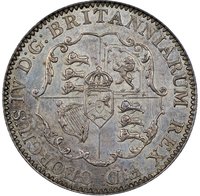
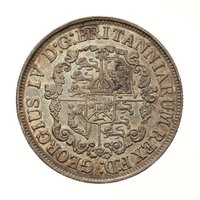
Obverse
Description:
Heraldic shield
Inscription:
GEORGIVS IV D:G: BRITANNIARUM REX F:D:
Translation:
George IV by the Grace of God King of the Britains Defender of the Faith
Script: Latin
Language: Latin
Engraver: William Wyon
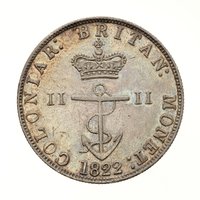
Reverse
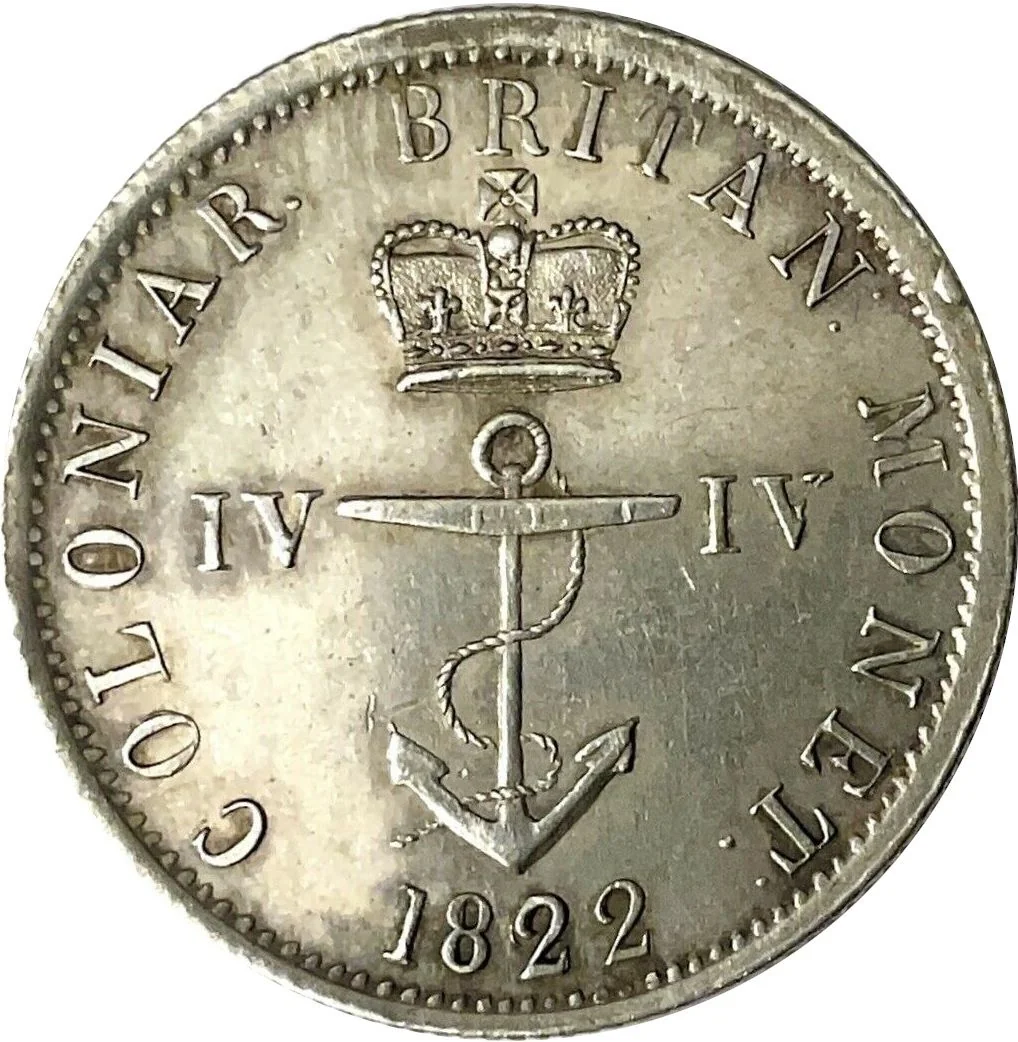
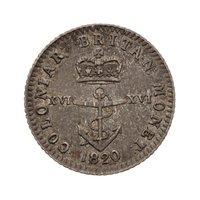
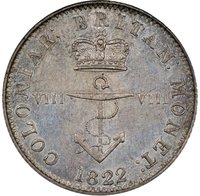
Description:
Crowned anchor.
Inscription:
COLONIAR: BRITAN: MONET:
IV IV
1822
IV IV
1822
Translation:
COLONIES OF BRITAIN: MONEY:
4 4
1822
4 4
1822
Script: Latin
Language: Latin
Engraver: William Wyon
Edge
Mints
| Name | Mark |
|---|---|
| Royal Mint (Tower Hill) | — |
Mintings
| Year | Mint Mark | Mintage | Quality | Collection |
|---|---|---|---|---|
| 1820 | — | 100,000 | ||
| 1820 | — | — | Proof | |
| 1822 | — | — | ||
| 1822 | — | — | Proof |
Historical background
In 1820, the British West Indies faced a complex and often chaotic currency situation, characterized by a severe shortage of official British coinage. The region’s plantation economy, built on sugar and slavery, generated substantial wealth but operated with a dysfunctional monetary system. While accounts were kept in pounds, shillings, and pence sterling, physical coins were scarce, leading to a heavy reliance on a confusing array of foreign coins, primarily Spanish dollars and their cut fractions (bits), which circulated alongside Portuguese joes and Dutch guilders. This patchwork system created constant difficulties in trade and accounting, as the value of these foreign coins fluctuated and was often set by local proclamation.
The British government's attempts to impose order, notably through the 1825 Order in Council that introduced British sterling coinage as the sole legal tender, had not yet been implemented. Consequently, the currency landscape was largely defined by local improvisation. Planters and merchants frequently used currency tokens issued by private estates or local banks, and even resorted to book credit and barter for everyday transactions. The enslaved population, participating in internal markets, often used low-value coins like the Spanish copper maravedí or commodity money.
Underpinning this monetary confusion was the profound social inequality of the slave society. The system primarily served the needs of the planter class and merchant creditors in their transactions with Britain, while leaving the majority of the population—the enslaved Africans—largely excluded from the formal cash economy. The currency situation, therefore, was not merely an economic inconvenience but a reflection of the colonial and exploitative structure of the islands, where financial instruments were designed to facilitate the export of agricultural wealth to Europe rather than to foster a stable, internal cash economy for all inhabitants.
The British government's attempts to impose order, notably through the 1825 Order in Council that introduced British sterling coinage as the sole legal tender, had not yet been implemented. Consequently, the currency landscape was largely defined by local improvisation. Planters and merchants frequently used currency tokens issued by private estates or local banks, and even resorted to book credit and barter for everyday transactions. The enslaved population, participating in internal markets, often used low-value coins like the Spanish copper maravedí or commodity money.
Underpinning this monetary confusion was the profound social inequality of the slave society. The system primarily served the needs of the planter class and merchant creditors in their transactions with Britain, while leaving the majority of the population—the enslaved Africans—largely excluded from the formal cash economy. The currency situation, therefore, was not merely an economic inconvenience but a reflection of the colonial and exploitative structure of the islands, where financial instruments were designed to facilitate the export of agricultural wealth to Europe rather than to foster a stable, internal cash economy for all inhabitants.
🌟 Limited