

½ Dollar – British West Indies
Context
Years: 1821–1822
Issuer: British West Indies
Ruler: George IV
Currency:
Demonetized: Yes
Total mintage: 1
Material
References
KM: #Click to copy to clipboard4
Numista: #20291
Value
Bullion value: $34.75
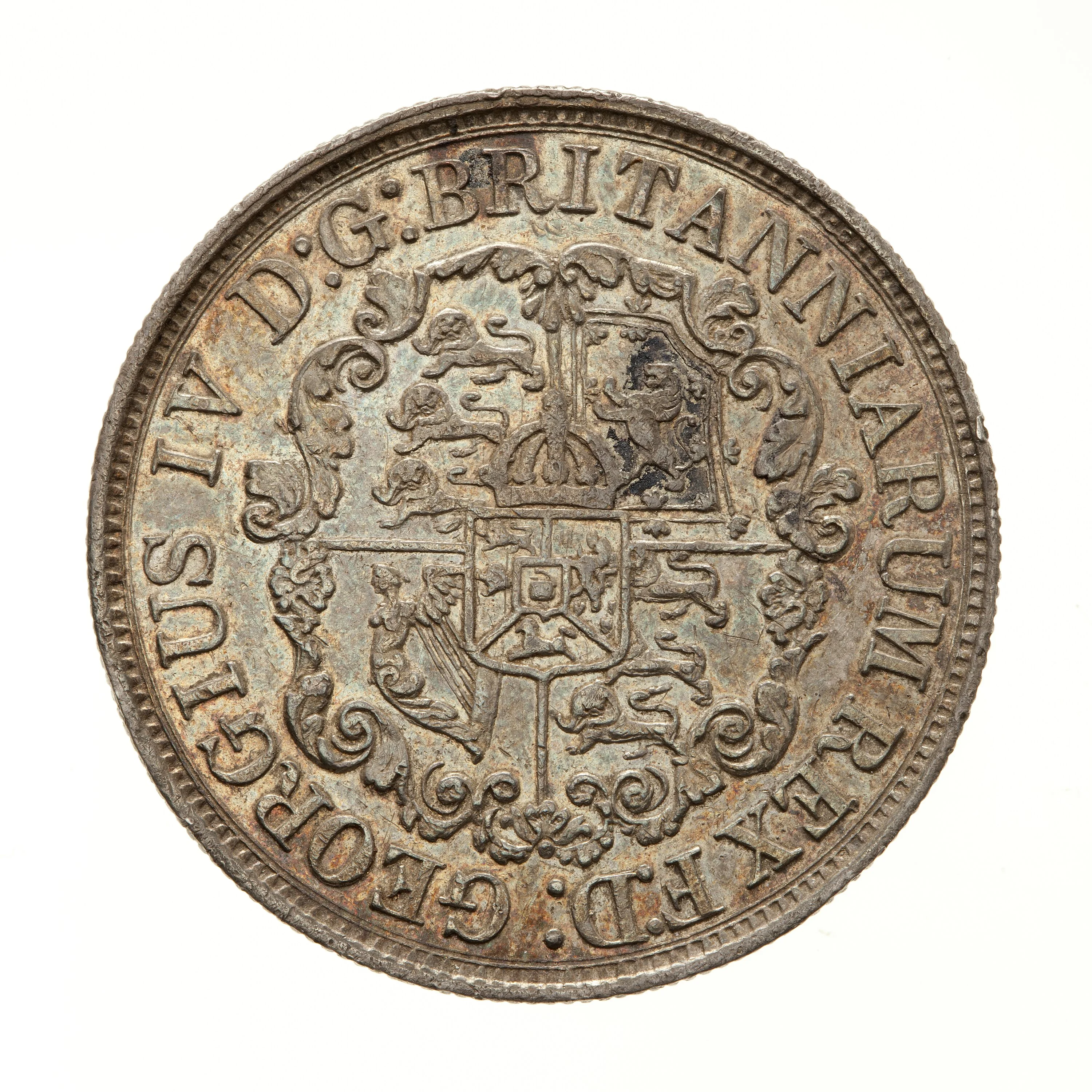
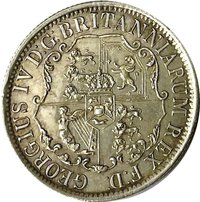
Obverse
Description:
Heraldic shield
Inscription:
GEORGIVS IV D:G: BRITANNIARUM REX F:D:
Translation:
George IV by the Grace of God King of the Britains Defender of the Faith
Script: Latin
Language: Latin
Engraver: William Wyon
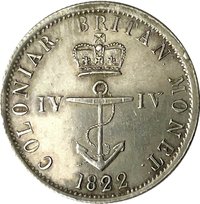
Reverse
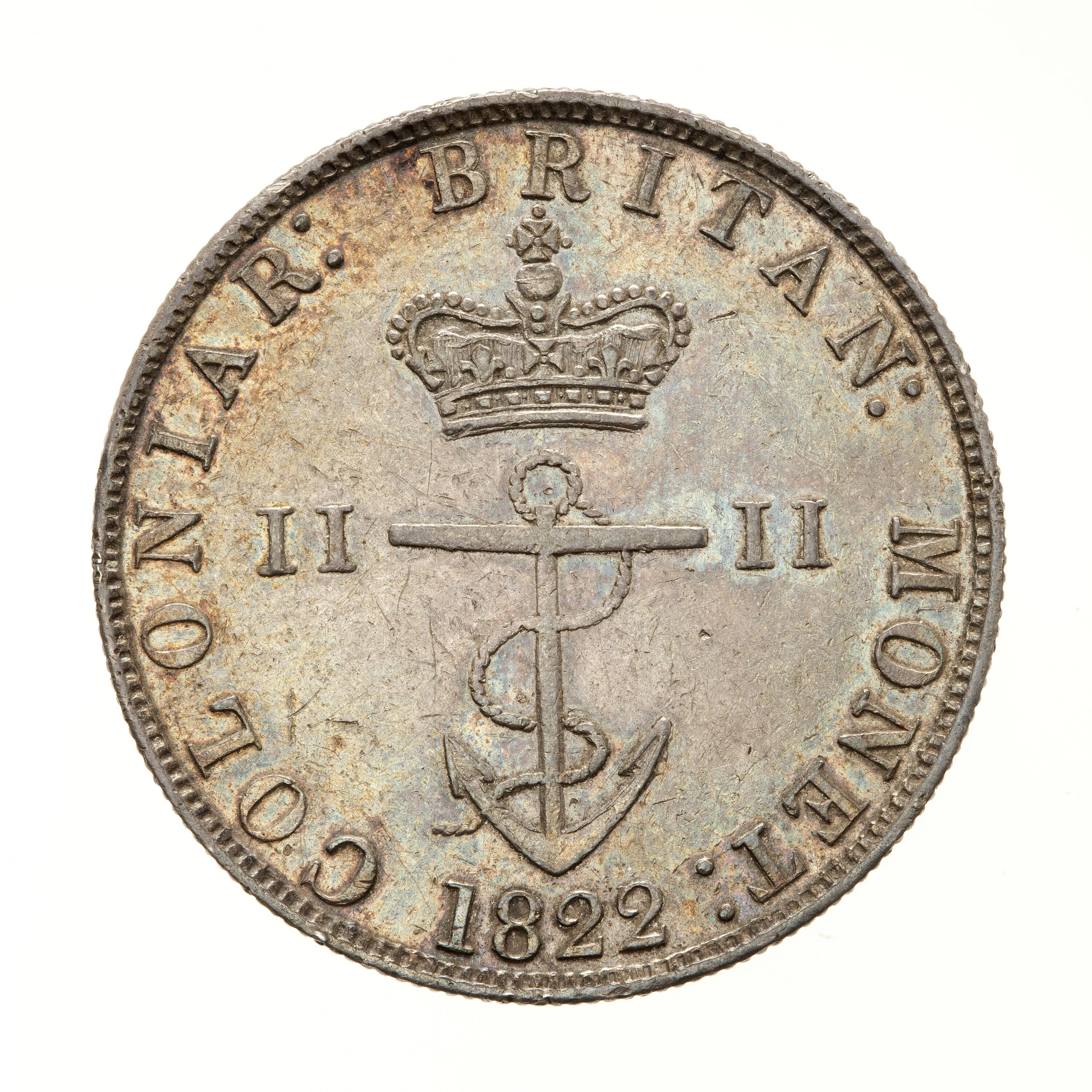
Description:
Crowned anchor.
Inscription:
COLONIAR: BRITAN: MONET:
II II
1822
II II
1822
Translation:
Money of the British Colonies
II II
1822
II II
1822
Script: Latin
Language: Latin
Engraver: William Wyon
Edge
Mints
| Name | Mark |
|---|---|
| Royal Mint (Tower Hill) | — |
Mintings
| Year | Mint Mark | Mintage | Quality | Collection |
|---|---|---|---|---|
| 1821 | — | 1 | Proof | |
| 1822 | — | — | ||
| 1822 | — | — | Proof |
Historical background
In 1821, the British West Indies faced a complex and problematic currency situation, characterised by a severe shortage of official coinage and a chaotic proliferation of foreign and makeshift currencies. The islands operated on a sterling standard, but the British government consistently failed to supply sufficient gold and silver coin to facilitate local trade and, crucially, the payment of taxes, which were demanded in sterling. This chronic scarcity was exacerbated by the region's negative balance of trade with Britain, as export earnings from sugar and other commodities were often directly remitted to London to pay planters' debts, draining coin from the colonies.
To fill the void, a wide array of foreign coins circulated, primarily Spanish and Portuguese gold and silver pieces, notably the Spanish dollar (piece of eight). Their value, however, was not fixed by simple proclamation but was subject to volatile local "ratings" set by each island's assembly, often at artificially high values to attract and retain coin. This led to confusion, arbitrage, and monetary instability across the region. Furthermore, in many islands, the shortage was so acute that planters resorted to using informal "currency tokens" or "tickets"—privately issued and often depreciated paper notes—to pay enslaved labourers and settle local accounts, creating a fragile and exploitative internal credit system.
The British government viewed this disordered system with increasing concern, as it hindered imperial commerce and revenue collection. The year 1821 was particularly significant as it followed the UK's own recoinage in 1816 (establishing the gold sovereign) and preceded a major imperial policy shift. In 1822, a pivotal Order in Council would begin to formally address the chaos by rating the Spanish dollar at a uniform 4s 4d sterling across most of the region, a step toward the eventual introduction of a unified British West Indian dollar in the 1830s. Thus, 1821 represents the final year of an entrenched, dysfunctional monetary patchwork before concerted imperial intervention.
To fill the void, a wide array of foreign coins circulated, primarily Spanish and Portuguese gold and silver pieces, notably the Spanish dollar (piece of eight). Their value, however, was not fixed by simple proclamation but was subject to volatile local "ratings" set by each island's assembly, often at artificially high values to attract and retain coin. This led to confusion, arbitrage, and monetary instability across the region. Furthermore, in many islands, the shortage was so acute that planters resorted to using informal "currency tokens" or "tickets"—privately issued and often depreciated paper notes—to pay enslaved labourers and settle local accounts, creating a fragile and exploitative internal credit system.
The British government viewed this disordered system with increasing concern, as it hindered imperial commerce and revenue collection. The year 1821 was particularly significant as it followed the UK's own recoinage in 1816 (establishing the gold sovereign) and preceded a major imperial policy shift. In 1822, a pivotal Order in Council would begin to formally address the chaos by rating the Spanish dollar at a uniform 4s 4d sterling across most of the region, a step toward the eventual introduction of a unified British West Indian dollar in the 1830s. Thus, 1821 represents the final year of an entrenched, dysfunctional monetary patchwork before concerted imperial intervention.
💎 Extremely Rare