

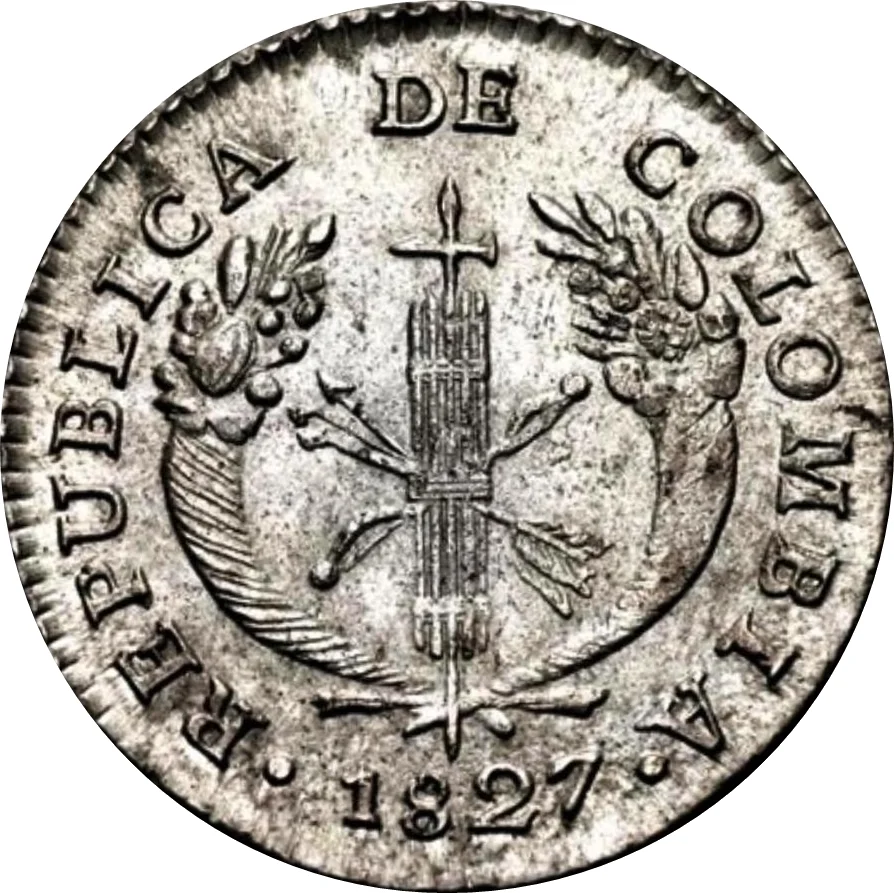
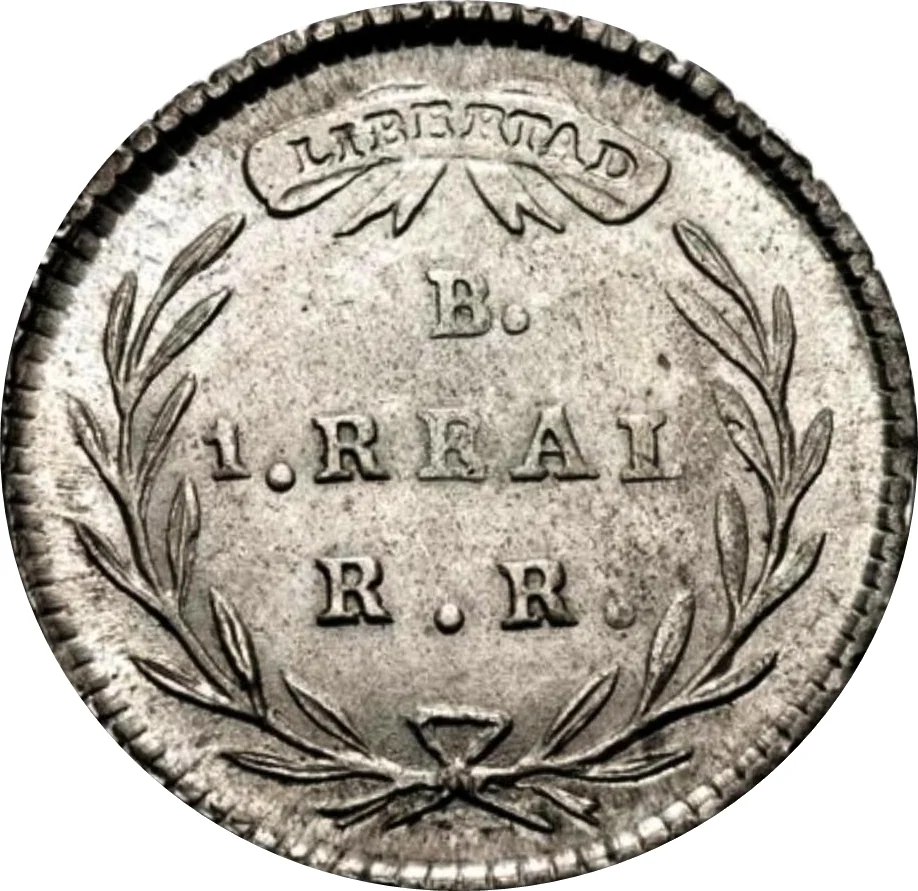
1 real – Colombia
Add to wishlist
Colombia
Context
Material
Diameter: 19 mm
Weight: 3.1 g
Silver Weight:: 2.06 g
Shape: Round
Composition: 66.6% Silver
Standard: Gold tenth ounce
Magnetic: No
Technique: Milled
Alignment: Coin alignment
flip
References
KM: #
Numista: #20272
Value
Bullion value: $5.15
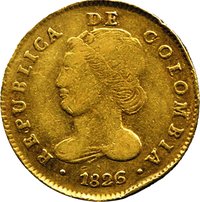
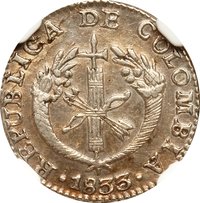
Obverse
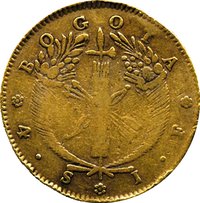
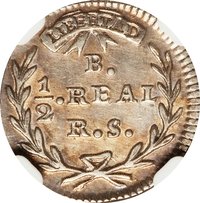
Reverse
Edge
Categories
| Symbol> Cornucopia |
| Symbol> Fasces |
Mints
| Name | Mark |
|---|---|
| Bogota Mint | B |
| Bogota Mint | BA |
| Casa de Moneda de Colombia | PN |
Mintings
| Year | Mint Mark | Mintage | Quality | Collection |
|---|---|---|---|---|
| 1827 | RR | — | ||
| 1827 | RU | — | ||
| 1828 | MF | — | ||
| 1828 | RR | — | ||
| 1828 | RS | — | ||
| 1828 | RU | — | ||
| 1829 | MF | — | ||
| 1829 | RS | — | ||
| 1829 | RU | — | ||
| 1830 | RU | — | ||
| 1831 | RU | — | ||
| 1832 | RU | — | ||
| 1833 | RS | — | ||
| 1833 | RU | — | ||
| 1834 | RS | — | ||
| 1834 | RU | — | ||
| 1835 | RS | — | ||
| 1836 | RS | — |
Historical background
In 1827, the Republic of Gran Colombia—encompassing present-day Colombia, Venezuela, Ecuador, and Panama—faced a severe and multifaceted monetary crisis. The fledgling nation, born from the wars of independence against Spain, inherited a chaotic patchwork of circulating currency. This included not only the official republican coinage (the peso and real), but also a vast quantity of worn and clipped Spanish colonial coins, and even counterfeit money. The lack of a unified, trusted currency system severely hampered domestic commerce and state finances, creating an environment of uncertainty for merchants and citizens alike.
The core of the problem was a critical shortage of specie, particularly silver. Years of war had drained precious metals from the economy, and the government, under the leadership of Simón Bolívar, lacked the bullion reserves to mint sufficient new coinage. To finance public debts and the costs of administration, the state resorted to issuing paper money, but these bills were not widely accepted beyond major cities and quickly depreciated. This led to a classic divergence between the official face value of coins and their actual market value based on metal content, causing Gresham's Law ("bad money drives out good money") to operate in full force, as people hoarded full-weight coins.
This monetary instability was both a cause and a symptom of the larger political fractures threatening Gran Colombia. Regional economic interests clashed, with Caracas and Bogotá often at odds over fiscal policy. The inability to establish a sound, centralized currency undermined the authority of the central government in Bogotá and fueled separatist sentiments, particularly in Venezuela. Thus, the currency chaos of 1827 was not merely an economic issue but a fundamental challenge to the viability of the union itself, foreshadowing its dissolution just three years later.
The core of the problem was a critical shortage of specie, particularly silver. Years of war had drained precious metals from the economy, and the government, under the leadership of Simón Bolívar, lacked the bullion reserves to mint sufficient new coinage. To finance public debts and the costs of administration, the state resorted to issuing paper money, but these bills were not widely accepted beyond major cities and quickly depreciated. This led to a classic divergence between the official face value of coins and their actual market value based on metal content, causing Gresham's Law ("bad money drives out good money") to operate in full force, as people hoarded full-weight coins.
This monetary instability was both a cause and a symptom of the larger political fractures threatening Gran Colombia. Regional economic interests clashed, with Caracas and Bogotá often at odds over fiscal policy. The inability to establish a sound, centralized currency undermined the authority of the central government in Bogotá and fueled separatist sentiments, particularly in Venezuela. Thus, the currency chaos of 1827 was not merely an economic issue but a fundamental challenge to the viability of the union itself, foreshadowing its dissolution just three years later.
⭐ Somewhat Rare