

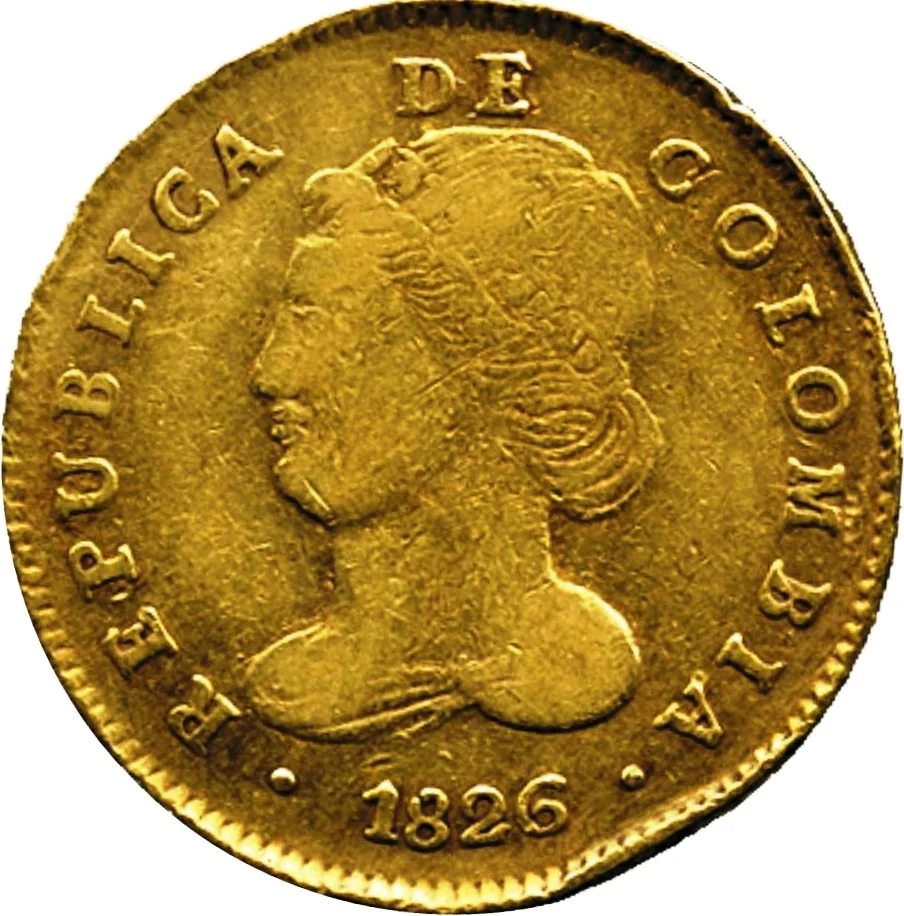
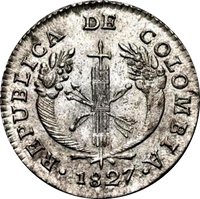
Obverse
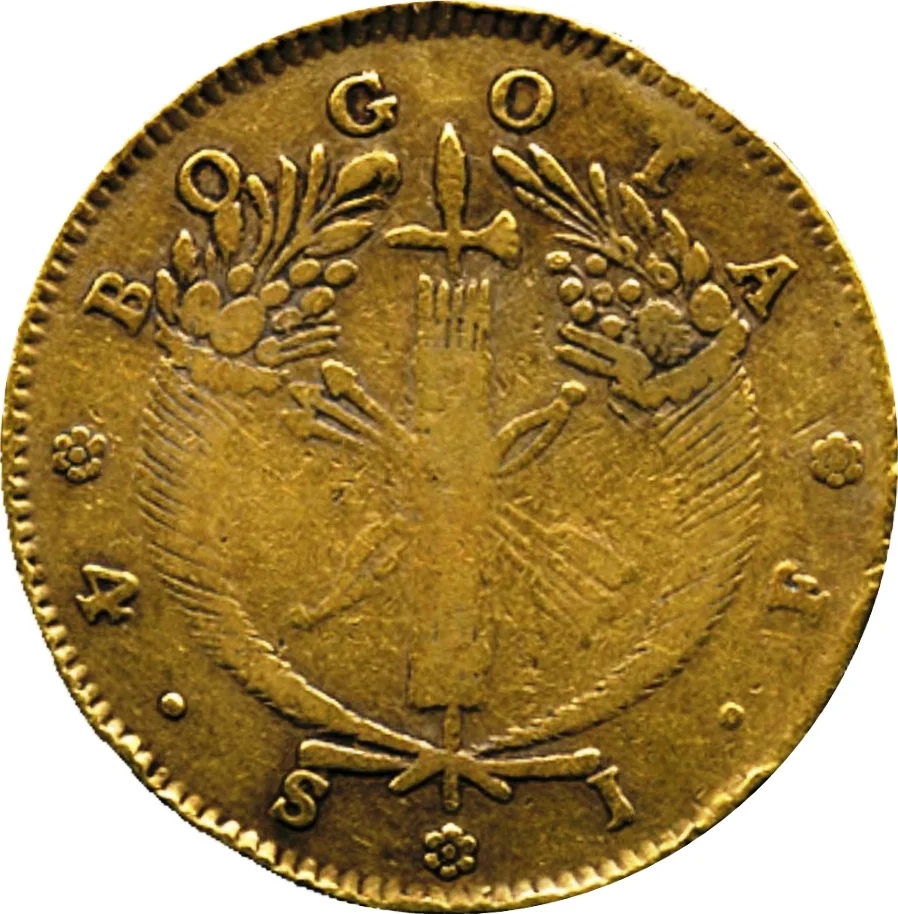
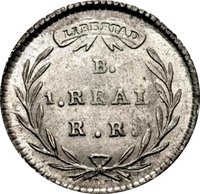
Reverse
Description:
Fasces between cornucopias, crossed by a bow and arrow.
Inscription:
BOGOTA
4 • S J • F
4 • S J • F
Script: Latin
Edge
Mintings
| Year | Mint Mark | Mintage | Quality | Collection |
|---|---|---|---|---|
| 1826 | JF | — |
Historical background
In 1826, Colombia's currency situation was a turbulent reflection of the broader challenges facing the nascent republic, then known as Gran Colombia. Following independence from Spain, the government inherited a chaotic monetary landscape characterized by a severe shortage of precious metals and a confusing circulation of diverse coins. These included not only remnants of Spanish colonial coinage but also coins from other newly independent Spanish American nations and even counterfeits. The lack of a unified, trusted national currency severely hampered commerce, tax collection, and the state's ability to pay its debts, both domestic and foreign.
Attempting to impose order, the government of Simón Bolívar had previously authorized the minting of new national coins in 1820. However, production was limited and failed to meet the economy's needs. More critically, to finance the wars of independence and early state functions, the government had resorted to issuing vast amounts of paper money (papel moneda) without sufficient metallic backing. By 1826, this fiat currency had dramatically depreciated, causing rampant inflation and a profound loss of public confidence. Citizens and merchants increasingly insisted on transactions in precious metal, effectively rejecting the state's paper notes.
This monetary crisis was inextricably linked to the republic's fragile fiscal health. Plummeting tax revenues, massive public debt from liberation loans (like those from Britain), and the economic disruption of the war years created a vicious cycle. The state could not back its currency because it was bankrupt, and its bankruptcy was worsened by a dysfunctional currency system. The situation in 1826 thus represented a critical point of economic stress, undermining political stability and foreshadowing the financial difficulties that would contribute to Gran Colombia's dissolution just a few years later.
Attempting to impose order, the government of Simón Bolívar had previously authorized the minting of new national coins in 1820. However, production was limited and failed to meet the economy's needs. More critically, to finance the wars of independence and early state functions, the government had resorted to issuing vast amounts of paper money (papel moneda) without sufficient metallic backing. By 1826, this fiat currency had dramatically depreciated, causing rampant inflation and a profound loss of public confidence. Citizens and merchants increasingly insisted on transactions in precious metal, effectively rejecting the state's paper notes.
This monetary crisis was inextricably linked to the republic's fragile fiscal health. Plummeting tax revenues, massive public debt from liberation loans (like those from Britain), and the economic disruption of the war years created a vicious cycle. The state could not back its currency because it was bankrupt, and its bankruptcy was worsened by a dysfunctional currency system. The situation in 1826 thus represented a critical point of economic stress, undermining political stability and foreshadowing the financial difficulties that would contribute to Gran Colombia's dissolution just a few years later.
✨ Legendary