

2 Francs – Switzerland
Switzerland
Context
Years: 1860–1863
Issuer: Switzerland 
Period:
(since 1848)
Currency:
(since 1850)
Demonetization: 31 December 1877
Total mintage: 3,500,760
Material
References
KM: #Click to copy to clipboard10a
Numista: #19981
Value
Exchange value: 2 CHF = $2.59
Bullion value: $22.90
Obverse
Description:
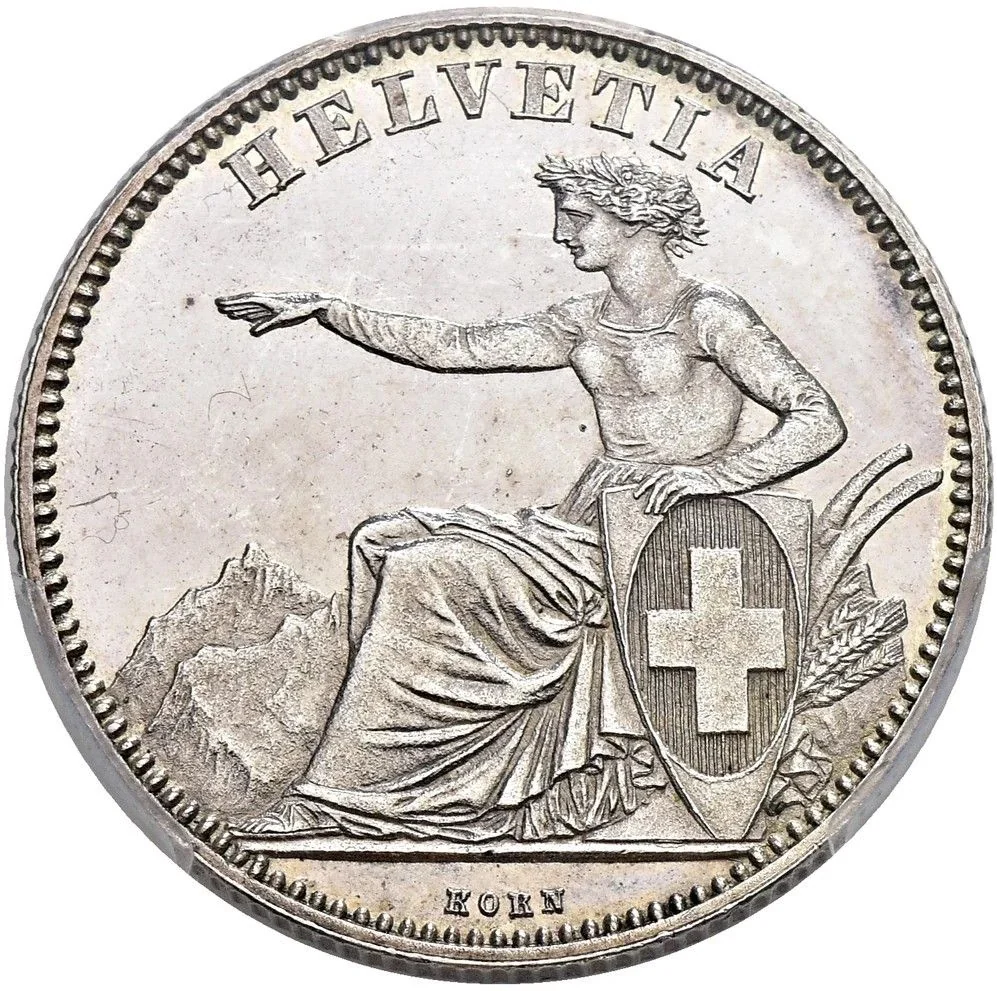
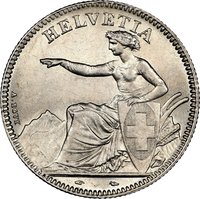
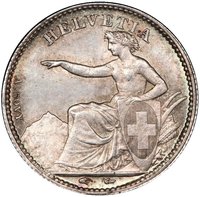
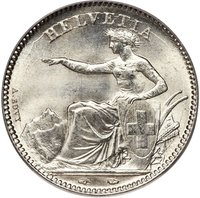
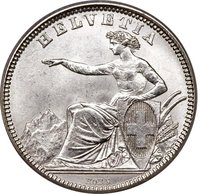
Helvetia seated left, wearing laurel wreath and toga, raising her right arm and holding Switzerland's shield. Plow and wheat to her right, mountains in the background.
Inscription:
HELVETIA
KORN
KORN
Script: Latin
Engraver: Ferdinand Korn
Designer: Friedrich Fisch
Reverse
Description:
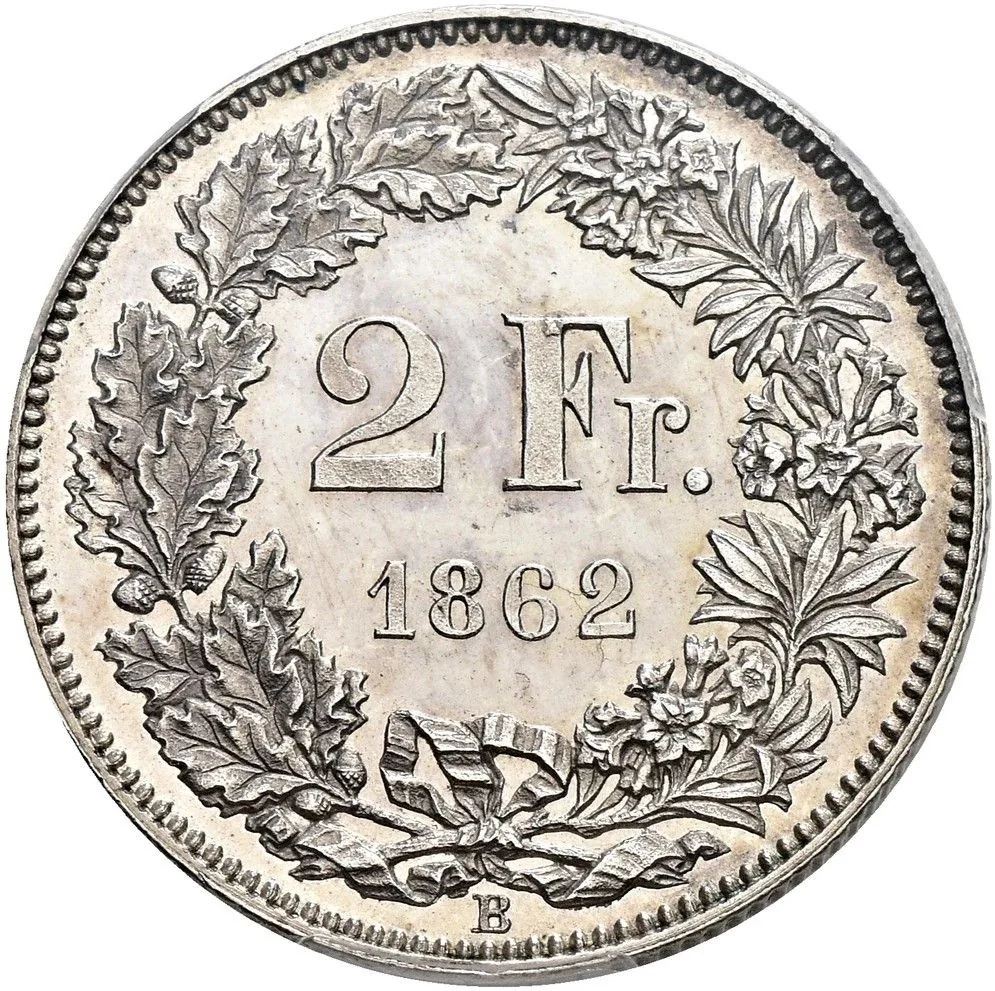
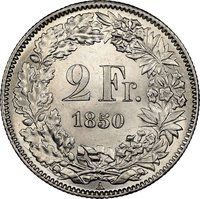
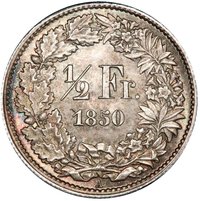
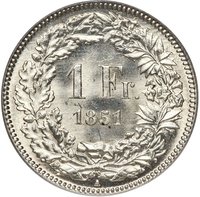
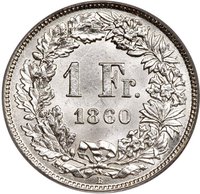
Oak and alpine rose wreath tied with a ribbon.
Inscription:
2 Fr.
1862
B
1862
B
Script: Latin
Engraver: Ferdinand Korn
Designer: Friedrich Fisch
Edge
Reeded.
Mints
| Name | Mark |
|---|---|
| Bern | B |
Historical background
In 1860, Switzerland's currency situation was one of considerable complexity and fragmentation, reflecting its decentralized political structure prior to the modern federal state. There was no single national currency; instead, a multitude of coins circulated simultaneously. These included the various currencies of the 25 cantons, each minting their own thalers, batzen, and rappen, alongside a flood of foreign coins from neighboring France, Italy, and the German states. This monetary mosaic created significant practical difficulties for trade and daily commerce, requiring constant reference to exchange rate lists and causing widespread confusion.
The driving force behind the push for unification was economic necessity. The expansion of the railway network and growing industrial trade across cantonal borders made the existing system untenable. Furthermore, the Latin Monetary Union (LMU), formed in 1865 between France, Belgium, Italy, and later Greece, presented both a model and an external pressure. Switzerland, whose franc was already aligned in weight and fineness with the French franc, saw immense advantage in formalizing this relationship to facilitate cross-border commerce and stabilize exchange rates within a recognized European system.
Consequently, the period around 1860 was a pivotal prelude to major reform. The Swiss Federal Constitution of 1848 had given the federal government the exclusive right to issue currency, but it took years to overcome cantonal resistance and implement a unified system. The Federal Coinage Act of 1850 had already introduced the Swiss franc, based on the French standard, but old and foreign coins remained legal tender for years. Thus, in 1860, the nation was in a transitional phase, practically using a hybrid system while politically moving toward the full implementation of a national currency and eventual entry into the Latin Monetary Union in 1865, which would finally bring order to its monetary chaos.
The driving force behind the push for unification was economic necessity. The expansion of the railway network and growing industrial trade across cantonal borders made the existing system untenable. Furthermore, the Latin Monetary Union (LMU), formed in 1865 between France, Belgium, Italy, and later Greece, presented both a model and an external pressure. Switzerland, whose franc was already aligned in weight and fineness with the French franc, saw immense advantage in formalizing this relationship to facilitate cross-border commerce and stabilize exchange rates within a recognized European system.
Consequently, the period around 1860 was a pivotal prelude to major reform. The Swiss Federal Constitution of 1848 had given the federal government the exclusive right to issue currency, but it took years to overcome cantonal resistance and implement a unified system. The Federal Coinage Act of 1850 had already introduced the Swiss franc, based on the French standard, but old and foreign coins remained legal tender for years. Thus, in 1860, the nation was in a transitional phase, practically using a hybrid system while politically moving toward the full implementation of a national currency and eventual entry into the Latin Monetary Union in 1865, which would finally bring order to its monetary chaos.
Series: Helvetia seated series
🌟 Uncommon