

5 taka – Bangladesh
Add to wishlist
Standard circulation coins
Commemoration: Jamuna Bridge
Bangladesh
Context
Years: 1994–1996
Issuer: Bangladesh
Issuing organization: Bangladesh Bank
Period:
(since 1971)
Currency:
(since 1972)
Material
Diameter: 26.8 mm
Weight: 8.17 g
Thickness: 1.8 mm
Shape: Dodecagonal
Composition: Stainless steel
Technique: Milled
Alignment: Medal alignment
flip
References
KM: #
Numista: #1975
Value
Exchange value: 5 BDT
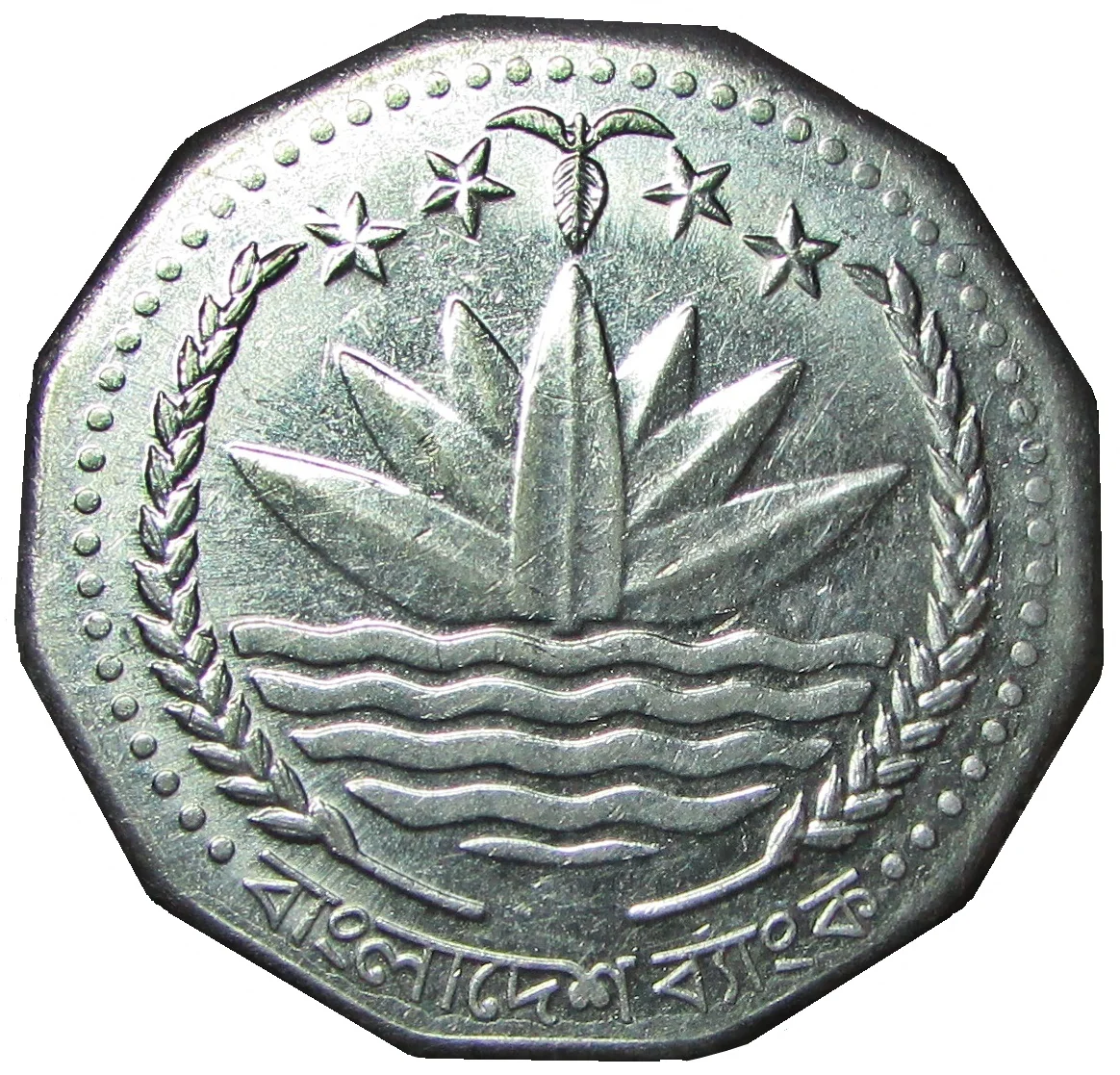
Obverse
Description:
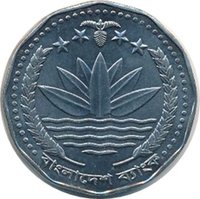
Bangladesh's national emblem features a water lily framed by rice sheaves, topped with a tea leaf clover and four stars symbolizing the 1972 constitutional principles: nationalism, secularism, socialism, and democracy.
Inscription:
বাংলাদেশ ব্যাংক
Translation:
Bangladesh Bank
Language: Bengali
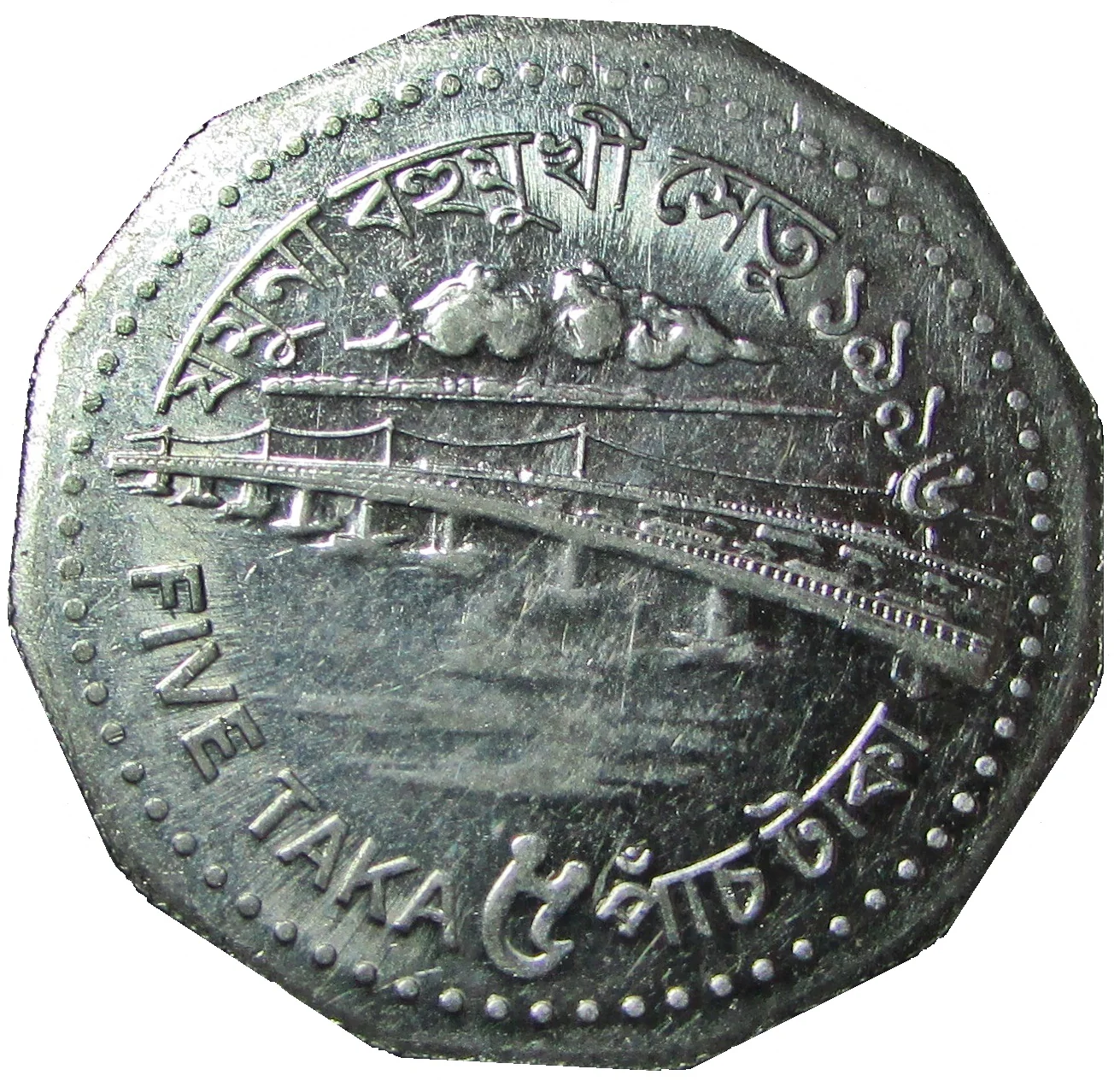
Reverse
Description:
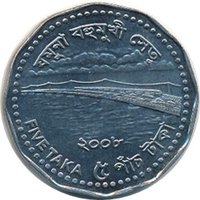
The top features the bridge's Bangla name. The center shows the Jamuna Multi-purpose Bridge (now Bangabandhu Bridge), a 5.63 km span over the Padma River and South Asia's 6th longest. The bottom displays the issue year and the coin's value in figures and words, in both English and Bangla.
Inscription:
যমুনা বহুমুখী সেতু ১৯৯৬
FIVE TAKA ৫ পাঁচ টাকা
FIVE TAKA ৫ পাঁচ টাকা
Translation:
Jamuna Multi-Purpose Bridge 1996
FIVE TAKA Five Taka
FIVE TAKA Five Taka
Language: Bengali
Edge
Plain
Mintings
| Year | Mint Mark | Mintage | Quality | Collection |
|---|---|---|---|---|
| 1994 | — | — | ||
| 1996 | — | — |
Historical background
In 1994, Bangladesh's currency situation was characterized by a managed floating exchange rate regime, a significant step away from the earlier fixed-rate system. The Taka (BDT) had undergone a major devaluation in the early 1990s as part of broader economic liberalization reforms, moving from a heavily controlled official rate to a more market-responsive one. By 1994, the exchange rate was determined through a daily interbank market, though the Bangladesh Bank (the central bank) remained an active participant to curb excessive volatility. This period saw relative stability in the nominal exchange rate against the US Dollar, but underlying pressures from trade deficits and inflation persisted.
The macroeconomic context was one of structural adjustment under guidance from the International Monetary Fund (IMF). A key focus was on maintaining a competitive real exchange rate to boost the crucial ready-made garment (RMG) exports, which were becoming the engine of economic growth. However, the currency management faced challenges from a widening current account deficit, fueled by imports of capital goods and consumer items, and moderate but persistent inflation (around 5-6%) which eroded the Taka's purchasing power domestically. Foreign exchange reserves were under pressure, necessitating careful management by the central bank to meet import bills and service external debt.
Overall, 1994 represented a period of consolidation for Bangladesh's currency framework. The Taka was not in crisis but operated within a delicate balance. The authorities were navigating the transition to a more open economy, using limited interventions to prevent sharp depreciation that could spike import costs and inflation, while also avoiding an overvalued currency that would hurt export competitiveness. This cautious management aimed to support the growing export sector, which was vital for long-term economic stability and the generation of much-needed foreign exchange.
The macroeconomic context was one of structural adjustment under guidance from the International Monetary Fund (IMF). A key focus was on maintaining a competitive real exchange rate to boost the crucial ready-made garment (RMG) exports, which were becoming the engine of economic growth. However, the currency management faced challenges from a widening current account deficit, fueled by imports of capital goods and consumer items, and moderate but persistent inflation (around 5-6%) which eroded the Taka's purchasing power domestically. Foreign exchange reserves were under pressure, necessitating careful management by the central bank to meet import bills and service external debt.
Overall, 1994 represented a period of consolidation for Bangladesh's currency framework. The Taka was not in crisis but operated within a delicate balance. The authorities were navigating the transition to a more open economy, using limited interventions to prevent sharp depreciation that could spike import costs and inflation, while also avoiding an overvalued currency that would hurt export competitiveness. This cautious management aimed to support the growing export sector, which was vital for long-term economic stability and the generation of much-needed foreign exchange.

🌱 Very Common