

⅙ vereinsthaler – Anhalt-Dessau
Add to wishlist
Germany
Context
Year: 1865
Country: Germany
Issuer: Anhalt-Dessau
Ruler: Leopold IV Frederick
Currency:
Subdivision: ⅙ vereinsthaler = 1⁄180 Metric Pound
Demonetized: Yes
Total mintage: 120,000
Material
References
KM: #
Numista: #19720
Value
Bullion value: $7.10
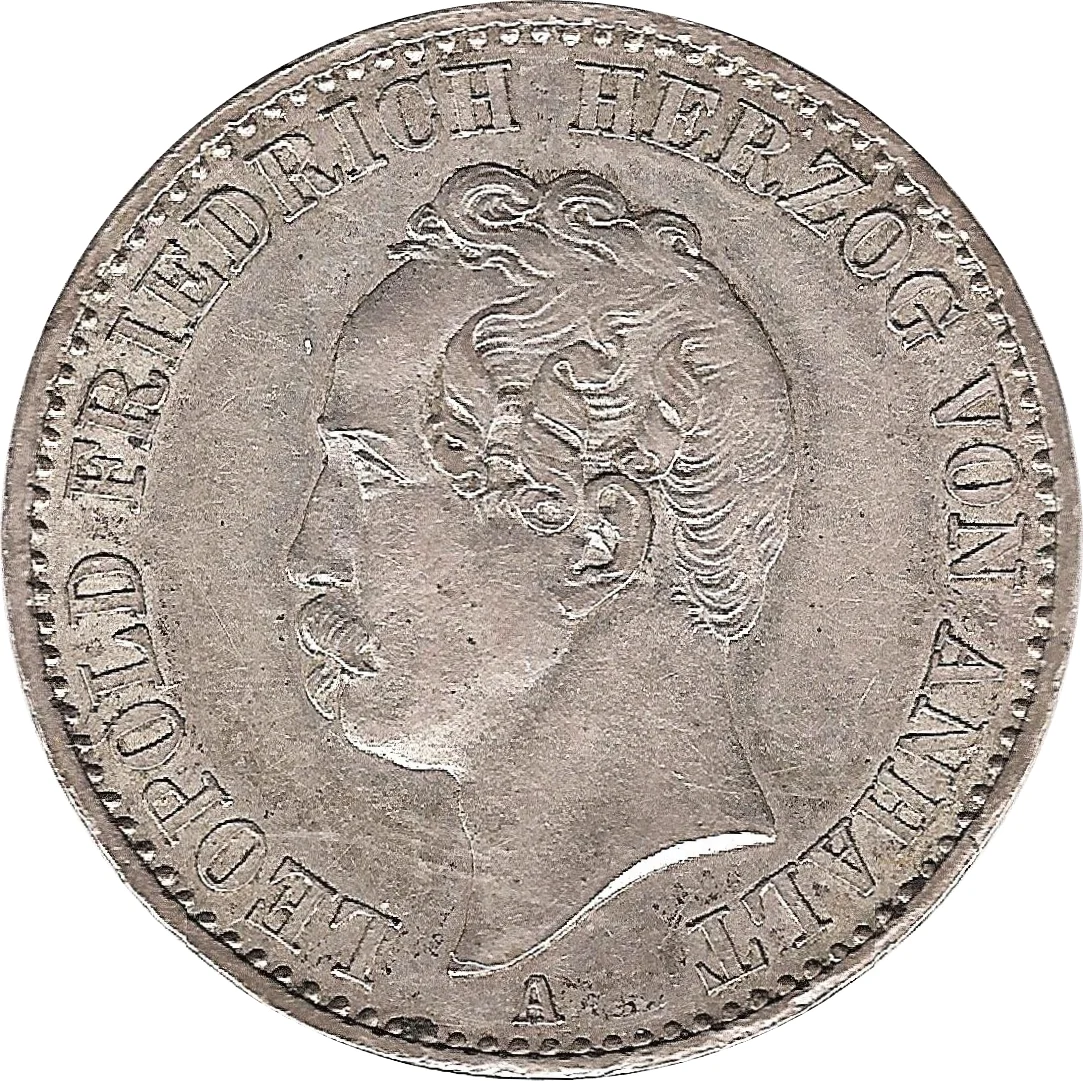
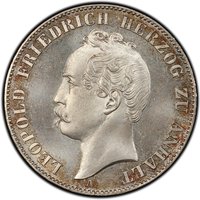
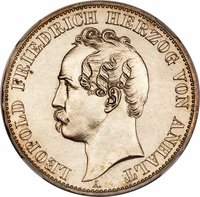
Obverse
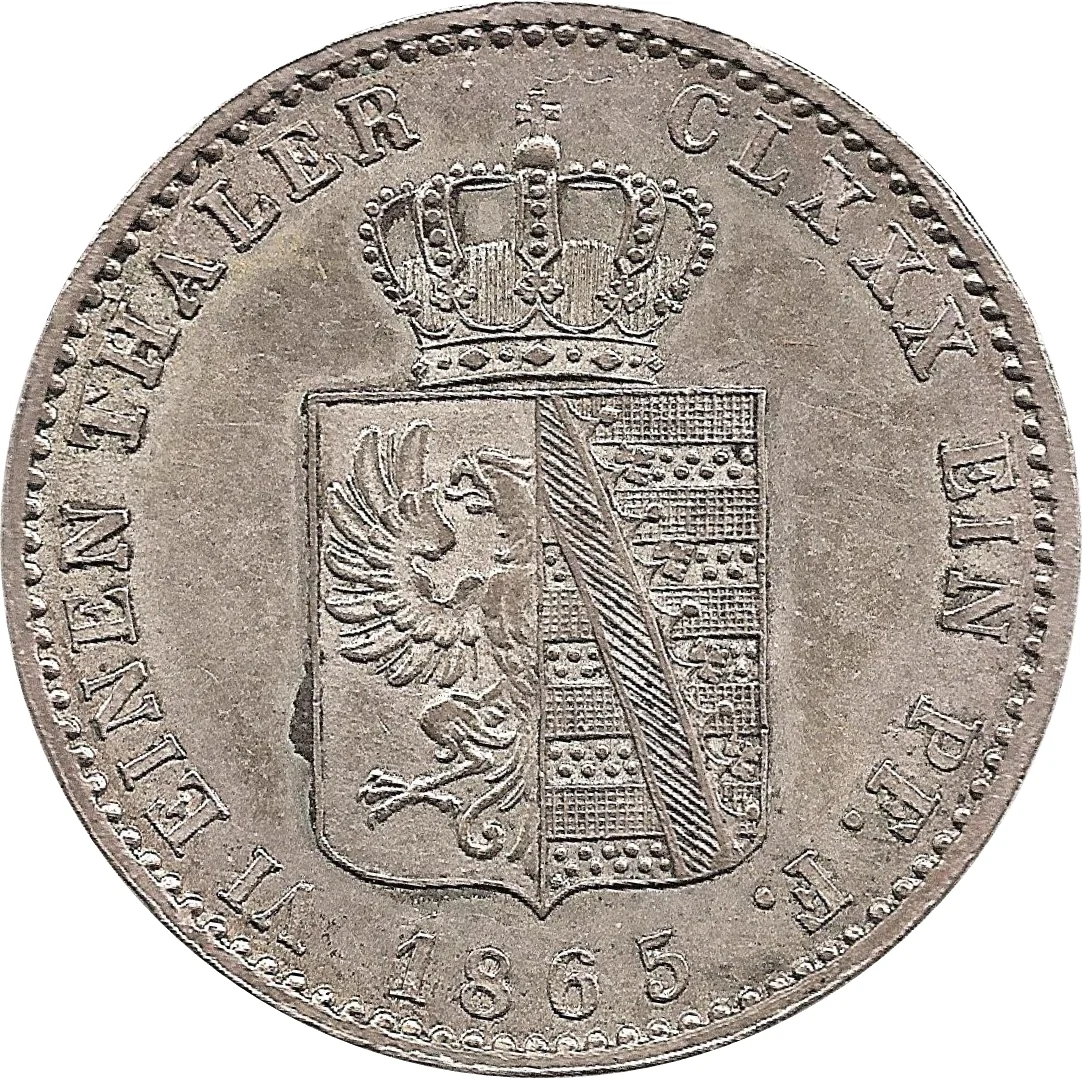
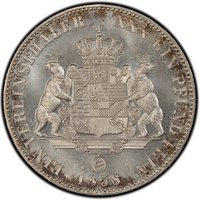
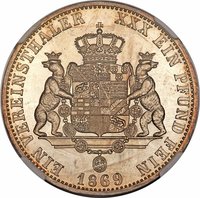
Reverse
Description:
Inscription around rim. Crowned family and state arms, date below.
Inscription:
VI EINEN THALER CLXXX EIN PF. F.
1865
1865
Script: Latin
Edge
Plain with inscription.
Legend:
GOTT SEGNE ANHALT
Mints
| Name | Mark |
|---|---|
| Berlin | A |
Mintings
| Year | Mint Mark | Mintage | Quality | Collection |
|---|---|---|---|---|
| 1865 | A | 120,000 |
Historical background
In 1865, the currency situation in the Duchy of Anhalt-Dessau was characterized by the complex and fragmented monetary systems of the German Confederation, prior to unification. The duchy did not have a fully independent currency but operated within the framework of the "Vereinsthaler" (Union Thaler) system, established by the Vienna Monetary Treaty of 1857. This treaty created a common silver standard across most German states, including Anhalt-Dessau, which minted its own minor coinage (such as groschen and pfennigs) but adhered to the Vereinsthaler as the large silver unit for larger transactions and accounting.
However, practical circulation was a mosaic of various forms of money. Alongside local Anhalt-Dessau coinage, Prussian Thalers, gold coins from other German states like the Hanoverian and Bavarian, and even older regional currencies circulated freely. Furthermore, paper money was gaining prominence, not from the duchy itself, which issued little, but primarily in the form of Prussian Treasury Notes (Preußische Kassenscheine). These notes were legal tender and widely used, effectively tying Anhalt-Dessau's economy more closely to the expanding economic influence of Prussia.
This landscape was one of transition, reflecting the broader political currents of the time. While the Vienna Treaty provided a semblance of uniformity, the coexistence of multiple physical currencies and the growing dominance of Prussian paper money highlighted the lack of a truly unified national monetary authority. The situation in Anhalt-Dessau in 1865 was thus one of managed complexity, awaiting the decisive political changes that would follow the Austro-Prussian War of 1866, after which the duchy would be drawn irrevocably into the Prussian-led North German Confederation and, eventually, its streamlined monetary system.
However, practical circulation was a mosaic of various forms of money. Alongside local Anhalt-Dessau coinage, Prussian Thalers, gold coins from other German states like the Hanoverian and Bavarian, and even older regional currencies circulated freely. Furthermore, paper money was gaining prominence, not from the duchy itself, which issued little, but primarily in the form of Prussian Treasury Notes (Preußische Kassenscheine). These notes were legal tender and widely used, effectively tying Anhalt-Dessau's economy more closely to the expanding economic influence of Prussia.
This landscape was one of transition, reflecting the broader political currents of the time. While the Vienna Treaty provided a semblance of uniformity, the coexistence of multiple physical currencies and the growing dominance of Prussian paper money highlighted the lack of a truly unified national monetary authority. The situation in Anhalt-Dessau in 1865 was thus one of managed complexity, awaiting the decisive political changes that would follow the Austro-Prussian War of 1866, after which the duchy would be drawn irrevocably into the Prussian-led North German Confederation and, eventually, its streamlined monetary system.
💎 Extremely Rare