

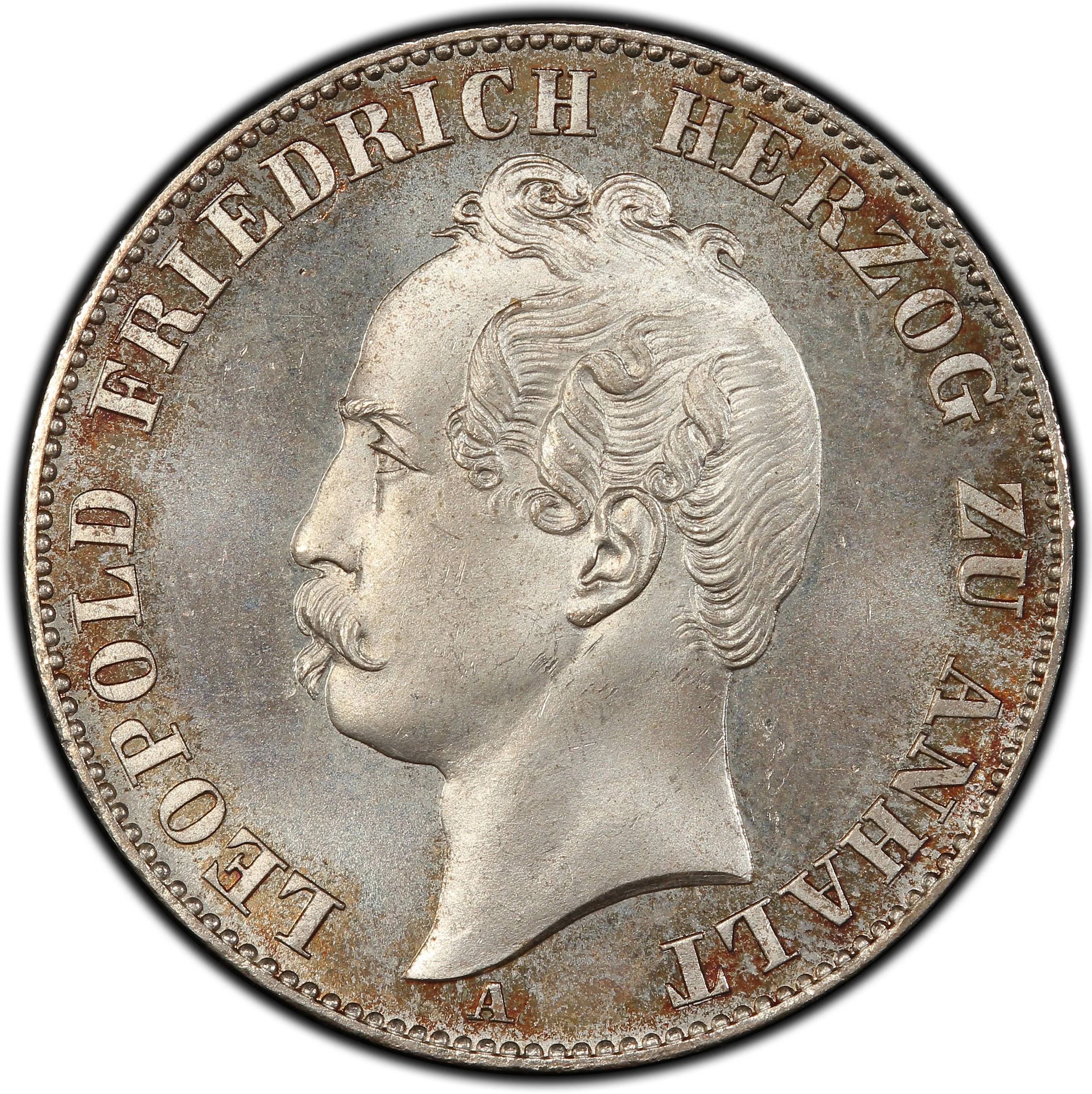
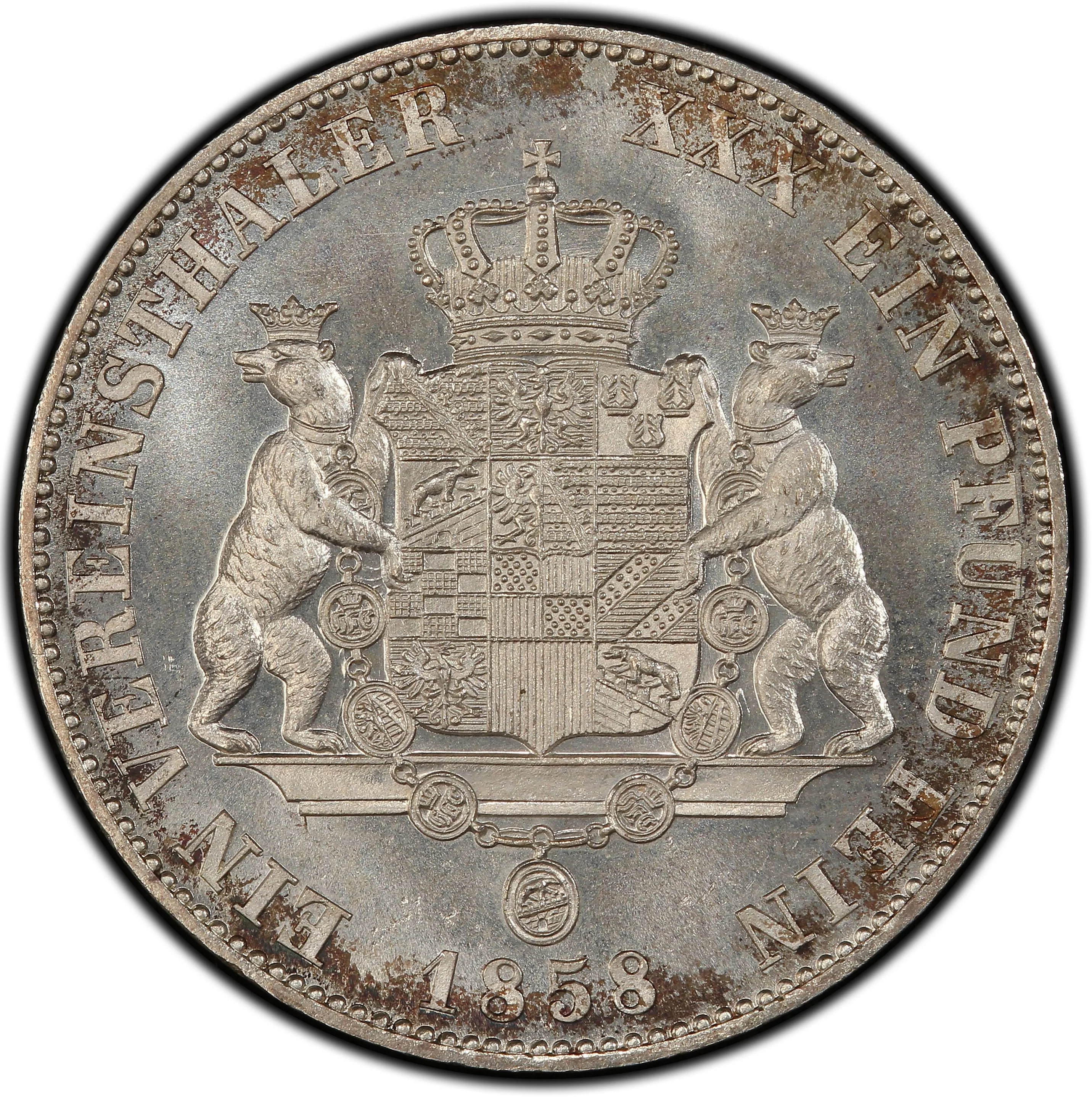
1 Vereinsthaler – Anhalt-Dessau
Germany
Context
Year: 1858
Country: Germany 
Issuer: Anhalt-Dessau
Ruler: Leopold IV Frederick
Currency:
Subdivision: 1 Vereinsthaler = 1⁄30 Metric Pound
Demonetized: Yes
Total mintage: 26,808
Material
References
KM: #Click to copy to clipboard14
Numista: #47330
Value
Bullion value: $46.20
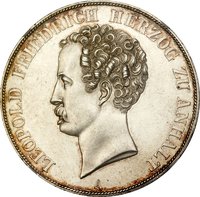
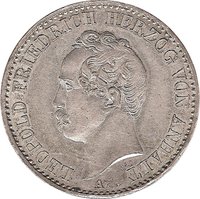
Obverse
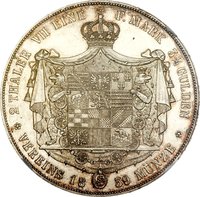
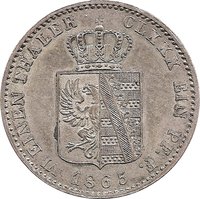
Reverse
Description:
Crowned bears support a crowned coat of arms.
Inscription:
EIN VEREINSTHALER XXX EIN PFUND FEIN
1858
1858
Script: Latin
Edge
Plain with inscription.
Legend:
GOTT SEGNE ANHALT
Mints
| Name | Mark |
|---|---|
| Berlin | A |
Mintings
| Year | Mint Mark | Mintage | Quality | Collection |
|---|---|---|---|---|
| 1858 | A | 26,808 |
Historical background
In 1858, the currency situation in the Duchy of Anhalt-Dessau was characterized by its integration within the broader framework of the German Customs Union (Zollverein) and the ongoing struggle for monetary standardization across the German states. The duchy, like its neighbors, was transitioning from a patchwork of regional and foreign coins towards a more uniform system based on the Prussian Taler. The Dresden Coinage Convention of 1838 had established a common silver standard between the northern Taler and southern Gulden states, and Anhalt-Dessau, as a member of the Zollverein, adhered to this framework, using the Vereinsthaler as its primary large silver coin.
However, daily commerce still involved a complex circulation of older local issues, coins from other German states, and even foreign currency. This multiplicity created practical challenges for trade and accounting. The critical development in the late 1850s was the push for a fully unified coinage system, which would culminate in the Munich Coinage Treaty of 1857. This treaty formally established the Vereinsthaler as the standard unit across the Zollverein, with a strict specification on fineness and weight, and introduced a new decimal subdivision.
Therefore, by 1858, Anhalt-Dessau was in a state of monetary anticipation and transition. The old systems were still in active use, but the legal and technical foundations for a streamlined, pan-German currency had just been laid. The ducal government was poised to align its minting and financial policies with the new treaty, moving definitively toward the monetary unification that would later underpin the German Empire's single currency. The year represents a point where the longstanding currency confusion was finally being resolved by binding regional sovereignty to a collective economic standard.
However, daily commerce still involved a complex circulation of older local issues, coins from other German states, and even foreign currency. This multiplicity created practical challenges for trade and accounting. The critical development in the late 1850s was the push for a fully unified coinage system, which would culminate in the Munich Coinage Treaty of 1857. This treaty formally established the Vereinsthaler as the standard unit across the Zollverein, with a strict specification on fineness and weight, and introduced a new decimal subdivision.
Therefore, by 1858, Anhalt-Dessau was in a state of monetary anticipation and transition. The old systems were still in active use, but the legal and technical foundations for a streamlined, pan-German currency had just been laid. The ducal government was poised to align its minting and financial policies with the new treaty, moving definitively toward the monetary unification that would later underpin the German Empire's single currency. The year represents a point where the longstanding currency confusion was finally being resolved by binding regional sovereignty to a collective economic standard.
💎 Extremely Rare