

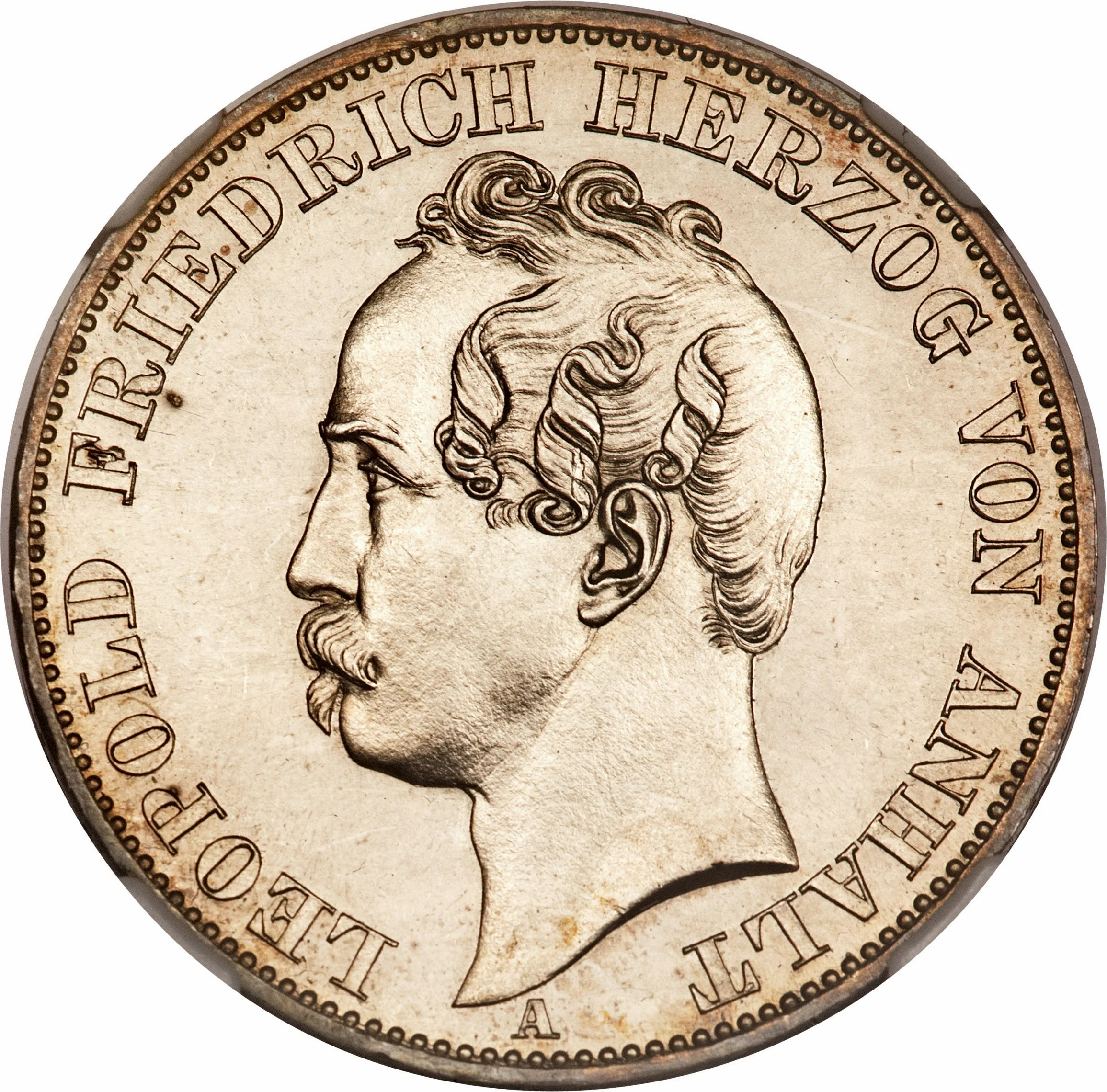
1 Vereinsthaler – Anhalt-Dessau
Germany
Context
Years: 1866–1869
Country: Germany 
Issuer: Anhalt-Dessau
Ruler: Leopold IV Frederick
Currency:
Subdivision: 1 Vereinsthaler = 1⁄30 Metric Pound
Demonetized: Yes
Total mintage: 62,407
Material
References
KM: #Click to copy to clipboard20
Numista: #47331
Value
Bullion value: $46.20
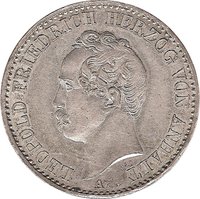
Obverse
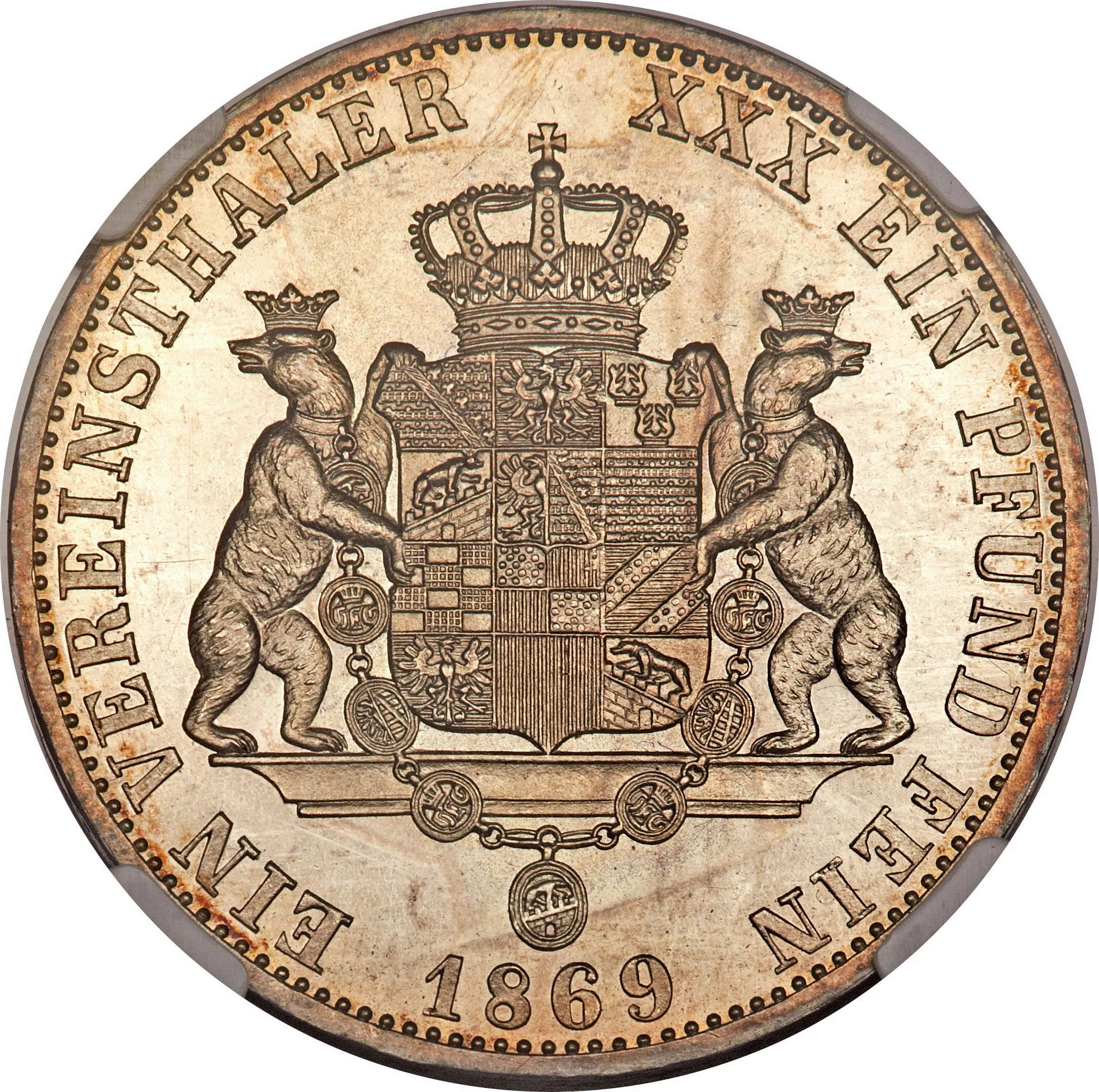
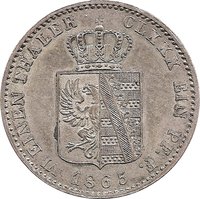
Reverse
Description:
Crowned bears support a crowned coat of arms.
Inscription:
EIN VEREINSTHALER XXX EIN PFUND FEIN
1869
1869
Script: Latin
Edge
Plain with inscription.
Legend:
GOTT SEGNE ANHALT
Mints
| Name | Mark |
|---|---|
| Berlin | A |
Historical background
In 1866, the currency situation in the Duchy of Anhalt-Dessau was characterized by its integration within the broader monetary systems of the German Confederation, yet it remained complex due to lingering particularism. The duchy was part of the Dresdner Münzverein (Dresden Coinage Treaty) of 1838, which established a fixed exchange rate between the two dominant silver-based currencies in northern Germany: the Prussian Thaler and the Saxon Thaler. Anhalt-Dessau officially used the Vereinsthaler (Union Thaler), the common currency defined by this treaty, which provided crucial stability and facilitated trade with neighbouring states like Prussia and Saxony.
However, the political and military upheaval of 1866, specifically the Austro-Prussian War, proved to be a decisive turning point. Prussia's victory led to the dissolution of the German Confederation and the establishment of Prussian hegemony in northern Germany through the North German Confederation. As a result, Anhalt-Dessau, now a member of this new confederation, was drawn inexorably into Prussia's economic and monetary orbit. The Prussian Thaler became the undisputed dominant currency, and plans for a uniform, Prussia-led currency system began to take concrete shape.
Therefore, the background of 1866 is one of transition from a multi-state silver standard to an impending Prussian-dominated one. The existing Vereinsthaler system provided a functional framework, but the political outcome of the war made the adoption of a future pan-German currency under Prussian leadership inevitable. This process would culminate just a few years later with the introduction of the Goldmark in 1871, fully integrating Anhalt-Dessau into the unified monetary system of the German Empire.
However, the political and military upheaval of 1866, specifically the Austro-Prussian War, proved to be a decisive turning point. Prussia's victory led to the dissolution of the German Confederation and the establishment of Prussian hegemony in northern Germany through the North German Confederation. As a result, Anhalt-Dessau, now a member of this new confederation, was drawn inexorably into Prussia's economic and monetary orbit. The Prussian Thaler became the undisputed dominant currency, and plans for a uniform, Prussia-led currency system began to take concrete shape.
Therefore, the background of 1866 is one of transition from a multi-state silver standard to an impending Prussian-dominated one. The existing Vereinsthaler system provided a functional framework, but the political outcome of the war made the adoption of a future pan-German currency under Prussian leadership inevitable. This process would culminate just a few years later with the introduction of the Goldmark in 1871, fully integrating Anhalt-Dessau into the unified monetary system of the German Empire.
💎 Extremely Rare