

¼ Guilder – Demerara and Essequibo
Guyana
Context
Year: 1816
Country: Guyana 
Issuer: Demerara and Essequibo
Ruler: George III
Currency:
Demonetized: Yes
Total mintage: 43,000
Material
References
KM: #Click to copy to clipboard11
Numista: #19590
Value
Bullion value: $4.59
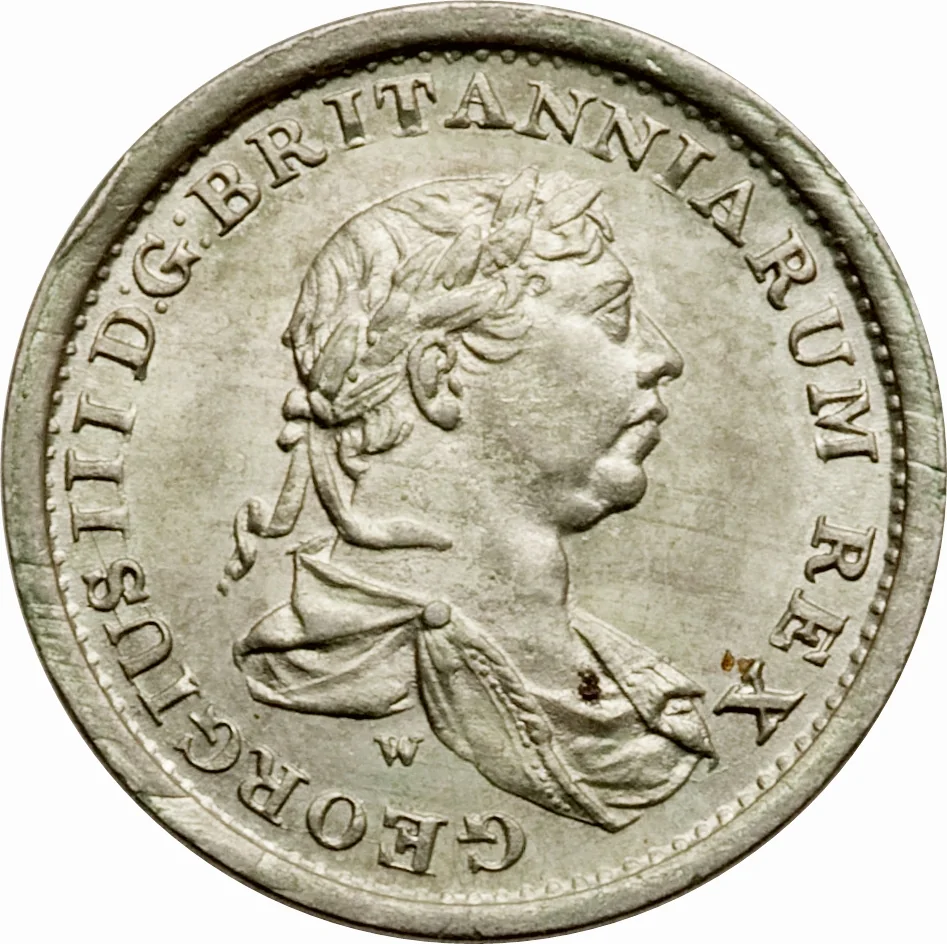
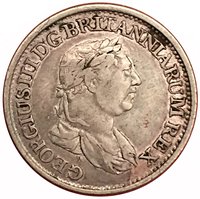
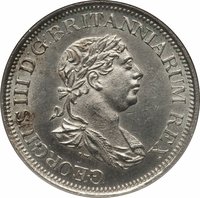
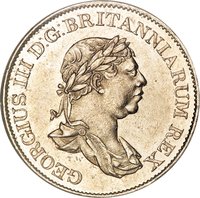
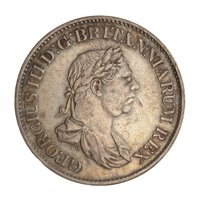
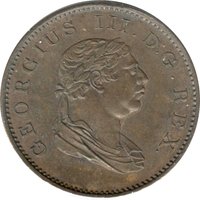
Obverse
Description:
Laureate head right
Inscription:
GEORGIUS III D:G:BRITANNIARUM REX
Translation:
George the Third, by the Grace of God, King of the Britains
Script: Latin
Language: Latin
Engraver: Thomas Wyon the Younger
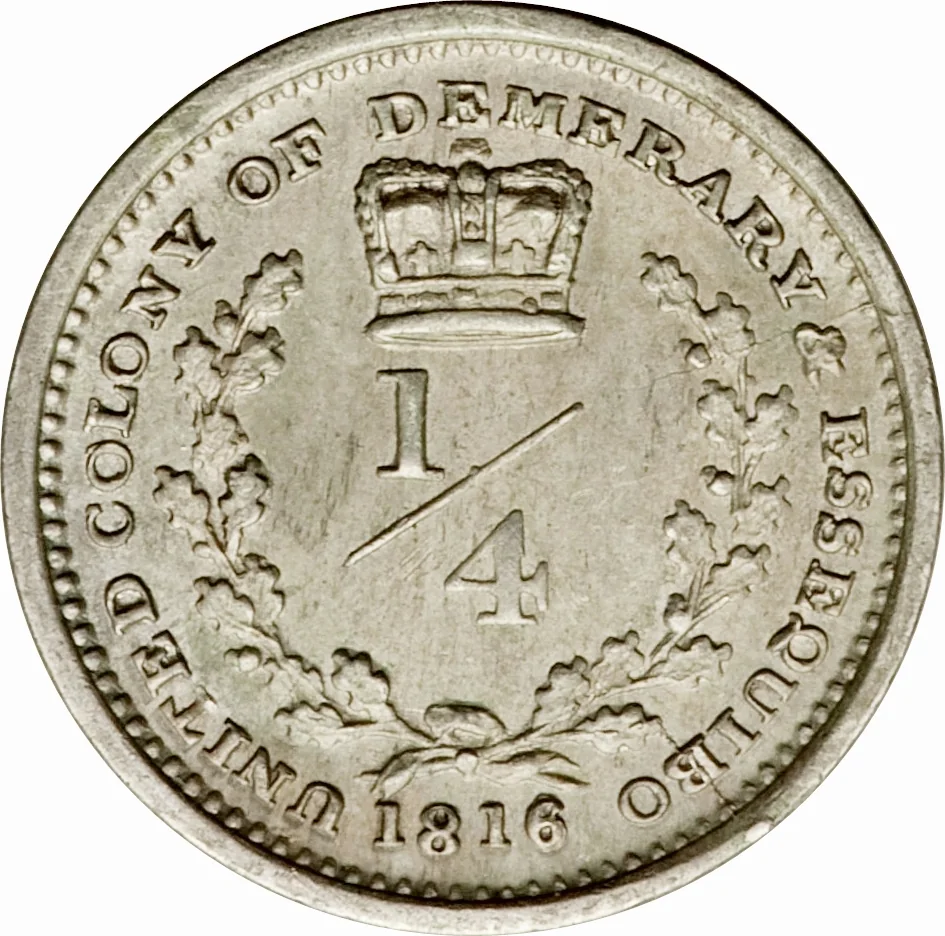
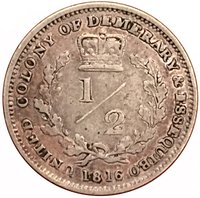
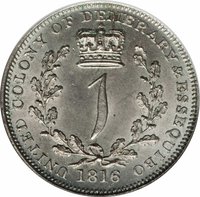
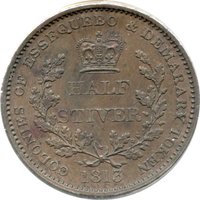
Reverse
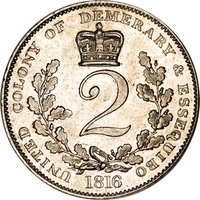
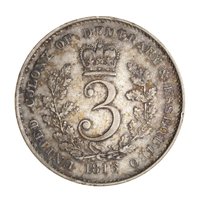
Description:
Wreath denomination
Inscription:
UNITED COLONY OF DEMERARY & ESSEQUIBO
1/4
1816
1/4
1816
Script: Latin
Edge
Plain
Mints
| Name | Mark |
|---|---|
| Royal Mint (Tower Hill) | — |
Mintings
| Year | Mint Mark | Mintage | Quality | Collection |
|---|---|---|---|---|
| 1816 | — | 43,000 | ||
| 1816 | — | — | Proof |
Historical background
In 1816, the colonies of Demerara and Essequibo (officially united as the colony of Demerara-Essequibo since 1812) operated within a complex and chronically deficient currency system. As British possessions acquired from the Dutch, they inherited and continued to suffer from a severe shortage of official coinage. The local economy, dominated by a booming sugar plantation system reliant on enslaved African labour, struggled with a jumble of circulating mediums. These included limited British silver coins, older Spanish dollars and bits (pieces of eight cut into segments), and a heavy reliance on unreliable paper money issued by local merchants and planters.
This scarcity of sound currency was exacerbated by the colony's position within the wider Atlantic economy. Specie was constantly drained away to pay for imported goods from Britain and North America, leaving the local system perpetually starved of hard cash. Consequently, the value and acceptability of the various paper notes and foreign coins were unstable, leading to frequent disputes in transactions, confusion over exchange rates, and general hindrance to commerce beyond the largest plantation houses.
The situation placed significant strain on daily economic life for all inhabitants, from merchants to freed people, but most acutely on the enslaved majority. Their internal market activities, which involved selling small surpluses from provision grounds, were conducted with a fragile system of credit, barter, and low-value coins. This monetary instability was a persistent grievance among the white and free coloured populations and represented one of the many underlying tensions within the colony, which would erupt in the large-scale enslaved rebellion of 1823.
This scarcity of sound currency was exacerbated by the colony's position within the wider Atlantic economy. Specie was constantly drained away to pay for imported goods from Britain and North America, leaving the local system perpetually starved of hard cash. Consequently, the value and acceptability of the various paper notes and foreign coins were unstable, leading to frequent disputes in transactions, confusion over exchange rates, and general hindrance to commerce beyond the largest plantation houses.
The situation placed significant strain on daily economic life for all inhabitants, from merchants to freed people, but most acutely on the enslaved majority. Their internal market activities, which involved selling small surpluses from provision grounds, were conducted with a fragile system of credit, barter, and low-value coins. This monetary instability was a persistent grievance among the white and free coloured populations and represented one of the many underlying tensions within the colony, which would erupt in the large-scale enslaved rebellion of 1823.
💎 Extremely Rare