

½ Stiver – Demerara and Essequibo
Guyana
Context
Year: 1813
Country: Guyana 
Issuer: Demerara and Essequibo
Ruler: George III
Currency:
Demonetized: Yes
Total mintage: 215,000
Material
References
KM: #Click to copy to clipboard9
Numista: #17300
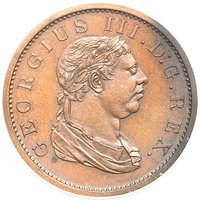
Obverse
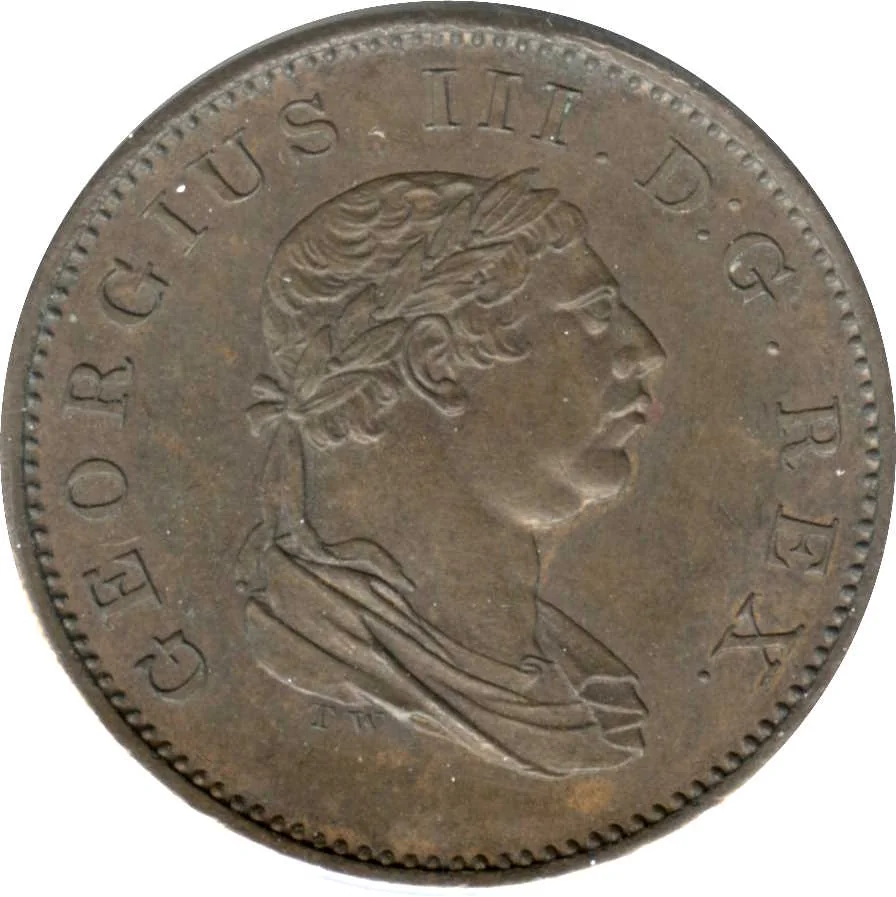
Description:
Laureate head right
Inscription:
GEORGIUS III.D:G.REX.
TW
TW
Translation:
George the Third, by the Grace of God, King.
Script: Latin
Language: Latin
Engraver: William Wyon
Reverse
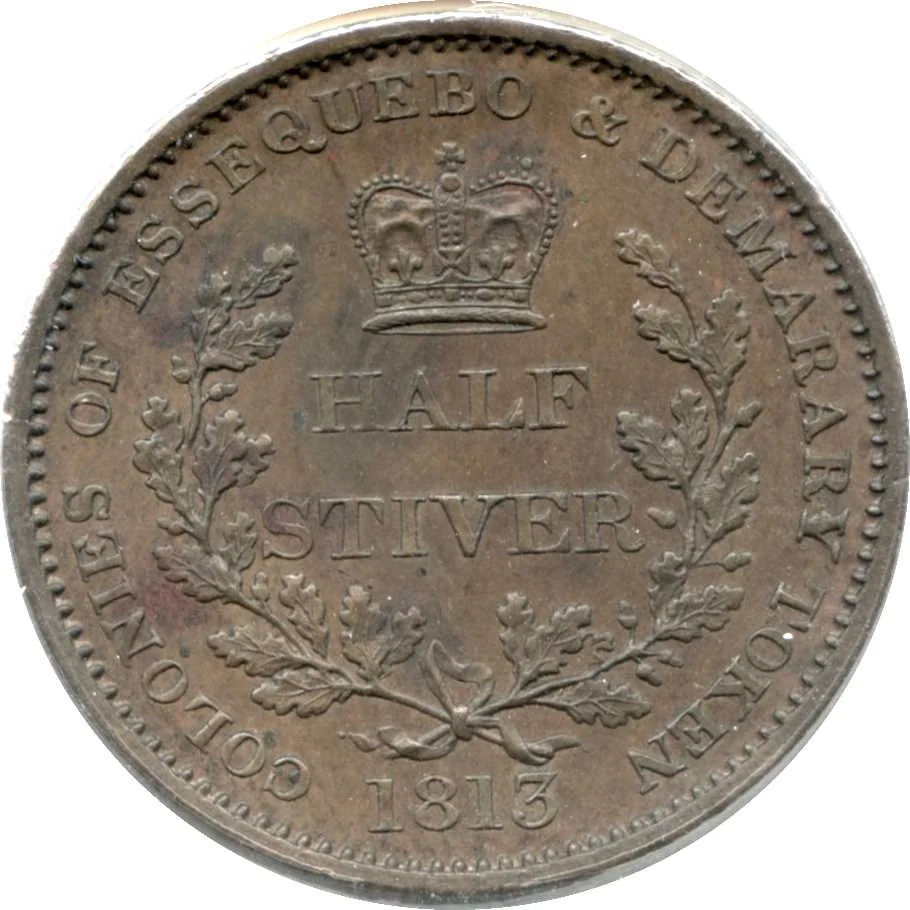
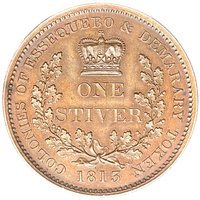
Description:
Wreath denomination
Inscription:
COLONIES OF ESSEQUEBO & DEMARARY TOKEN
HALF
STIVER
1813
HALF
STIVER
1813
Script: Latin
Edge
Smooth with a reeded groove running circumferentially around the edge of the coin
Mints
| Name | Mark |
|---|---|
| Royal Mint (Tower Hill) | — |
Mintings
| Year | Mint Mark | Mintage | Quality | Collection |
|---|---|---|---|---|
| 1813 | — | 215,000 | ||
| 1813 | — | — | Proof |
Historical background
In 1813, the colonies of Demerara and Essequibo (formally united as the Colony of Demerara-Essequibo under British control since 1803) faced a chronic and disruptive currency shortage. The local economy, dominated by sugar and coffee plantations reliant on enslaved African labour, operated within a complex monetary ecosystem. Officially, British sterling was the standard, but in practice, a multitude of foreign coins circulated, primarily Spanish dollars (pieces of eight) and their cut fractions (bits), alongside Dutch guilders and Portuguese joes from the prior Dutch colonial period. This scarcity of official coinage severely hampered daily transactions and commercial exchange.
The problem was systemic. Planters were deeply indebted to British merchants, and much of the hard currency that did arrive was immediately exported to settle these metropolitan debts, draining the colony. To facilitate local trade, merchants and planters increasingly resorted to issuing private paper notes or "promissory notes," which were essentially IOUs. While these notes provided a necessary medium of exchange, their value was precarious, being entirely dependent on the credibility and solvency of the individual issuer, leading to frequent losses and disputes.
The British colonial administration, recognising the instability, had taken some steps to regulate the system. A pivotal 1809 proclamation had attempted to standardise the rated value of the various foreign coins in relation to sterling, setting a "currency" value above their intrinsic metal worth to keep them in circulation. However, by 1813, these measures were proving insufficient. The core issues of currency drain and reliance on insecure private paper persisted, creating an environment of financial uncertainty that would eventually lead to the establishment of the first official colonial bank, the Demerara Bank, in 1836, as a more structured response to the enduring monetary crisis.
The problem was systemic. Planters were deeply indebted to British merchants, and much of the hard currency that did arrive was immediately exported to settle these metropolitan debts, draining the colony. To facilitate local trade, merchants and planters increasingly resorted to issuing private paper notes or "promissory notes," which were essentially IOUs. While these notes provided a necessary medium of exchange, their value was precarious, being entirely dependent on the credibility and solvency of the individual issuer, leading to frequent losses and disputes.
The British colonial administration, recognising the instability, had taken some steps to regulate the system. A pivotal 1809 proclamation had attempted to standardise the rated value of the various foreign coins in relation to sterling, setting a "currency" value above their intrinsic metal worth to keep them in circulation. However, by 1813, these measures were proving insufficient. The core issues of currency drain and reliance on insecure private paper persisted, creating an environment of financial uncertainty that would eventually lead to the establishment of the first official colonial bank, the Demerara Bank, in 1836, as a more structured response to the enduring monetary crisis.
🌱 Common