

4 Pence – British Guiana
Guyana
Context
Years: 1938–1943
Country: Guyana 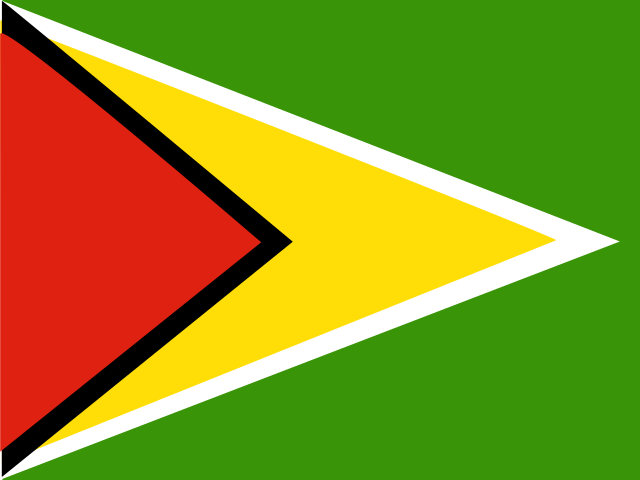
Issuer: British Guiana
Ruler: George VI
Currency:
(1840—1954)
Demonetized: Yes
Total mintage: 708,000
Material
References
KM: #Click to copy to clipboard30
Numista: #19571
Value
Bullion value: $5.08
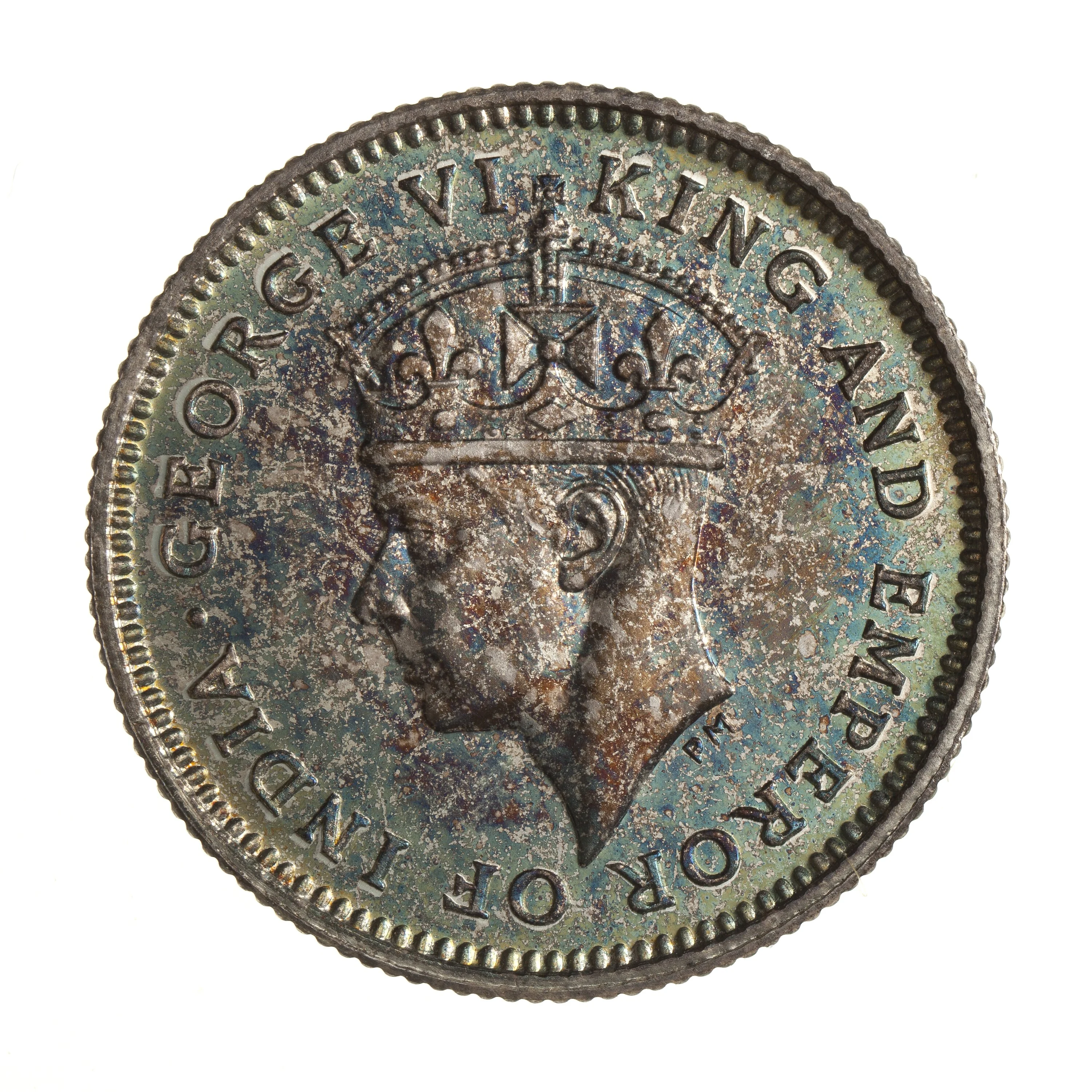
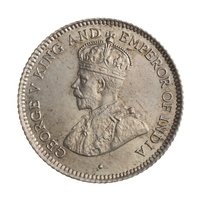
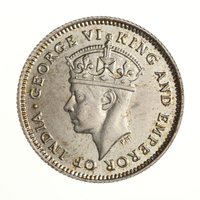
Obverse
Description:
King George VI left-facing bust.
Inscription:
GEORGE VI KING AND EMPEROR OF INDIA
Translation:
GEORGE VI KING AND EMPEROR OF INDIA
Script: Latin
Language: English
Engraver: Percy Metcalfe
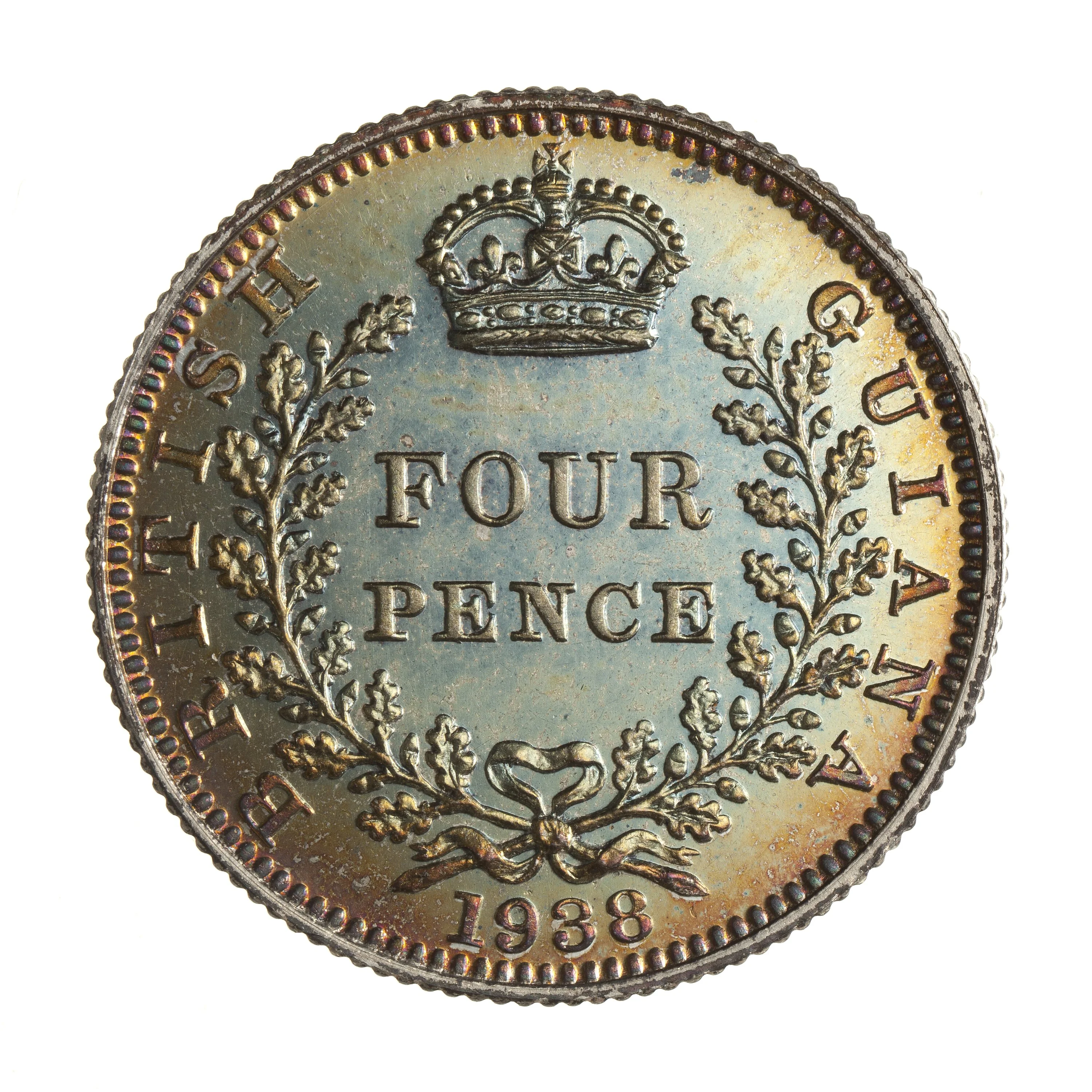
Reverse
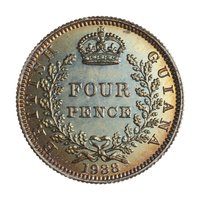
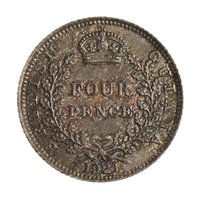
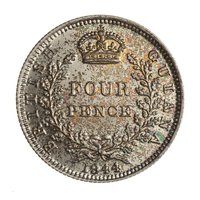
Description:
Crowned value encircled by wreath.
Inscription:
BRITISH GUIANA
FOUR
PENCE
1943
FOUR
PENCE
1943
Script: Latin
Edge
Reeded
Mints
| Name | Mark |
|---|---|
| Royal Mint (Tower Hill) | — |
Mintings
| Year | Mint Mark | Mintage | Quality | Collection |
|---|---|---|---|---|
| 1938 | — | 30,000 | ||
| 1938 | — | — | Proof | |
| 1939 | — | 48,000 | ||
| 1939 | — | — | Proof | |
| 1940 | — | 90,000 | ||
| 1940 | — | — | Proof | |
| 1941 | — | 120,000 | ||
| 1941 | — | — | Proof | |
| 1942 | — | 180,000 | ||
| 1942 | — | — | Proof | |
| 1943 | — | — | Proof | |
| 1943 | — | 240,000 |
Historical background
In 1938, British Guiana’s currency system was a direct colonial construct, operating under a sterling exchange standard. The local currency was the British Guiana dollar, fixed at a rate of 4 shillings and 2 pence sterling (or $4.80 to £1). This peg meant the colony’s money supply and credit conditions were entirely dependent on the balance of payments and the decisions of British-linked commercial banks, primarily Barclays (DCO) and the Royal Bank of Canada. There was no central bank; currency issuance was managed through a Currency Board in London, which held sterling reserves to back the local notes in circulation, ensuring convertibility but severely limiting local economic autonomy.
The system profoundly shaped the colony’s economic and social distress, a key factor in the widespread labour riots and strikes of 1938. The money supply was inelastic, often contracting during periods of low export earnings from sugar and bauxite, exacerbating deflationary pressures. Combined with a rigid banking sector that extended little credit outside of the established export industries, this starved the small agricultural and entrepreneurial sectors of capital. Consequently, workers and the unemployed faced severe cash shortages, stagnant wages, and high costs for imported goods, fueling the social unrest that swept through the colony.
The 1938 disturbances, part of a broader wave of Caribbean protests, forced a colonial commission of inquiry which indirectly critiqued the monetary straitjacket. While immediate currency reform was not enacted, the crisis highlighted the systemic flaws of a rigid colonial exchange system that prioritized imperial financial stability over local developmental needs. This scrutiny would later contribute to post-war movements toward financial autonomy and development banking in the lead-up to decolonization.
The system profoundly shaped the colony’s economic and social distress, a key factor in the widespread labour riots and strikes of 1938. The money supply was inelastic, often contracting during periods of low export earnings from sugar and bauxite, exacerbating deflationary pressures. Combined with a rigid banking sector that extended little credit outside of the established export industries, this starved the small agricultural and entrepreneurial sectors of capital. Consequently, workers and the unemployed faced severe cash shortages, stagnant wages, and high costs for imported goods, fueling the social unrest that swept through the colony.
The 1938 disturbances, part of a broader wave of Caribbean protests, forced a colonial commission of inquiry which indirectly critiqued the monetary straitjacket. While immediate currency reform was not enacted, the crisis highlighted the systemic flaws of a rigid colonial exchange system that prioritized imperial financial stability over local developmental needs. This scrutiny would later contribute to post-war movements toward financial autonomy and development banking in the lead-up to decolonization.
🌱 Common