

4 Pence – British Guiana
Guyana
Context
Years: 1944–1945
Country: Guyana 
Issuer: British Guiana
Ruler: George VI
Currency:
(1840—1954)
Demonetized: Yes
Total mintage: 210,000
Material
References
KM: #Click to copy to clipboard30a
Numista: #19572
Value
Bullion value: $2.75
Obverse
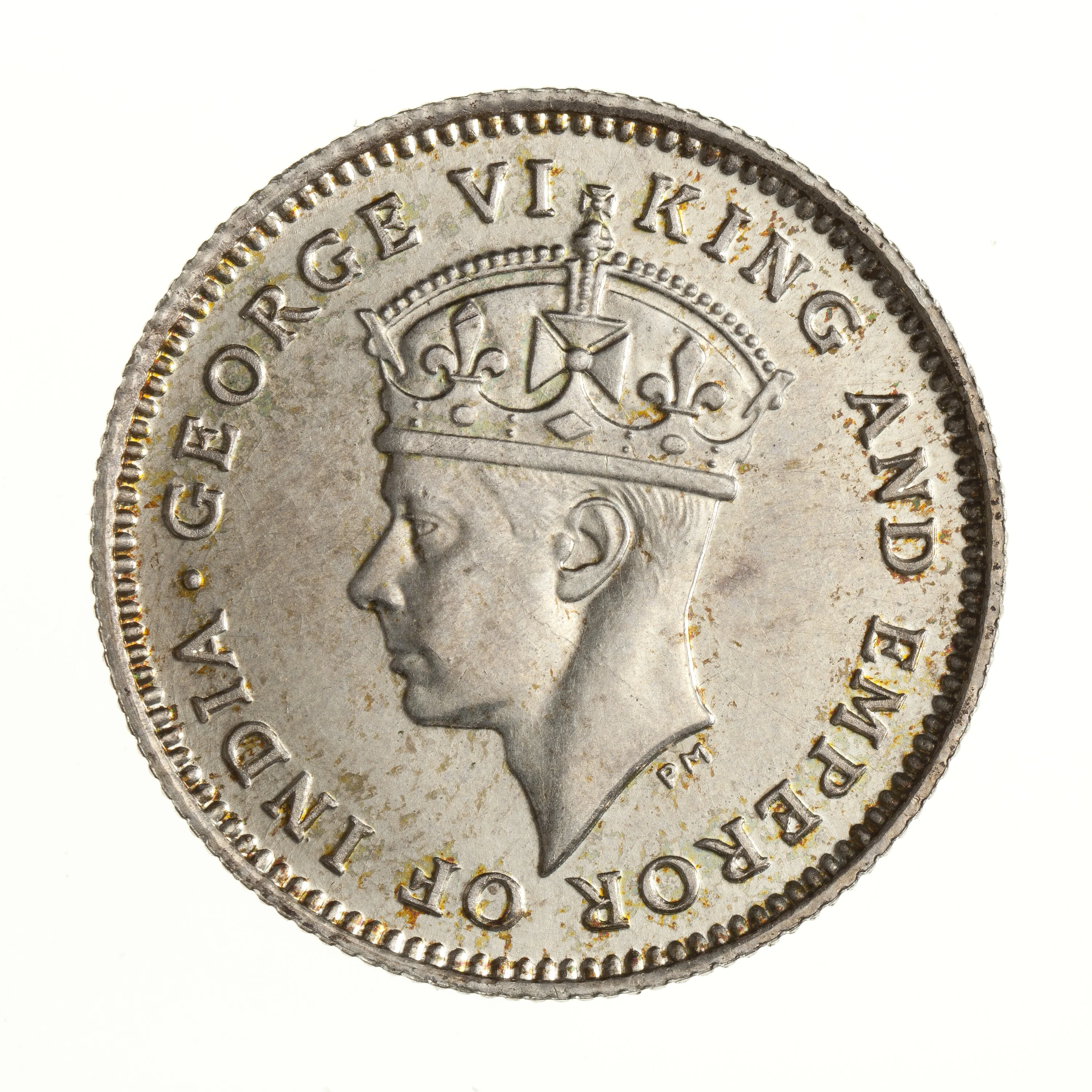
Description:
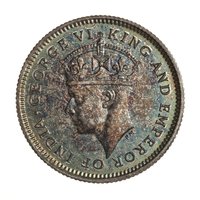
King George VI left-facing bust.
Inscription:
GEORGE VI KING AND EMPEROR OF INDIA
PM
PM
Translation:
GEORGE VI KING AND EMPEROR OF INDIA
PM
PM
Script: Latin
Language: English
Engraver: Percy Metcalfe
Reverse
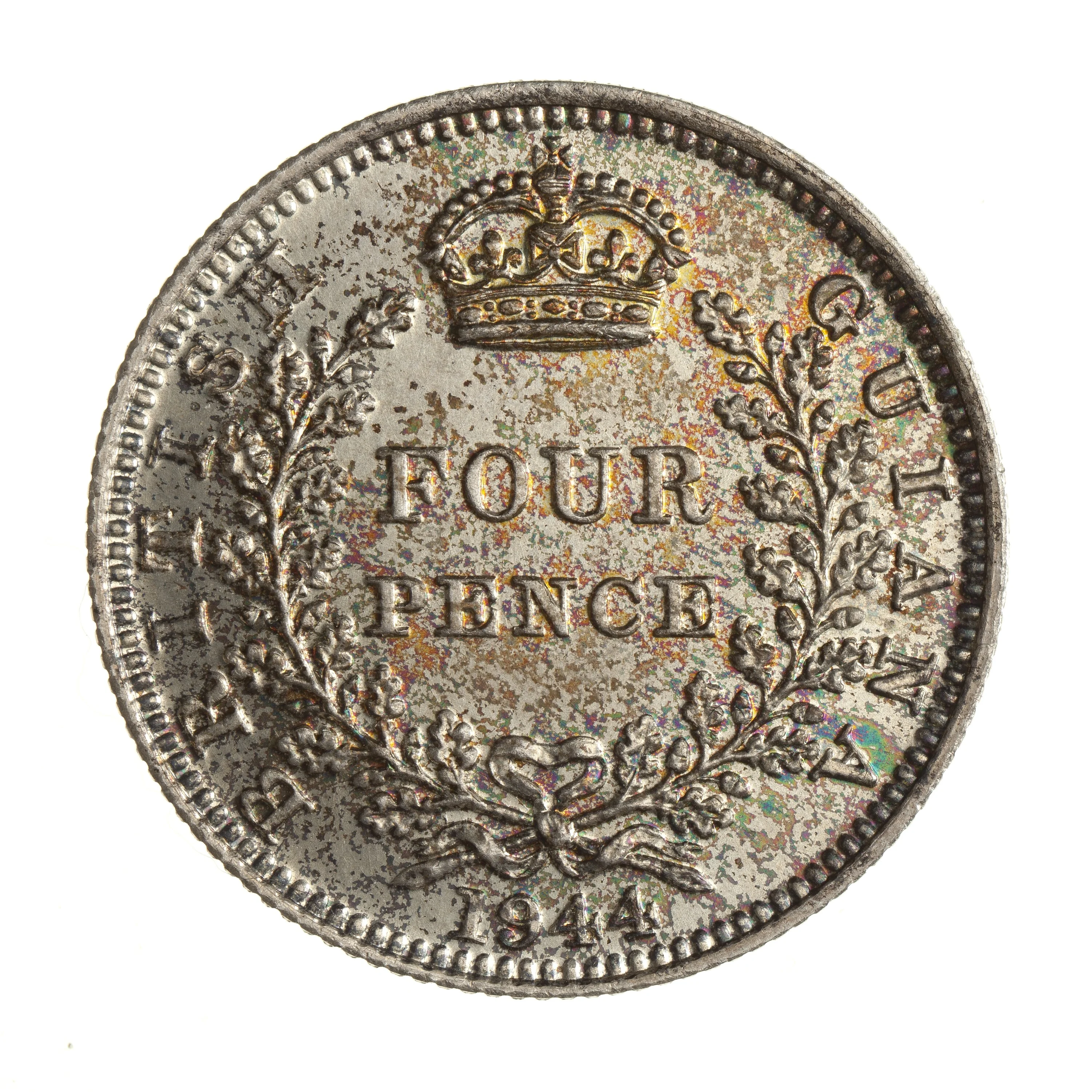
Description:
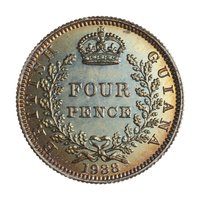
Crowned value encircled by wreath.
Inscription:
BRITISH GUIANA
FOUR
PENCE
1945
FOUR
PENCE
1945
Script: Latin
Edge
Mints
| Name | Mark |
|---|---|
| Royal Mint (Tower Hill) | — |
Mintings
| Year | Mint Mark | Mintage | Quality | Collection |
|---|---|---|---|---|
| 1944 | — | 90,000 | ||
| 1945 | — | 120,000 | ||
| 1945 | — | — | Proof |
Historical background
In 1944, British Guiana’s currency situation was defined by its status as a British colony, operating under a currency board system. The colony’s official currency was the British Guiana dollar (BGD), which was pegged at a fixed rate to sterling, specifically 4 shillings 2 pence (or BGD$4.80 = £1). This peg ensured monetary stability and facilitated trade with the United Kingdom, the colony's dominant economic partner. The currency was issued by the British Guiana Board of Commissioners of Currency, which held sterling reserves in London to fully back the local currency in circulation, a classic colonial sterling-exchange standard.
The wartime context of 1944 heavily influenced the colony's monetary conditions. As part of the broader Sterling Area, British Guiana was obligated to pool its foreign exchange earnings, particularly from its vital bauxite and sugar exports, into the central sterling reserves in London. This arrangement ensured Britain had access to crucial dollar resources but limited the colony's own financial autonomy and access to hard currencies like the US dollar. Internally, inflationary pressures were a growing concern, as seen across the Caribbean, due to wartime supply chain disruptions, shipping shortages, and increased government spending, which strained the fixed supply of goods against rising local currency liquidity.
Overall, the system in 1944 provided stability and guaranteed convertibility into sterling, but it was inherently designed to serve imperial economic interests. It tied the colony's prosperity directly to the British economy and policy, leaving little room for independent monetary management to address local economic challenges. This rigid framework, while orderly, would later become a point of contention in the post-war period as movements for greater self-government and economic diversification gained momentum.
The wartime context of 1944 heavily influenced the colony's monetary conditions. As part of the broader Sterling Area, British Guiana was obligated to pool its foreign exchange earnings, particularly from its vital bauxite and sugar exports, into the central sterling reserves in London. This arrangement ensured Britain had access to crucial dollar resources but limited the colony's own financial autonomy and access to hard currencies like the US dollar. Internally, inflationary pressures were a growing concern, as seen across the Caribbean, due to wartime supply chain disruptions, shipping shortages, and increased government spending, which strained the fixed supply of goods against rising local currency liquidity.
Overall, the system in 1944 provided stability and guaranteed convertibility into sterling, but it was inherently designed to serve imperial economic interests. It tied the colony's prosperity directly to the British economy and policy, leaving little room for independent monetary management to address local economic challenges. This rigid framework, while orderly, would later become a point of contention in the post-war period as movements for greater self-government and economic diversification gained momentum.
🌟 Uncommon