

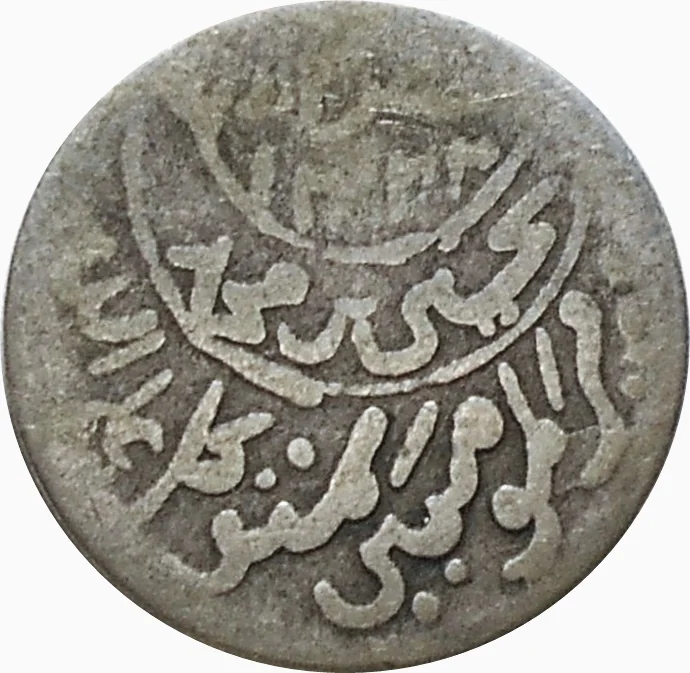
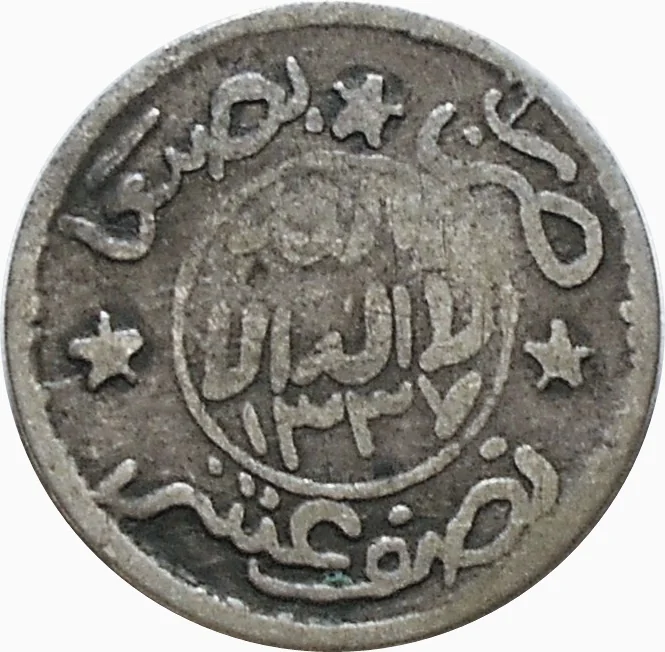
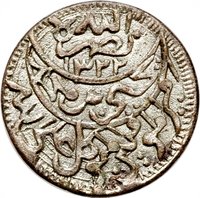
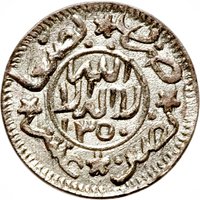
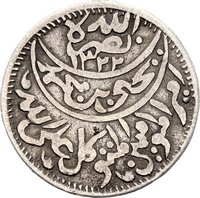
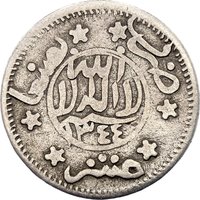
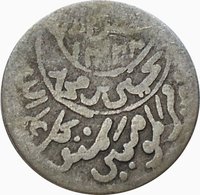
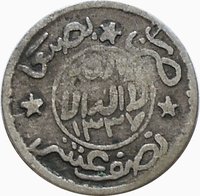
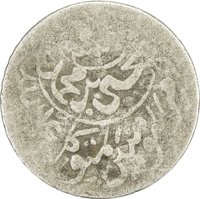
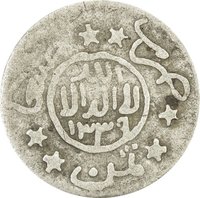
1⁄20 rial – Mutawakkilite Kingdom
Add to wishlist
Yemen
Context
Year: 1919
Islamic (Hijri) Year:: 1337
Country: Yemen
Issuer: Mutawakkilite Kingdom
Ruler: Yahya Muhammad Hamid ed-Din
Currency:
(1918—1974)
Demonetized: Yes
Material
References
Y: #
Numista: #195687
Value
Bullion value: $2.06
Mintings
| Year | Mint Mark | Mintage | Quality | Collection |
|---|---|---|---|---|
| 1919 | — | — |
Historical background
The currency situation in the Mutawakkilite Kingdom of Yemen in 1919 was one of transition and fragmentation, reflecting the kingdom's recent independence and its complex economic ties. Following the collapse of the Ottoman Empire at the end of World War I, Imam Yahya Hamid ad-Din had secured full sovereignty over the country's interior. This meant the withdrawal of the Ottoman monetary system, which had previously circulated alongside a variety of older, locally struck coins. The kingdom now faced the immediate challenge of establishing a unified and authoritative currency to facilitate trade and assert its newfound political autonomy.
In practice, the monetary landscape in 1919 was a heterogeneous mix. The primary circulating coins were the silver Imadi Riyal, named after Imam Yahya, which the state began minting in small quantities. However, these new coins competed with a plethora of older silver coins, such as the Maria Theresa thaler (widely known as the riyal franji), which had been a dominant trade currency for centuries, and residual Ottoman coins like the qirsh. The lack of sufficient minting capacity and standardized national coinage meant that exchange rates between these various silver pieces could fluctuate, often based on their weight and fineness rather than a fixed state decree.
This currency fragmentation underscored the kingdom's economic challenges and its cautious engagement with the outside world. While Imam Yahya sought to solidify his rule through a national currency, the continued dominance of foreign silver, particularly the Maria Theresa thaler, highlighted Yemen's deep integration into Red Sea and Indian Ocean trade networks. The situation in 1919 was therefore a delicate balance: the state was taking its first steps toward monetary sovereignty, but the economy still largely operated on a system of commodity money (silver bullion) and historic trade coins, awaiting a more comprehensive and centralized reform in the decades to follow.
In practice, the monetary landscape in 1919 was a heterogeneous mix. The primary circulating coins were the silver Imadi Riyal, named after Imam Yahya, which the state began minting in small quantities. However, these new coins competed with a plethora of older silver coins, such as the Maria Theresa thaler (widely known as the riyal franji), which had been a dominant trade currency for centuries, and residual Ottoman coins like the qirsh. The lack of sufficient minting capacity and standardized national coinage meant that exchange rates between these various silver pieces could fluctuate, often based on their weight and fineness rather than a fixed state decree.
This currency fragmentation underscored the kingdom's economic challenges and its cautious engagement with the outside world. While Imam Yahya sought to solidify his rule through a national currency, the continued dominance of foreign silver, particularly the Maria Theresa thaler, highlighted Yemen's deep integration into Red Sea and Indian Ocean trade networks. The situation in 1919 was therefore a delicate balance: the state was taking its first steps toward monetary sovereignty, but the economy still largely operated on a system of commodity money (silver bullion) and historic trade coins, awaiting a more comprehensive and centralized reform in the decades to follow.
✨ Legendary