

4 Pence – British Guiana and West Indies
Guyana
Context
Years: 1903–1910
Country: Guyana 
Issuer: British Guiana and West Indies
Ruler: Edward VII
Currency:
(1840—1954)
Demonetized: Yes
Total mintage: 192,000
Material
References
KM: #Click to copy to clipboard27
Numista: #19568
Value
Bullion value: $5.07
Obverse
Description:
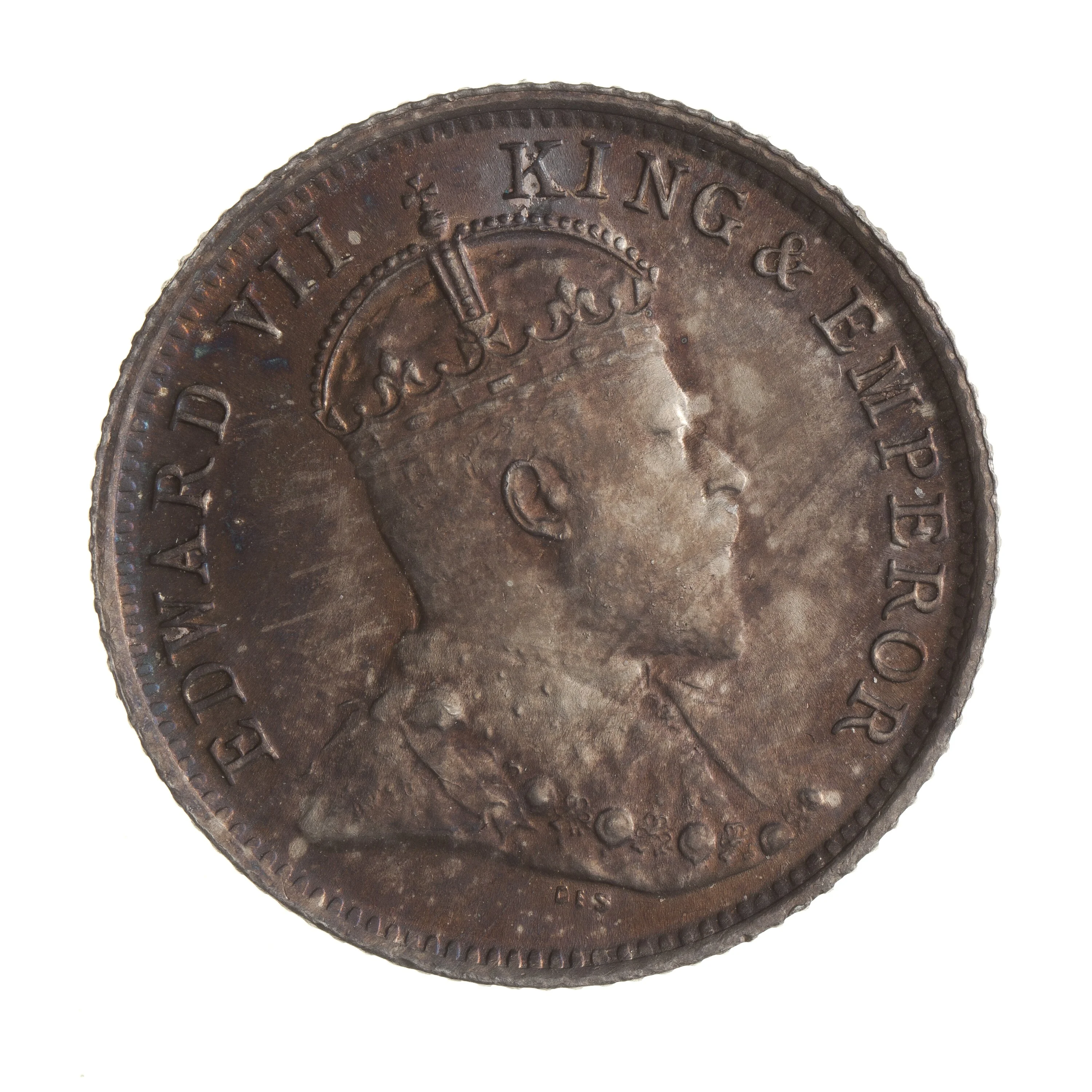
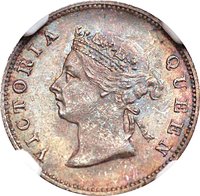
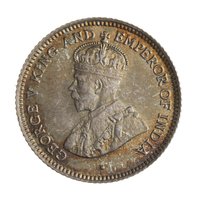
Edward VII right-facing bust, encircled by legend.
Inscription:
EDWARD VII KING & EMPEROR
Translation:
EDWARD VII KING & EMPEROR
Script: Latin
Language: English
Engraver: George William de Saulles
Reverse
Description:
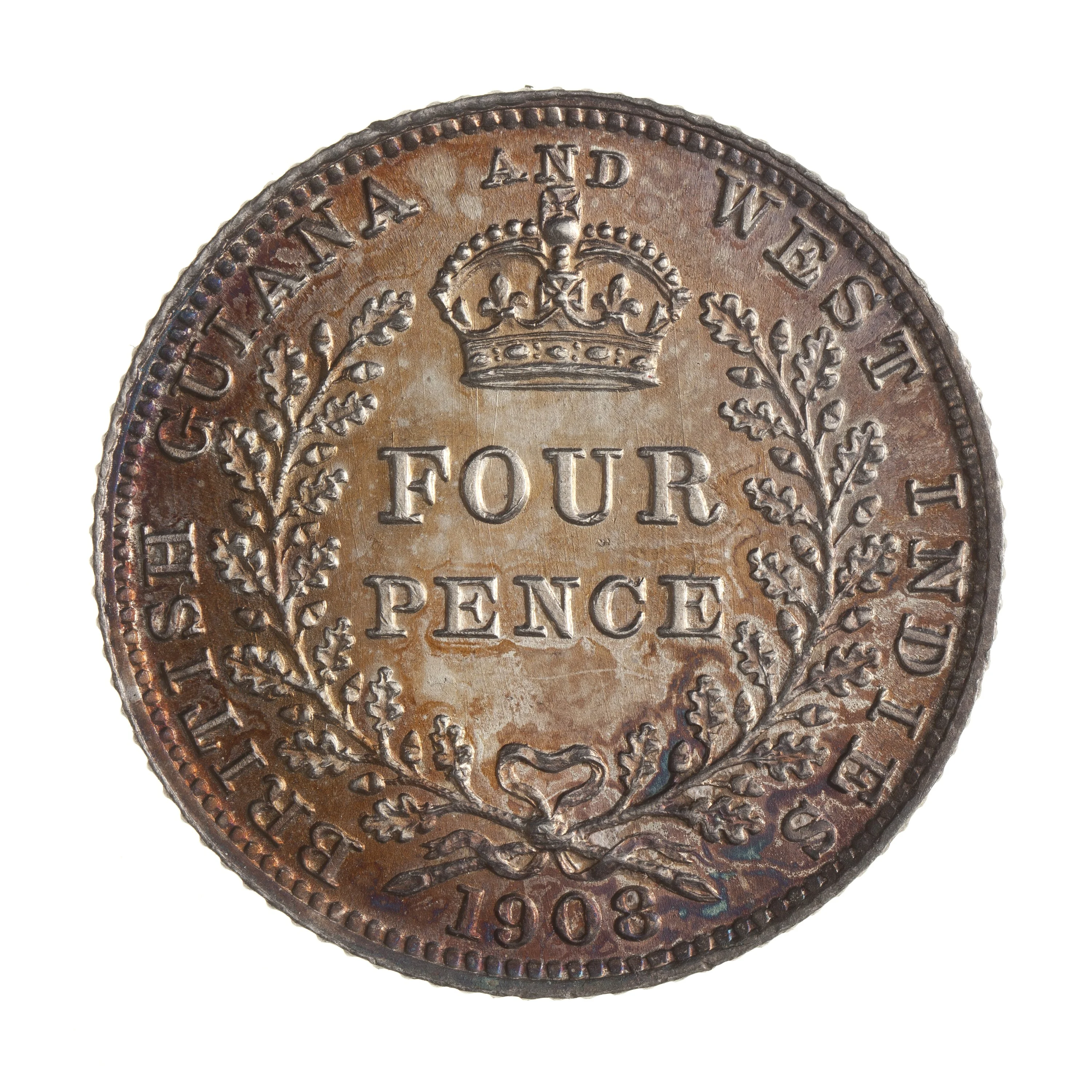
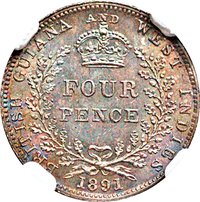
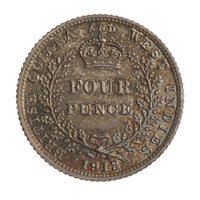
Denomination in wreath, legend around, date below.
Inscription:
BRITISH GUIANA AND WEST INDIES
FOUR
PENCE
1903
FOUR
PENCE
1903
Script: Latin
Edge
Reeded
Mints
| Name | Mark |
|---|---|
| Royal Mint (Tower Hill) | — |
Mintings
| Year | Mint Mark | Mintage | Quality | Collection |
|---|---|---|---|---|
| 1903 | — | — | Matte | |
| 1903 | — | 60,000 | ||
| 1903 | — | — | Proof | |
| 1908 | — | 30,000 | ||
| 1909 | — | 36,000 | ||
| 1910 | — | 66,000 |
Historical background
In 1903, the currency situation across British Guiana and the wider British West Indies was defined by a complex and often inconvenient dual-currency system. The official medium of exchange was British sterling, the currency of the colonial power. However, in daily commerce, the Spanish silver dollar and its fractional parts (known as "bits") remained stubbornly in widespread circulation, a legacy of centuries of regional trade. This created constant practical difficulties, as the fluctuating value of the silver dollar against the fixed gold-based sterling led to confusion, exchange losses, and friction in transactions, particularly for the wage-earning class and small traders.
The British colonial authorities had long sought to resolve this by imposing a full sterling standard. A significant step was the 1882 "Pinching Ordinance," which demonetized the Spanish dollar in British Guiana, but it proved largely ineffective as the coins remained in everyday use. By the turn of the century, the problem was acute, exacerbated by a global shortage of silver coinage that hampered local trade. The system was inefficient for an economy increasingly tied to British capital, especially the dominant sugar industry, which conducted its large-scale operations in sterling but paid workers with a mixture of currencies.
Consequently, 1903 fell within a period of active reform. The solution being implemented was the introduction of a new, bespoke British West Indian dollar, first issued in 1901. This was a sterling-backed silver token coinage, with a fixed value of four shillings and two pence sterling. By 1903, this new coinage was gradually circulating alongside and replacing the old Spanish dollars, aiming to finally unify the monetary system under a stable, decimalized currency that maintained a firm link to the pound while satisfying local familiarity with a dollar unit. The transition marked the end of the Spanish monetary legacy and the consolidation of a formal colonial currency sphere.
The British colonial authorities had long sought to resolve this by imposing a full sterling standard. A significant step was the 1882 "Pinching Ordinance," which demonetized the Spanish dollar in British Guiana, but it proved largely ineffective as the coins remained in everyday use. By the turn of the century, the problem was acute, exacerbated by a global shortage of silver coinage that hampered local trade. The system was inefficient for an economy increasingly tied to British capital, especially the dominant sugar industry, which conducted its large-scale operations in sterling but paid workers with a mixture of currencies.
Consequently, 1903 fell within a period of active reform. The solution being implemented was the introduction of a new, bespoke British West Indian dollar, first issued in 1901. This was a sterling-backed silver token coinage, with a fixed value of four shillings and two pence sterling. By 1903, this new coinage was gradually circulating alongside and replacing the old Spanish dollars, aiming to finally unify the monetary system under a stable, decimalized currency that maintained a firm link to the pound while satisfying local familiarity with a dollar unit. The transition marked the end of the Spanish monetary legacy and the consolidation of a formal colonial currency sphere.
🌟 Limited