

4 pence – British Guiana and West Indies
Add to wishlist
Guyana
Context
Years: 1891–1901
Country: Guyana
Issuer: British Guiana and West Indies
Ruler: Victoria
Currency:
(1840—1954)
Demonetized: Yes
Total mintage: 561,000
Material
References
KM: #
Numista: #19567
Value
Bullion value: $4.47
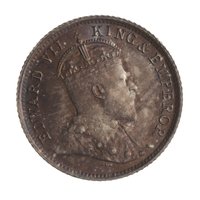
Obverse
Description:
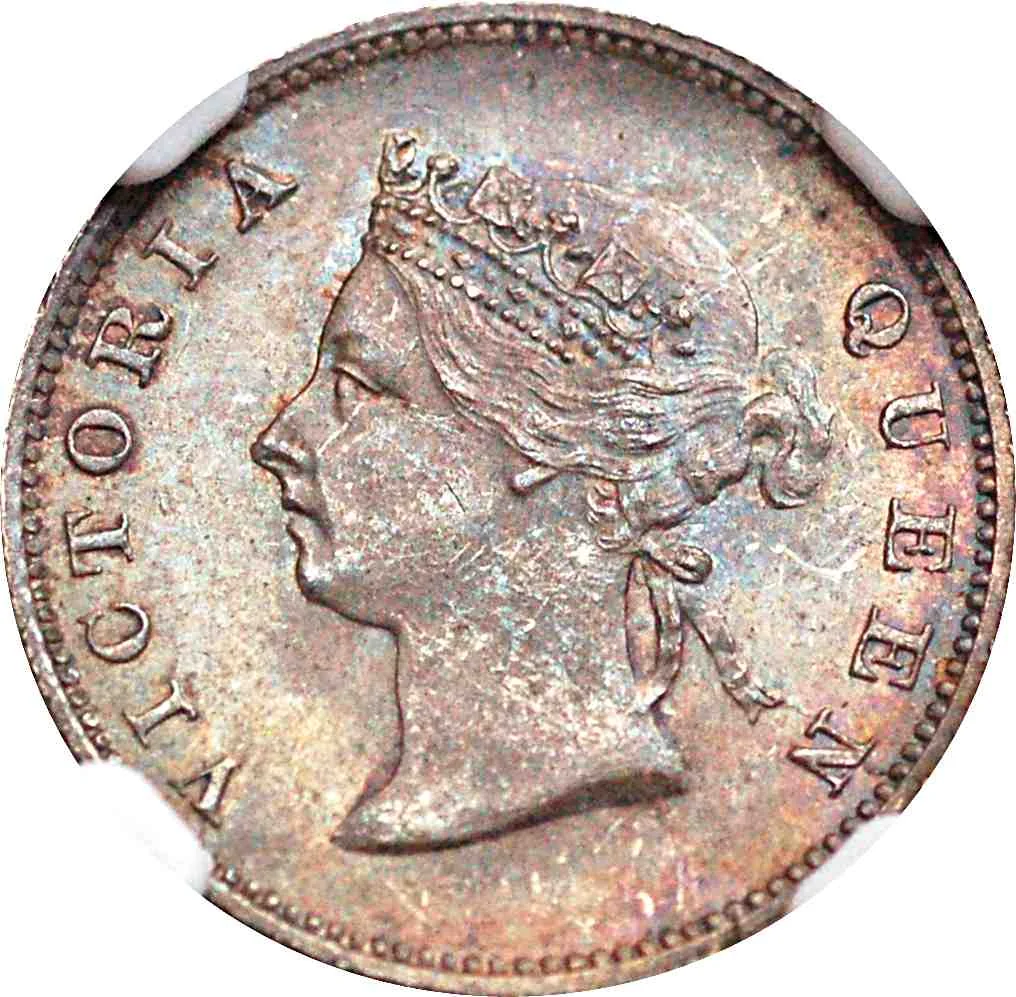
Bust of Queen Victoria, left-facing.
Inscription:
VICTORIA QUEEN
Script: Latin
Engraver: Leonard Charles Wyon
Designer: William Theed
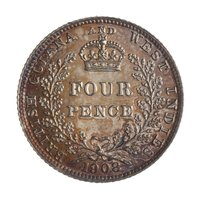
Reverse
Description:
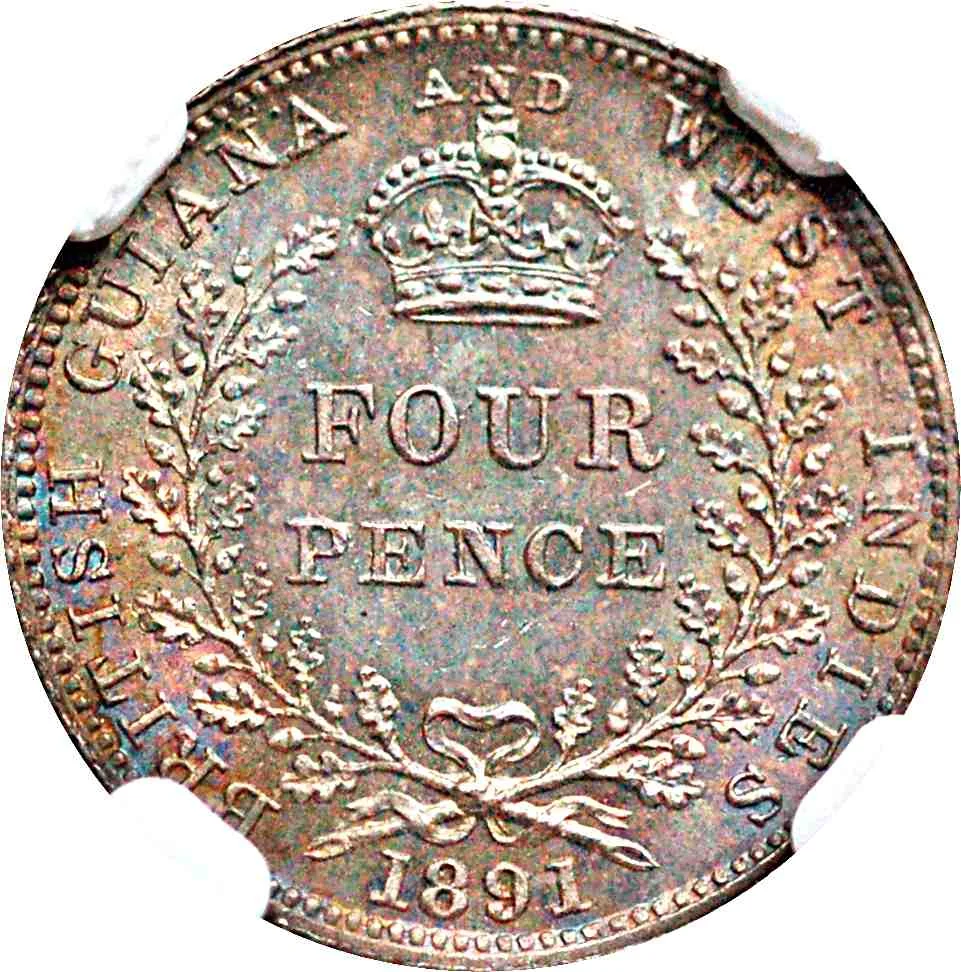
Crowned value encircled by wreath.
Inscription:
BRITISH GUIANA AND WEST INDIES
FOUR
PENCE
1891
FOUR
PENCE
1891
Script: Latin
Edge
Reeded
Mints
| Name | Mark |
|---|---|
| Royal Mint (Tower Hill) | — |
Mintings
| Year | Mint Mark | Mintage | Quality | Collection |
|---|---|---|---|---|
| 1891 | — | 336,000 | ||
| 1894 | — | 120,000 | ||
| 1900 | — | 45,000 | ||
| 1901 | — | 60,000 |
Historical background
In 1891, the currency situation in British Guiana and the wider British West Indies was defined by a complex and often problematic dual-currency system. The official medium of exchange was British sterling, the currency of the colonial power, which was used for government transactions, foreign trade, and banking. However, in everyday commerce, the Spanish silver dollar and its fractional parts (bits) remained stubbornly in circulation, particularly among the working and merchant classes. This created a persistent exchange rate headache, as the value of the Spanish dollar fluctuated against sterling, leading to confusion, instability in local pricing, and opportunities for profiteering.
The core issue was a chronic shortage of official British coinage that was small enough for daily wages and market purchases. To address this, various tokens and private banknotes circulated, but the void was largely filled by the familiar Spanish dollars and their cut pieces. The colonial government had attempted to standardise the system by overstamping Spanish dollars with a "portcullis" mark to give them a fixed sterling value (4 shillings 2 pence), but these coins were often exported as bullion when silver prices rose, perpetuating the shortage. This environment hindered efficient trade and economic planning, as merchants and planters constantly had to calculate between two monetary standards.
Recognising the impediment to commerce and administration, the imperial authorities were moving towards a definitive solution. The year 1891 fell within a period of active planning that would lead to the establishment of a unified, decimal-based currency for the region. This culminated in the 1898 Order-in-Council, which created the British West Indies dollar, pegged to sterling at a fixed rate of 4 shillings 2 pence. Therefore, the situation in 1891 was one of transition, characterised by the lingering frustrations of an outdated dual system on the cusp of being replaced by a modern, government-issued territorial currency designed to bring stability and uniformity.
The core issue was a chronic shortage of official British coinage that was small enough for daily wages and market purchases. To address this, various tokens and private banknotes circulated, but the void was largely filled by the familiar Spanish dollars and their cut pieces. The colonial government had attempted to standardise the system by overstamping Spanish dollars with a "portcullis" mark to give them a fixed sterling value (4 shillings 2 pence), but these coins were often exported as bullion when silver prices rose, perpetuating the shortage. This environment hindered efficient trade and economic planning, as merchants and planters constantly had to calculate between two monetary standards.
Recognising the impediment to commerce and administration, the imperial authorities were moving towards a definitive solution. The year 1891 fell within a period of active planning that would lead to the establishment of a unified, decimal-based currency for the region. This culminated in the 1898 Order-in-Council, which created the British West Indies dollar, pegged to sterling at a fixed rate of 4 shillings 2 pence. Therefore, the situation in 1891 was one of transition, characterised by the lingering frustrations of an outdated dual system on the cusp of being replaced by a modern, government-issued territorial currency designed to bring stability and uniformity.
🌱 Fairly Common