

4 Pence – British Guiana and West Indies
Guyana
Context
Years: 1911–1916
Country: Guyana 
Issuer: British Guiana and West Indies
Ruler: George V
Currency:
(1840—1954)
Demonetized: Yes
Total mintage: 90,000
Material
References
KM: #Click to copy to clipboard28
Numista: #19569
Value
Bullion value: $5.07
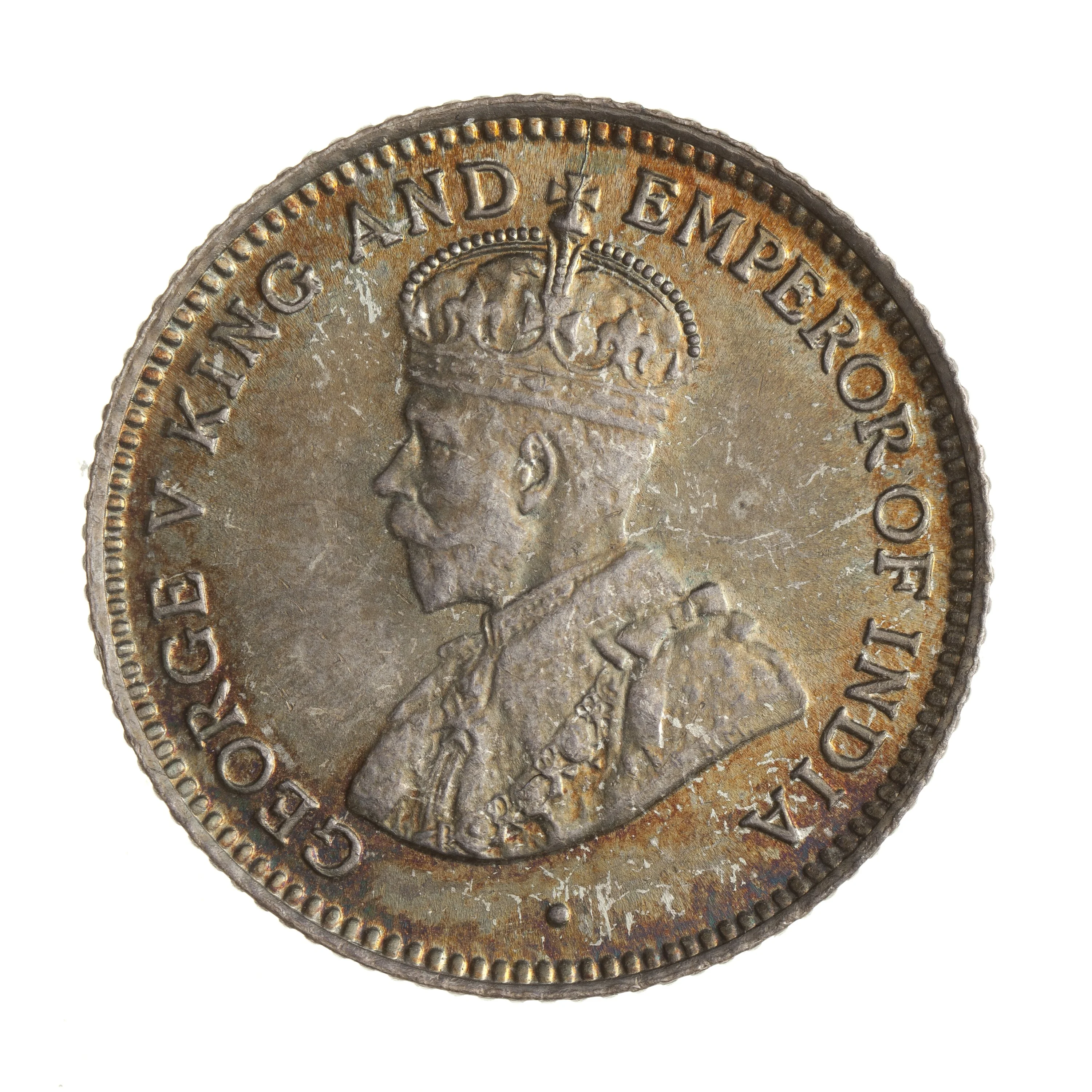
Obverse
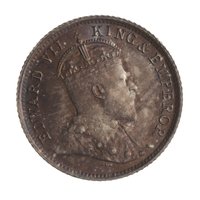
Description:
King George V left-facing bust
Inscription:
GEORGE V KING AND EMPEROR OF INDIA
Translation:
GEORGE V KING AND EMPEROR OF INDIA
Script: Latin
Language: English
Engraver: Edgar Bertram MacKennal
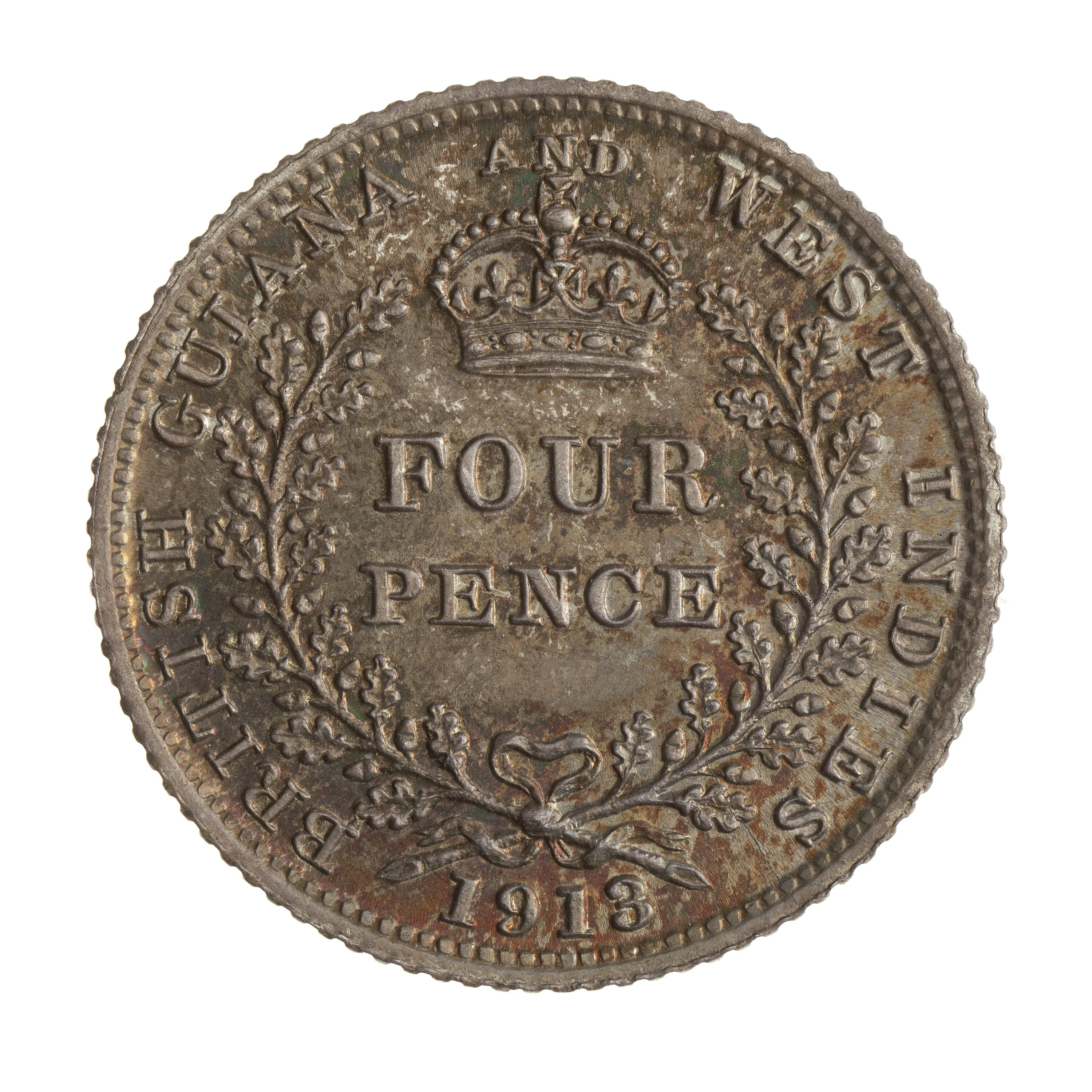
Reverse
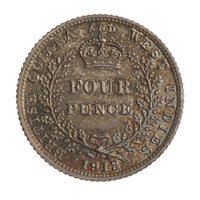
Description:
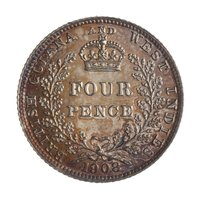
Crowned value encircled by wreath.
Inscription:
BRITISH GUIANA AND WEST INDIES
FOUR
PENCE
1911
FOUR
PENCE
1911
Script: Latin
Edge
Mints
| Name | Mark |
|---|---|
| Royal Mint (Tower Hill) | — |
Mintings
| Year | Mint Mark | Mintage | Quality | Collection |
|---|---|---|---|---|
| 1911 | — | 30,000 | ||
| 1913 | — | 30,000 | ||
| 1916 | — | 30,000 |
Historical background
In 1911, the currency situation in British Guiana and the wider British West Indies was defined by a complex and often problematic dual system. The official currency was British sterling, with pounds, shillings, and pence as the legal tender for government transactions and larger commercial dealings. However, in daily life, the Spanish silver dollar and its fractional parts (bits) remained stubbornly in circulation, particularly among the working population for wages and small market purchases. This created constant friction, as fluctuating exchange rates between the two systems led to confusion, calculation errors, and opportunities for exploitation.
The British government had long sought to standardize the currency on a sterling gold standard to fully integrate the colonies into the imperial economic system. A key step was the introduction of a special British West Indian dollar in the late 19th century, valued at four shillings and twopence sterling. By 1911, this token coinage was gaining ground, but the transition was incomplete and uneven across the islands. The older Spanish dollars, often worn and clipped, continued to circulate at values decreed by local proclamation, leading to a messy multiplicity of concurrent values for the same physical coins.
This monetary duality reflected the broader economic and social stratification of the colonies. The planter class, merchants, and colonial administration operated in sterling, tying them directly to London's financial markets. Meanwhile, the Afro-Caribbean and Indo-Caribbean labour force, paid in the more volatile dollar system, faced a hidden inflation tax whenever the local dollar was devalued against sterling. Consequently, the year 1911 fell within a period of protracted monetary reform, where the official drive for sterling uniformity persistently clashed with the practical realities of a resilient, popular silver currency.
The British government had long sought to standardize the currency on a sterling gold standard to fully integrate the colonies into the imperial economic system. A key step was the introduction of a special British West Indian dollar in the late 19th century, valued at four shillings and twopence sterling. By 1911, this token coinage was gaining ground, but the transition was incomplete and uneven across the islands. The older Spanish dollars, often worn and clipped, continued to circulate at values decreed by local proclamation, leading to a messy multiplicity of concurrent values for the same physical coins.
This monetary duality reflected the broader economic and social stratification of the colonies. The planter class, merchants, and colonial administration operated in sterling, tying them directly to London's financial markets. Meanwhile, the Afro-Caribbean and Indo-Caribbean labour force, paid in the more volatile dollar system, faced a hidden inflation tax whenever the local dollar was devalued against sterling. Consequently, the year 1911 fell within a period of protracted monetary reform, where the official drive for sterling uniformity persistently clashed with the practical realities of a resilient, popular silver currency.
⭐ Rare