

5 Mu – Myanmar
Myanmar
Context
Year: 1853
Buddhist (Chulasakarat) Year: 1214
Issuer: Myanmar 
Ruler: Mindon Min
Currency:
(1852—1889)
Demonetized: Yes
Material
References
KM: #Click to copy to clipboard9
Numista: #19495
Value
Bullion value: $15.20
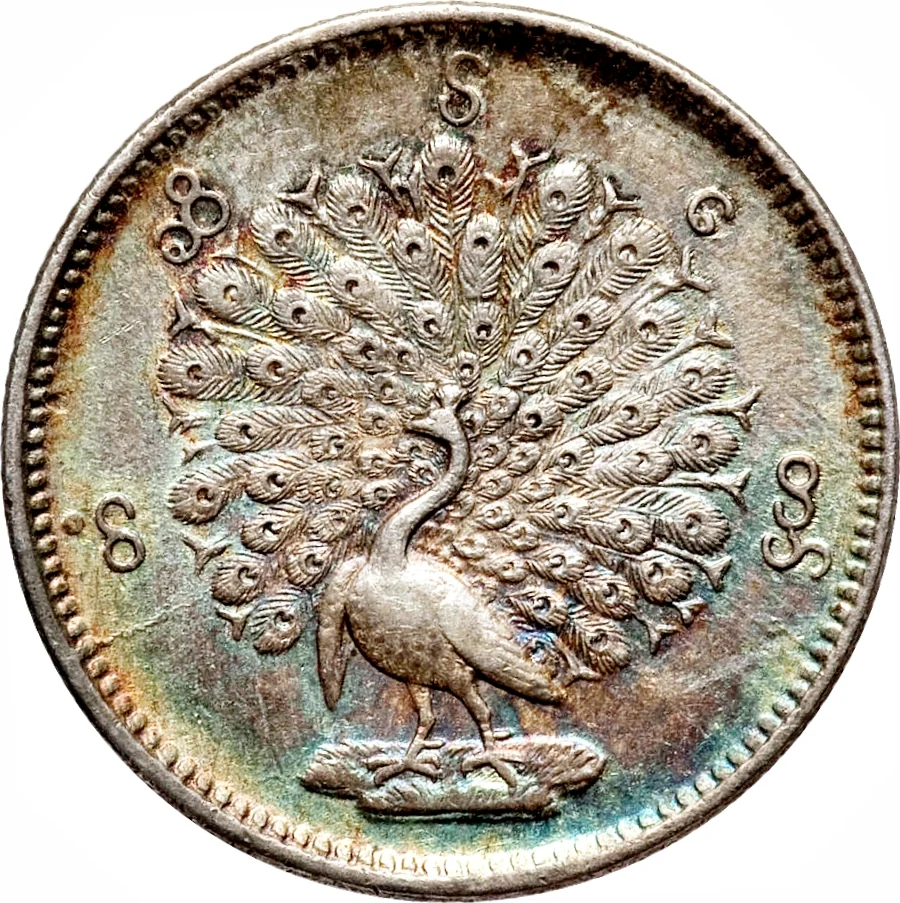
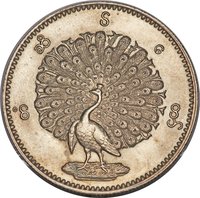
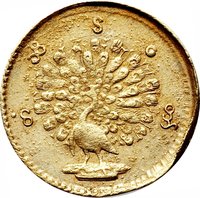
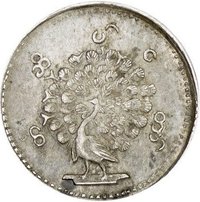
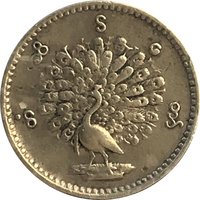
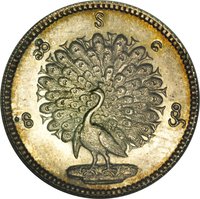
Obverse
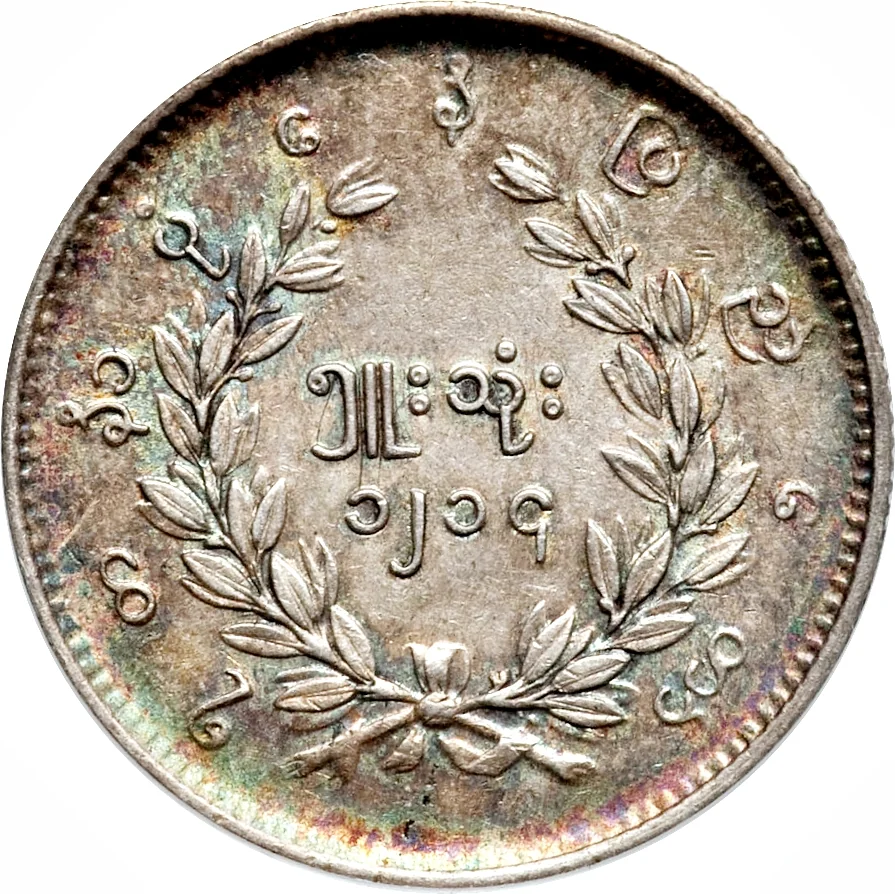
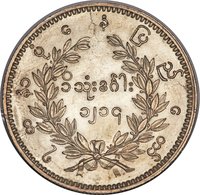
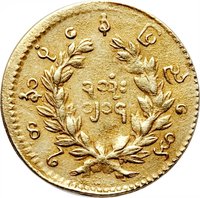
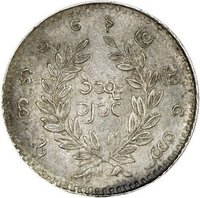
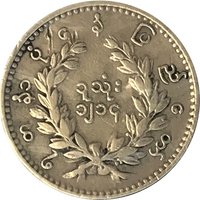
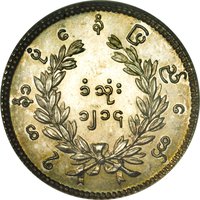
Reverse
Inscription:
ရတနာပိုနေပြဥာ်တော်
၅။းသိုး
၁၂၁၃
၅။းသိုး
၁၂၁၃
Translation:
Fifth Year of the Era of the Lord of the White Elephant, the Repository of Gems. 1213.
Language: Burmese
Edge
Mintings
| Year | Mint Mark | Mintage | Quality | Collection |
|---|---|---|---|---|
| 1853 | — | — |
Historical background
In 1853, the currency situation in the Kingdom of Myanmar (then the Konbaung Dynasty) was complex and transitional, operating under a pre-colonial bimetallic system. The primary unit was the kyat (also known as the tical), a silver coin of high purity, alongside the gold mu and a vast array of lead, copper, and brass coins for smaller, everyday transactions. The state held a royal monopoly on coinage, and the value of these metals was not fixed by a strict ratio but fluctuated based on weight, purity, and royal decree. This system was largely insular, designed for a subsistence agricultural economy and internal taxation, with limited integration into broader regional monetary networks.
However, this indigenous system was under growing pressure from external forces. The British had annexed Lower Myanmar following the First Anglo-Burmese War (1824-1826), and by 1853, the Second Anglo-Burmese War was concluding, leading to the British annexation of Pegu. This resulted in a divided monetary landscape: British India's silver rupee and subsidiary coins began circulating in the newly occupied territories, creating a dual-currency zone along the coast and southern regions. Meanwhile, in the independent Burmese heartland around Mandalay, King Mindon maintained the traditional system, though he was increasingly aware of the need for modernization and standardization to facilitate trade and assert sovereignty.
Consequently, 1853 stands at a pivotal moment, marking the beginning of the end for Myanmar's traditional currency. The territorial and economic encroachment by the British Empire introduced a competing, standardized currency that would eventually dominate. Within a few years, King Mindon would respond by attempting to reform the system, introducing machine-struck coins in 1857 to replace the cruder hammered coins, in an effort to create a more modern and unified national currency. Thus, the year captures a kingdom striving to maintain its monetary autonomy while being inexorably pulled into the economic orbit of colonial India.
However, this indigenous system was under growing pressure from external forces. The British had annexed Lower Myanmar following the First Anglo-Burmese War (1824-1826), and by 1853, the Second Anglo-Burmese War was concluding, leading to the British annexation of Pegu. This resulted in a divided monetary landscape: British India's silver rupee and subsidiary coins began circulating in the newly occupied territories, creating a dual-currency zone along the coast and southern regions. Meanwhile, in the independent Burmese heartland around Mandalay, King Mindon maintained the traditional system, though he was increasingly aware of the need for modernization and standardization to facilitate trade and assert sovereignty.
Consequently, 1853 stands at a pivotal moment, marking the beginning of the end for Myanmar's traditional currency. The territorial and economic encroachment by the British Empire introduced a competing, standardized currency that would eventually dominate. Within a few years, King Mindon would respond by attempting to reform the system, introducing machine-struck coins in 1857 to replace the cruder hammered coins, in an effort to create a more modern and unified national currency. Thus, the year captures a kingdom striving to maintain its monetary autonomy while being inexorably pulled into the economic orbit of colonial India.
Series: 1853 Myanmar circulation coins
💎 Very Rare