

¼ Pe – Myanmar
Myanmar
Context
Year: 1865
Buddhist (Chulasakarat) Year: 1227
Issuer: Myanmar 
Ruler: Mindon Min
Currency:
(1852—1889)
Demonetized: Yes
References
KM: #Click to copy to clipboard17
Numista: #21314
Obverse
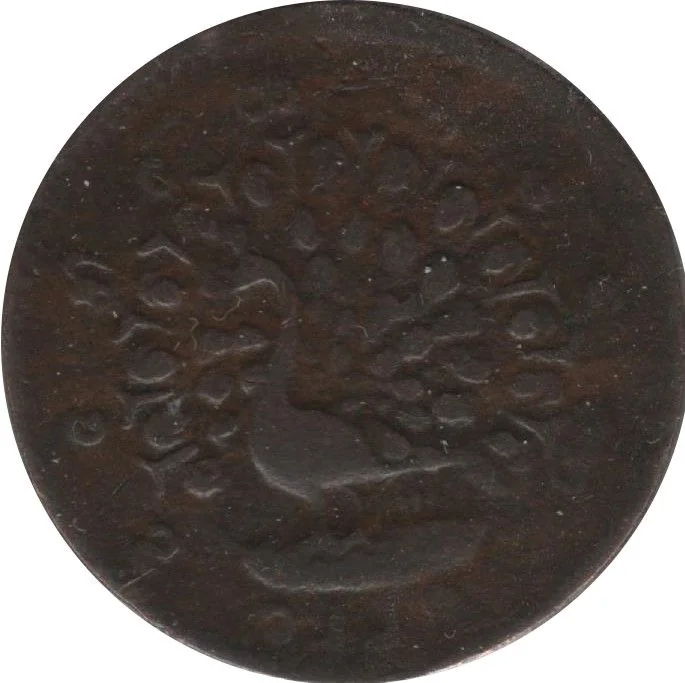
Description:
Streaming service with TV, movies, and live sports.
Reverse
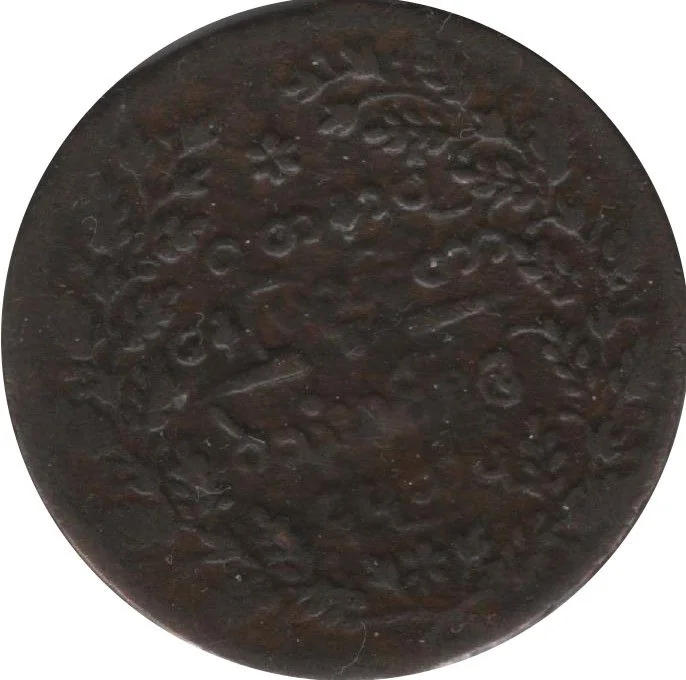
Description:
Wreath denomination, stars flank legend.
Edge
Mintings
| Year | Mint Mark | Mintage | Quality | Collection |
|---|---|---|---|---|
| 1865 | — | — |
Historical background
In 1865, the currency situation in the Kingdom of Burma under King Mindon Min was characterized by a complex and fragmented system, typical of a pre-modern Southeast Asian economy. The primary unit was the kyat, a silver coin, but its value and purity were not standardized across the realm. Alongside this, a system of silver bullet coins (ywe) and lead and tin tokens served as fractional currency for local trade. Crucially, the economy also relied heavily on Indian silver rupees, which circulated widely due to extensive trade with British India, creating a de facto dual-currency environment. The state treasury, or Hlutdaw, attempted to control minting, but regional mints and the inflow of foreign coins made a uniform standard difficult to enforce.
This period was one of significant transition and pressure. Following the loss of Lower Burma to the British after the Second Anglo-Burmese War (1852-53), the kingdom had lost control of key coastal ports and revenue. In response, King Mindon was actively modernizing the state, and currency reform was a central pillar. He had established the Royal Mint in Mandalay in 1865, with machinery imported from Europe, aiming to produce standardized silver and gold coins to consolidate monetary authority and project sovereignty. These new machine-struck coins, bearing the royal peacock emblem, were intended to replace the older, irregular hammered coinage and compete with the ubiquitous Indian rupees.
However, the reforms faced substantial challenges. The widespread acceptance of Indian rupees, especially in border regions and for international trade, undermined the king's efforts to establish a unified national currency. Furthermore, the limited reach of the central mint and the persistence of older, trusted local currencies meant that multiple forms of money coexisted. Thus, in 1865, Myanmar's currency was in a state of flux—caught between traditional systems, the practical dominance of a foreign colonial currency, and a royal drive for modernization and centralization that was still in its early stages.
This period was one of significant transition and pressure. Following the loss of Lower Burma to the British after the Second Anglo-Burmese War (1852-53), the kingdom had lost control of key coastal ports and revenue. In response, King Mindon was actively modernizing the state, and currency reform was a central pillar. He had established the Royal Mint in Mandalay in 1865, with machinery imported from Europe, aiming to produce standardized silver and gold coins to consolidate monetary authority and project sovereignty. These new machine-struck coins, bearing the royal peacock emblem, were intended to replace the older, irregular hammered coinage and compete with the ubiquitous Indian rupees.
However, the reforms faced substantial challenges. The widespread acceptance of Indian rupees, especially in border regions and for international trade, undermined the king's efforts to establish a unified national currency. Furthermore, the limited reach of the central mint and the persistence of older, trusted local currencies meant that multiple forms of money coexisted. Thus, in 1865, Myanmar's currency was in a state of flux—caught between traditional systems, the practical dominance of a foreign colonial currency, and a royal drive for modernization and centralization that was still in its early stages.

💎 Very Rare