

⅓ farthing – Malta
Add to wishlist
Malta
Context
Year: 1902
Issuer: Malta
Ruler: Edward VII
Currency:
(1825—1972)
Demonetization: 31 December 1960
Total mintage: 288,000
Material
References
KM: #
Numista: #19480
Obverse
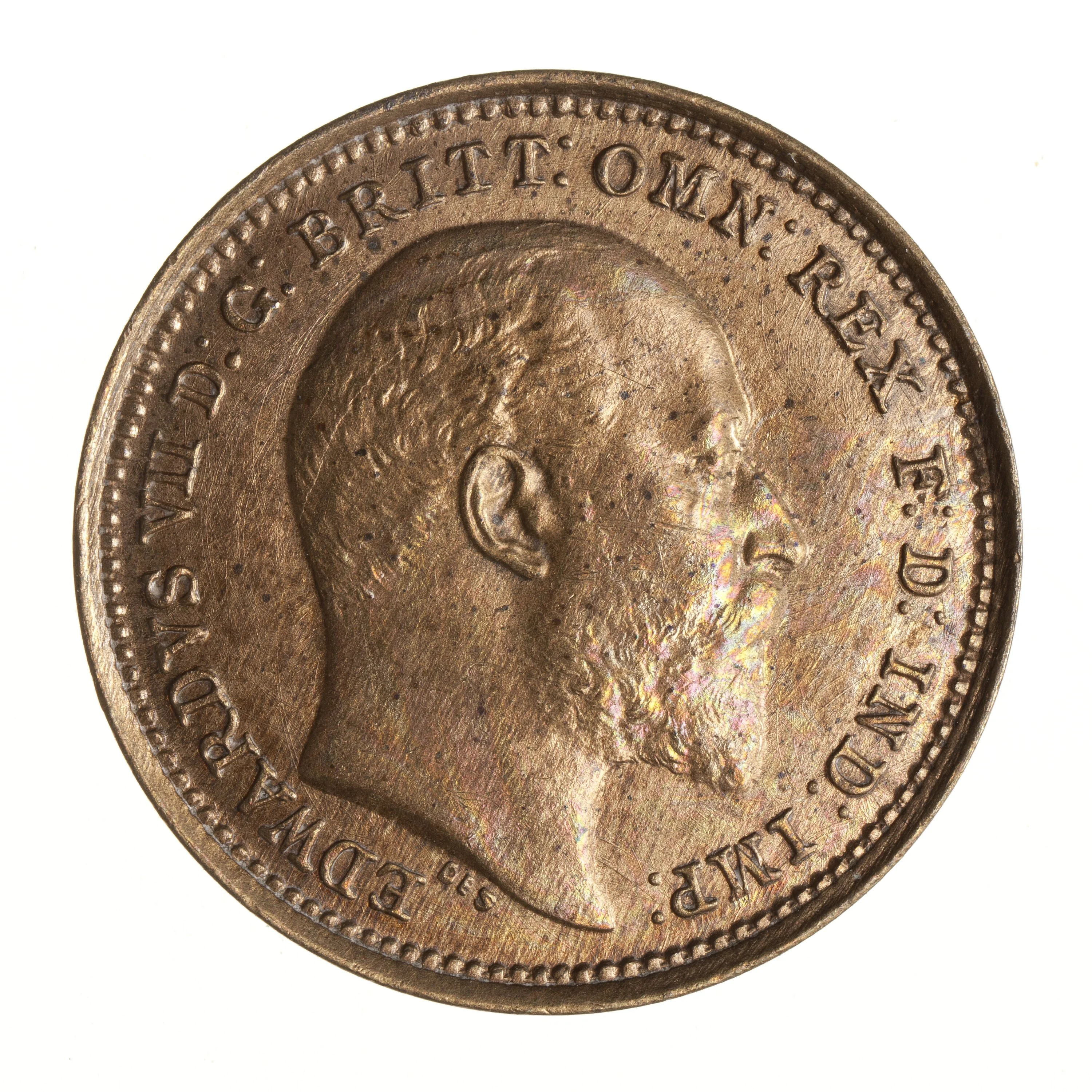
Description:
King Edward VII, uncrowned, facing right with encircling legend.
Inscription:
EDWARDVS VII D: G: BRITT: OMN: REX F. D. IND: IMP:
Translation:
Edward VII, by the Grace of God, King of all the Britains, Defender of the Faith, Emperor of India.
Script: Latin
Language: Latin
Engraver: George William de Saulles
Reverse
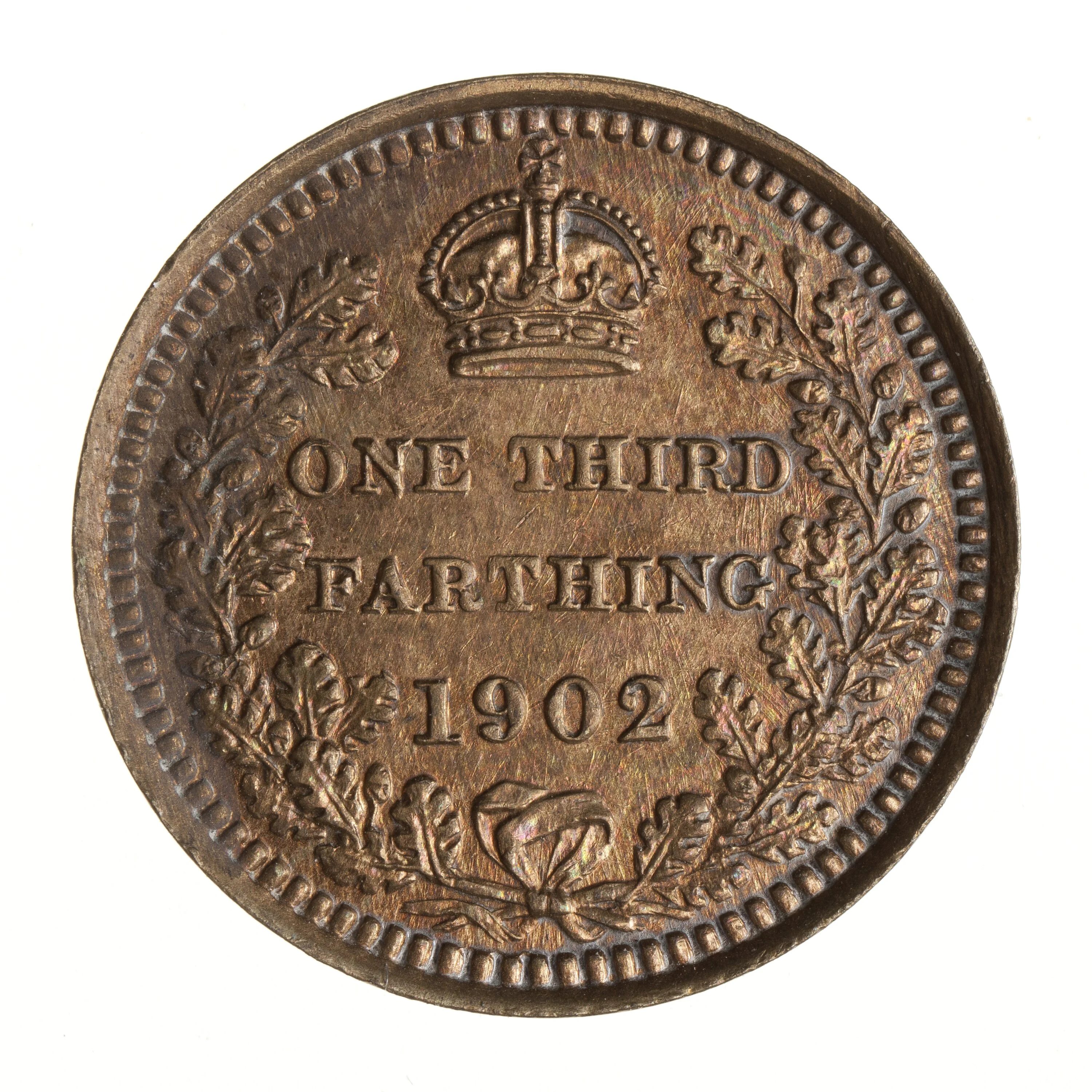
Description:
Crowned denomination above date within laurel wreath.
Inscription:
ONE THIRD
FARTHING
1902
FARTHING
1902
Script: Latin
Edge
Plain
Mints
| Name | Mark |
|---|---|
| Royal Mint (Tower Hill) | — |
Mintings
| Year | Mint Mark | Mintage | Quality | Collection |
|---|---|---|---|---|
| 1902 | — | 288,000 |
Historical background
In 1902, Malta operated under a complex and somewhat anomalous currency system, a legacy of its strategic position within the British Empire. The official currency was the British sterling, with pounds, shillings, and pence as the formal units of account for government and large transactions. However, the everyday monetary reality for most Maltese was dominated by a parallel system of token coins, primarily the Maltese scudo and its subdivisions (tari and grani). This scudo system, a holdover from the period of the Knights of St. John, circulated widely at a fixed exchange rate of 1 scudo to 1 shilling 8 pence (or 1/12th of a British pound).
This dual-currency environment created persistent practical difficulties. While legally fixed, the coexistence of two systems led to confusion in commerce and frequent disputes over conversion, especially for smaller purchases and among the working class. British silver and copper coins circulated alongside the distinct Maltese token coins, but the insufficiency of small-denomination British copper coins meant the fractional grano and tari tokens remained essential for daily market life. This situation was seen by British colonial authorities as inefficient and outdated, out of step with the island's formal integration into the Empire.
Consequently, the early 1900s marked a period of transition and deliberate policy shift. The year 1902 fell within a protracted process of "sterlingisation," where the British government sought to suppress the local token coinage and make sterling the sole, practical currency. This effort involved gradually withdrawing the old tokens from circulation and introducing sufficient British bronze coinage. The process, driven by a desire for administrative uniformity and economic integration, aimed to simplify trade and fully align Malta's monetary system with that of the United Kingdom, a goal that would be largely achieved in the subsequent decade.
This dual-currency environment created persistent practical difficulties. While legally fixed, the coexistence of two systems led to confusion in commerce and frequent disputes over conversion, especially for smaller purchases and among the working class. British silver and copper coins circulated alongside the distinct Maltese token coins, but the insufficiency of small-denomination British copper coins meant the fractional grano and tari tokens remained essential for daily market life. This situation was seen by British colonial authorities as inefficient and outdated, out of step with the island's formal integration into the Empire.
Consequently, the early 1900s marked a period of transition and deliberate policy shift. The year 1902 fell within a protracted process of "sterlingisation," where the British government sought to suppress the local token coinage and make sterling the sole, practical currency. This effort involved gradually withdrawing the old tokens from circulation and introducing sufficient British bronze coinage. The process, driven by a desire for administrative uniformity and economic integration, aimed to simplify trade and fully align Malta's monetary system with that of the United Kingdom, a goal that would be largely achieved in the subsequent decade.
🌱 Fairly Common