



10 lei – Romania
Add to wishlist
Romania
Context
Year: 2019
Issuer: Romania
Issuing organization: National Bank of Romania
Period:
(since 1989)
Currency:
(since 2005)
Total mintage: 1,000
Material
References
KM: #
Numista: #188611
Value
Exchange value: 10 RON
Bullion value: $188.00
Inflation-adjusted value: 14.78 RON
Obverse
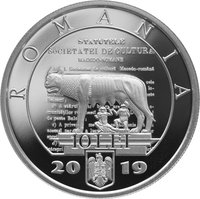
Description:
The obverse of the 1922 Lei 50 gold coin, issued 2019, features the Romanian coat of arms, "ROMANIA," and the face value "10 LEI."
Inscription:
ROMANIA
10 LEI
2019
10 LEI
2019
Script: Latin
Reverse
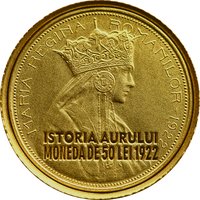
Description:
The reverse of the 1922 50 Lei gold coin, inscribed "ISTORIA AURULUI MONEDA DE 50 LEI 1922."
Inscription:
ISTORIA AURULUI
MONEDA DE 50 LEI 1922
MONEDA DE 50 LEI 1922
Script: Latin
Edge
Milled
Mintings
| Year | Mint Mark | Mintage | Quality | Collection |
|---|---|---|---|---|
| 2019 | — | 1,000 | Proof |
Historical background
In 2019, Romania's currency situation was characterized by a period of relative stability for the Romanian Leu (RON) against the Euro, but within a context of persistent macroeconomic imbalances. The RON traded in a narrow band, around 4.7 to 4.8 RON per EUR for much of the year, supported by robust economic growth and attractive interest rates that drew foreign investment into government bonds. However, this stability was somewhat artificial, heavily managed by the National Bank of Romania (NBR), which intervened in the foreign exchange market to smooth volatility and prevent excessive depreciation.
Beneath this calm surface, significant pressures were building. The country was grappling with twin deficits—a substantial current account deficit, exceeding 4% of GDP, and a widening budget deficit, driven by increased public spending and tax cuts. This made the economy reliant on short-term capital inflows, leaving the currency vulnerable to shifts in global investor sentiment. Furthermore, political instability and concerns over fiscal discipline, including controversial emergency ordinances affecting the banking sector, periodically eroded investor confidence and put downward pressure on the Leu.
Consequently, the key theme of 2019 was the central bank's challenging balancing act. The NBR cautiously raised its benchmark interest rate to 2.50% by year-end to combat above-target inflation and support the currency, but it had to do so without stifling economic growth. The overall situation highlighted Romania's underlying vulnerabilities: strong consumption-driven GDP growth was being sustained at the cost of growing external and internal imbalances, with the stable RON masking the need for structural reforms to ensure long-term stability.
Beneath this calm surface, significant pressures were building. The country was grappling with twin deficits—a substantial current account deficit, exceeding 4% of GDP, and a widening budget deficit, driven by increased public spending and tax cuts. This made the economy reliant on short-term capital inflows, leaving the currency vulnerable to shifts in global investor sentiment. Furthermore, political instability and concerns over fiscal discipline, including controversial emergency ordinances affecting the banking sector, periodically eroded investor confidence and put downward pressure on the Leu.
Consequently, the key theme of 2019 was the central bank's challenging balancing act. The NBR cautiously raised its benchmark interest rate to 2.50% by year-end to combat above-target inflation and support the currency, but it had to do so without stifling economic growth. The overall situation highlighted Romania's underlying vulnerabilities: strong consumption-driven GDP growth was being sustained at the cost of growing external and internal imbalances, with the stable RON masking the need for structural reforms to ensure long-term stability.
Series: History of Gold















💎 Extremely Rare