

100 Francs – Belgium
Belgium
Context
Years: 1948–1951
Issuer: Belgium 
Ruler: Leopold III
Currency:
(1832—2001)
Demonetization: 16 July 1979
Total mintage: 7,962,000
Material
References
KM: #Click to copy to clipboard139
Numista: #1877
Value
Exchange value: 100 BEF
Bullion value: $42.73
Obverse
Description:
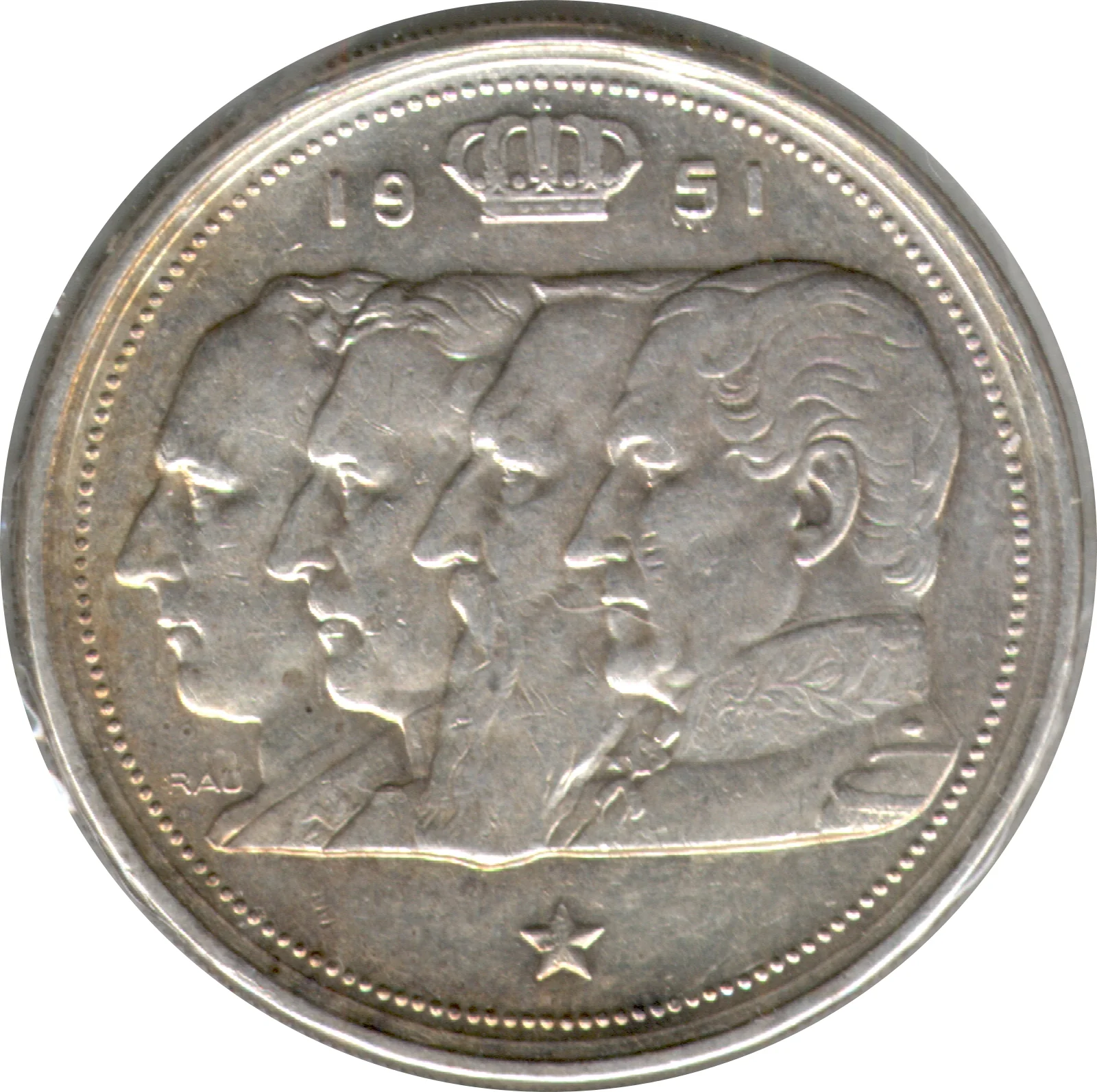
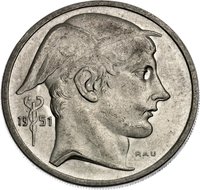
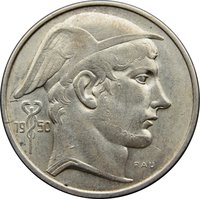
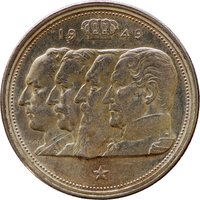
Four kings facing left. Crown above date, star below. Designer at left.
Inscription:
1951
RAU
★
RAU
★
Script: Latin
Engraver: Marcel Rau
Reverse
Description:
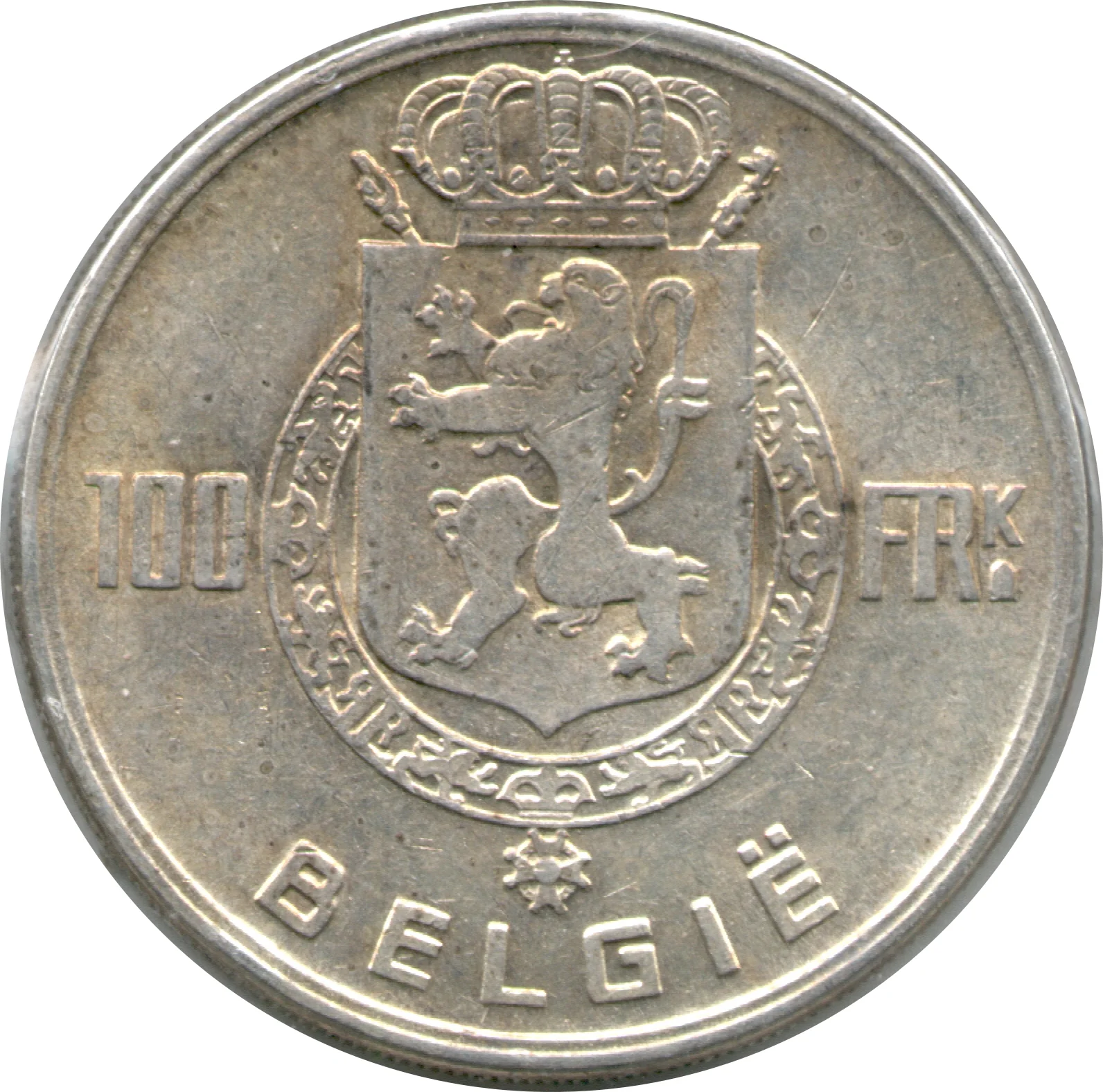
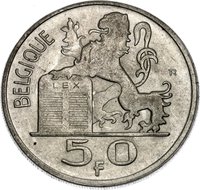
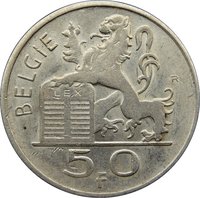
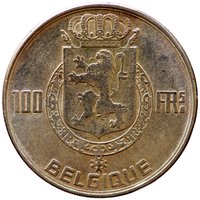
Crowned coat of arms divides value. Dutch legend below.
Inscription:
100 FRk
BELGIË
BELGIË
Translation:
100 Francs
Belgium
Belgium
Script: Latin
Engraver: Marcel Rau
Edge
Reeded
Mints
| Name | Mark |
|---|---|
| Royal Mint of Belgium | — |
Mintings
| Year | Mint Mark | Mintage | Quality | Collection |
|---|---|---|---|---|
| 1948 | — | 1,000,000 | ||
| 1949 | — | 2,271,000 | ||
| 1950 | — | — | ||
| 1951 | — | 4,691,000 |
Historical background
In 1948, Belgium’s currency situation was defined by the aftermath of World War II and the urgent need for monetary stabilization. The Belgian franc, severely weakened by wartime occupation, inflation, and a chaotic circulation of multiple note issues, had undergone a major reform in October 1944. This "Operation Gutt" – a drastic monetary purge named after Finance Minister Camille Gutt – had frozen bank accounts and replaced old notes to confiscate illicit profits and reduce the money supply. By 1948, this harsh but effective measure had laid a foundation for relative stability, yet the economy remained fragile and highly dependent on external trade and reconstruction aid.
The critical context of 1948 was Belgium’s pivotal role in the emerging European recovery program and the Bretton Woods system. As a founding member of the Benelux Customs Union (1948) and an enthusiastic participant in the U.S.-funded Marshall Plan (which began disbursing aid in 1948), Belgium required a stable and convertible currency to facilitate trade. Consequently, on December 18, 1946, Belgium had already taken the significant step of becoming the first European country to officially establish a fixed gold parity for the franc with the International Monetary Fund, setting it at 0.0202765 grams of fine gold. This move, fully operational in the 1948 landscape, provided a bedrock of confidence and aimed to integrate Belgium into the postwar liberal economic order.
However, maintaining this fixed parity and ensuring convertibility presented ongoing challenges. Domestic price pressures and the cost of reconstruction, coupled with the need to import vital materials, strained the franc's stability. The government, therefore, pursued a policy of strict fiscal discipline and wage restraint to control inflation and defend the currency's value. This approach, while securing Belgium’s reputation for monetary orthodoxy, also led to social tensions, notably the great strike of 1950. Thus, in 1948, the Belgian franc was institutionally anchored and outwardly stable, but its strength was contingent on continued austerity and the success of broader Western European economic cooperation.
The critical context of 1948 was Belgium’s pivotal role in the emerging European recovery program and the Bretton Woods system. As a founding member of the Benelux Customs Union (1948) and an enthusiastic participant in the U.S.-funded Marshall Plan (which began disbursing aid in 1948), Belgium required a stable and convertible currency to facilitate trade. Consequently, on December 18, 1946, Belgium had already taken the significant step of becoming the first European country to officially establish a fixed gold parity for the franc with the International Monetary Fund, setting it at 0.0202765 grams of fine gold. This move, fully operational in the 1948 landscape, provided a bedrock of confidence and aimed to integrate Belgium into the postwar liberal economic order.
However, maintaining this fixed parity and ensuring convertibility presented ongoing challenges. Domestic price pressures and the cost of reconstruction, coupled with the need to import vital materials, strained the franc's stability. The government, therefore, pursued a policy of strict fiscal discipline and wage restraint to control inflation and defend the currency's value. This approach, while securing Belgium’s reputation for monetary orthodoxy, also led to social tensions, notably the great strike of 1950. Thus, in 1948, the Belgian franc was institutionally anchored and outwardly stable, but its strength was contingent on continued austerity and the success of broader Western European economic cooperation.
Series: 1948 Belgium circulation coins
🌱 Very Common