

20 francs – Belgium
Add to wishlist
Belgium
Context
Years: 1949–1955
Issuer: Belgium
Ruler: Baudouin I
Currency:
(1832—2001)
Demonetization: 22 February 1974
Total mintage: 23,239,000
Material
References
KM: #
Numista: #1259
Value
Exchange value: 20 BEF
Bullion value: $16.94
Obverse
Description:
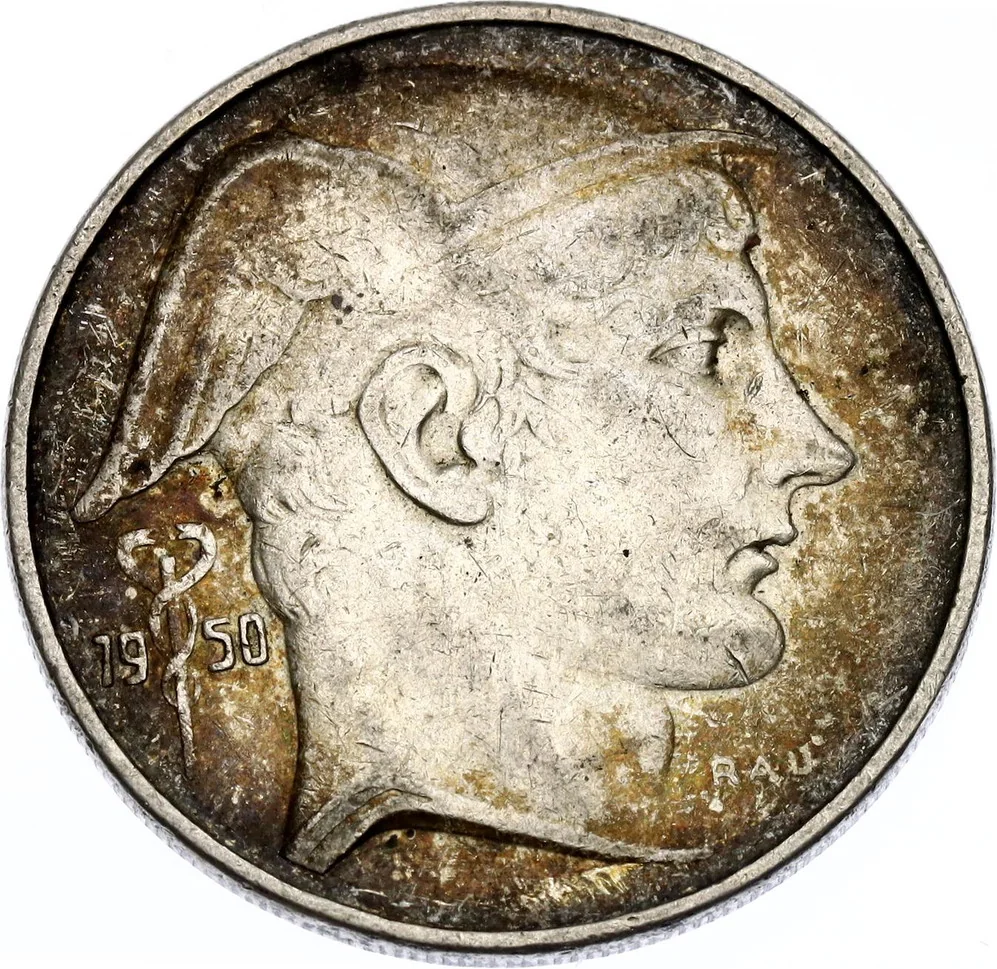
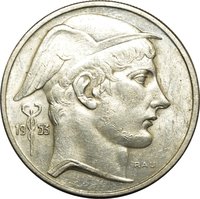
Mercury head right. Caduceus splits date, designer at right.
Inscription:
1954
RAU
RAU
Script: Latin
Engraver: Marcel Rau
Reverse
Description:
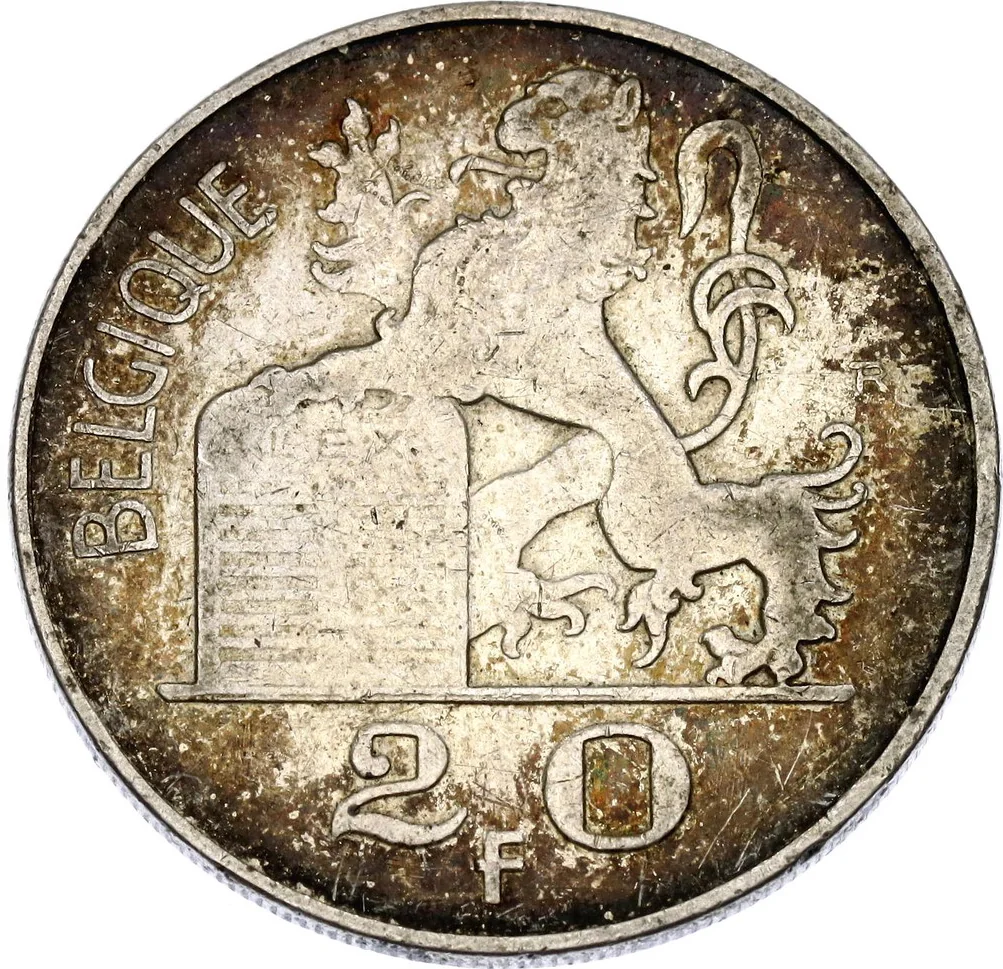
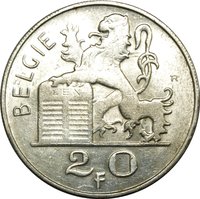
Left-facing lion with Belgian constitution. French legend left, value below, designer initial right.
Inscription:
BELGIQUE
20
F
20
F
Translation:
Belgium
20
Francs
20
Francs
Script: Latin
Language: French
Engraver: Marcel Rau
Edge
Reeded
Mints
| Name | Mark |
|---|---|
| Royal Mint of Belgium | — |
Mintings
| Year | Mint Mark | Mintage | Quality | Collection |
|---|---|---|---|---|
| 1949 | — | 4,600,000 | ||
| 1950 | — | 12,957,000 | ||
| 1953 | — | 3,952,000 | ||
| 1954 | — | — | ||
| 1955 | — | 1,730,000 |
Historical background
In 1949, Belgium’s currency situation was defined by its participation in the post-war European monetary system and its relationship with the U.S. dollar. The country was a founding member of the Bretton Woods system, established in 1944, which pegged the Belgian franc to the U.S. dollar at a fixed rate of 50 francs to one dollar. This parity, set in 1946, provided a crucial anchor for stability as the nation continued its impressive economic recovery and reconstruction following World War II, heavily supported by Marshall Plan aid from the United States.
Domestically, the Belgian franc was relatively strong compared to many of its European neighbours, a reflection of Belgium's early and robust industrial rebound and its strategically important export sectors. However, this strength was carefully managed. The National Bank of Belgium maintained strict exchange controls to prevent capital flight and to manage the balance of payments, a common practice in the immediate post-war era. The primary monetary policy focus was on controlling inflation and supporting the rebuilding of the country's foreign exchange reserves, which had been depleted during the war and occupation.
Internationally, 1949 was a significant year for European currencies due to a major realignment in September, when the United Kingdom devalued the pound sterling by 30.5%. This triggered a wave of competitive devaluations across Europe. Belgium, however, stood out by choosing not to devalue the franc, demonstrating confidence in its economic position and its trade balance. This decision underscored the Belgian franc's stability but also required continued vigilance to maintain export competitiveness against now-cheaper British goods, shaping the country's trade and monetary policies as it moved into the 1950s.
Domestically, the Belgian franc was relatively strong compared to many of its European neighbours, a reflection of Belgium's early and robust industrial rebound and its strategically important export sectors. However, this strength was carefully managed. The National Bank of Belgium maintained strict exchange controls to prevent capital flight and to manage the balance of payments, a common practice in the immediate post-war era. The primary monetary policy focus was on controlling inflation and supporting the rebuilding of the country's foreign exchange reserves, which had been depleted during the war and occupation.
Internationally, 1949 was a significant year for European currencies due to a major realignment in September, when the United Kingdom devalued the pound sterling by 30.5%. This triggered a wave of competitive devaluations across Europe. Belgium, however, stood out by choosing not to devalue the franc, demonstrating confidence in its economic position and its trade balance. This decision underscored the Belgian franc's stability but also required continued vigilance to maintain export competitiveness against now-cheaper British goods, shaping the country's trade and monetary policies as it moved into the 1950s.
🌱 Very Common