

20 kroner (First Sami Congress) – Norway
Add to wishlist
Circulating commemorative coins
Commemoration: 100th Anniversary of the First Sami Congress
Norway
Context
Material
References
KM: #
Numista: #107326
Value
Exchange value: 20 NOK
Inflation-adjusted value: 26.27 NOK
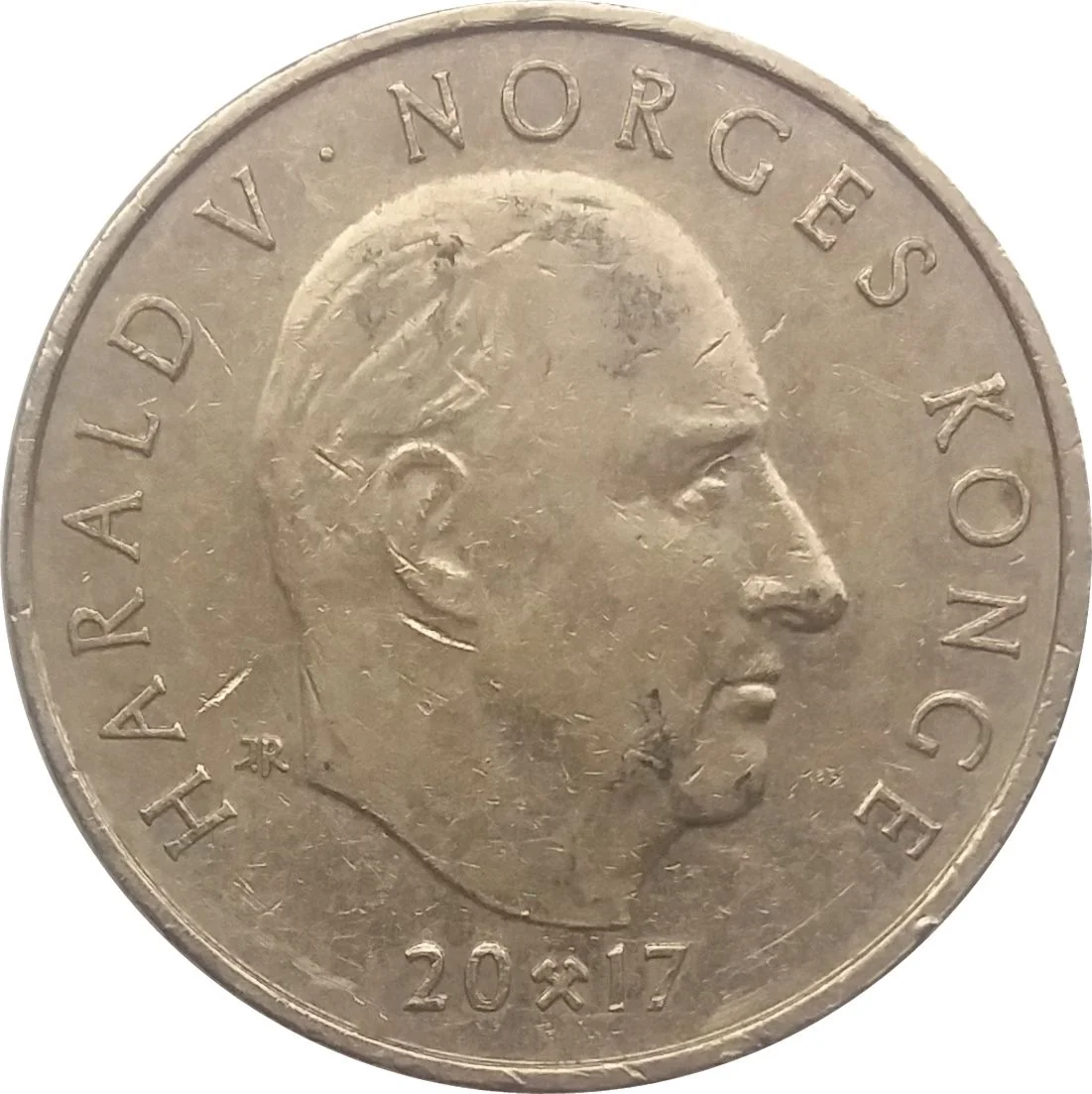
Obverse
Description:
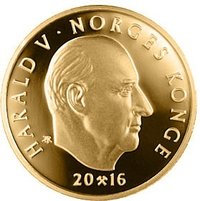
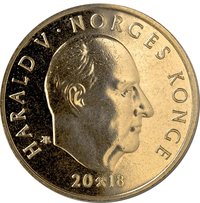
Bust of King Harald V facing right, with engraver's initials behind it. Inscription surrounds the bust, and a mintmark divides the date below. Solid ring on the rim.
Inscription:
HARALD V · NORGES KONGE
IAR
20 ⚒ 17
IAR
20 ⚒ 17
Translation:
Harald V, Norway's King
IAR
20 17
IAR
20 17
Script: Latin
Engraver: Ingrid Austlid Rise
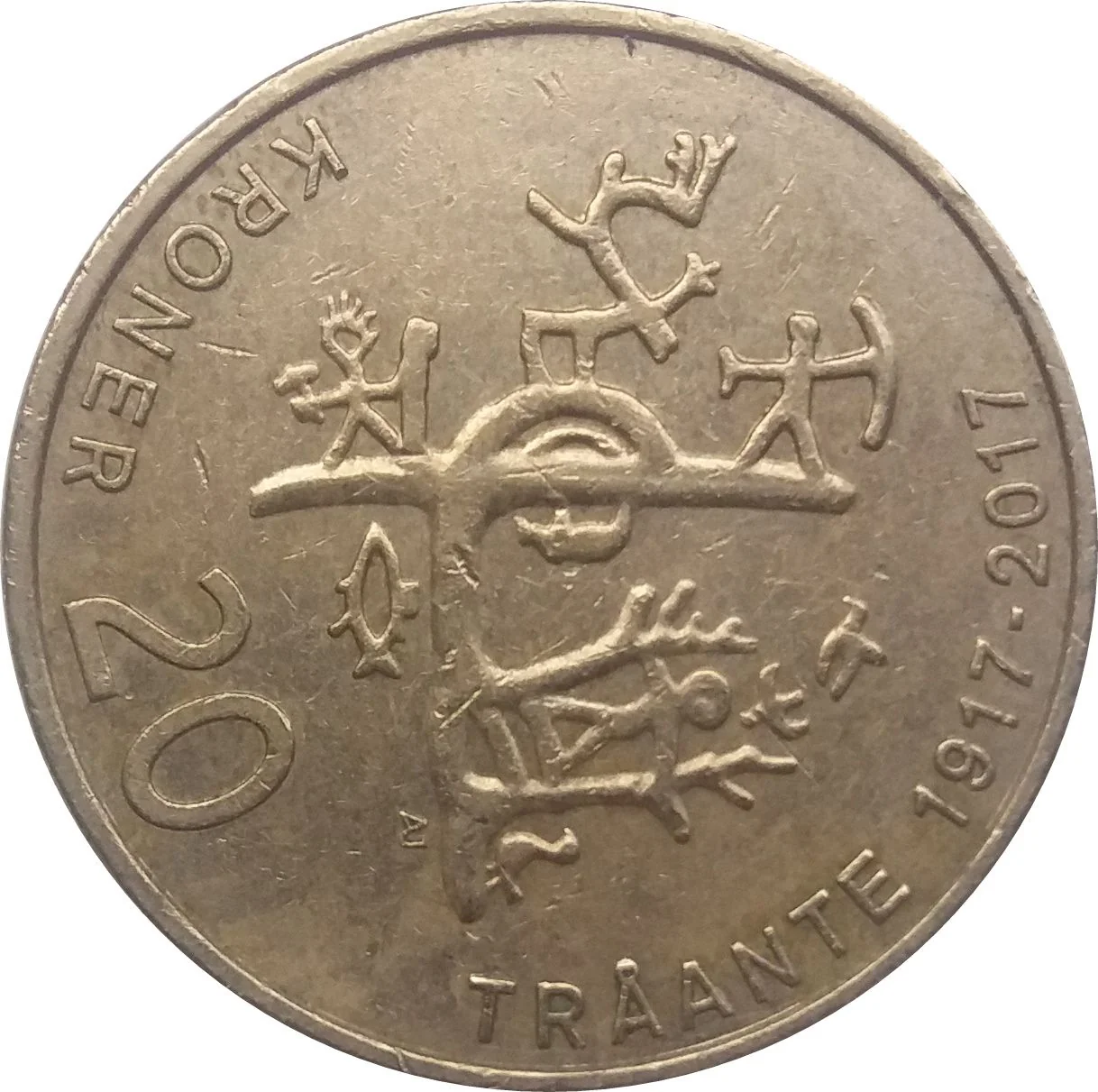
Reverse
Description:
Sami mythological symbols and ceremonial drum center. Left: value. Designer initials below symbols. Inscription bottom right. Solid rim ring.
Inscription:
KRONER 20
AJ
TRÅANTE 1917-2017
AJ
TRÅANTE 1917-2017
Translation:
Twenty Kroner
AJ
Trondheim 1917-2017
AJ
Trondheim 1917-2017
Script: Latin
Engraver: Ingrid Austlid Rise
Designer: Annelise Josefsen
Edge
Plain
Categories
| Mythology |
Mints
| Name | Mark |
|---|---|
| Norwegian Mint | — |
Mintings
| Year | Mint Mark | Mintage | Quality | Collection |
|---|---|---|---|---|
| 2017 | — | 2,042,000 | ||
| 2017 | — | 2,450 | Proof |
Historical background
In 2017, Norway's currency situation was characterized by a period of relative stability and gradual strengthening for the Norwegian krone (NOK), though it remained historically weak compared to pre-2014 levels. The primary driver was a recovering oil market, with Brent crude prices climbing from an average of $45 per barrel in 2016 to over $54 in 2017. As a petroleum-based economy, this uplift improved the nation's trade balance and fiscal outlook, providing fundamental support for the krone. However, the currency's appreciation was tempered by the Norges Bank's persistently low interest rate, held at a record-low 0.5% for most of the year to support an economy still adjusting to the earlier oil price shock.
Monetary policy was a key focal point, with the central bank carefully navigating between supporting domestic demand and preventing excessive krone weakness that could fuel inflation. Governor Øystein Olsen signaled a shift away from the highly accommodative stance, indicating that the next rate move would likely be up, but emphasized that this was a distant prospect. This cautious "forward guidance" kept a lid on rapid krone gains, as international investors found little immediate yield incentive. Consequently, while the NOK gained against the euro and dollar during the year, its recovery was measured.
The broader economic context featured a resilient mainland (non-oil) economy and rising house prices, which added complexity to the central bank's decisions. Internationally, the krone was also influenced by global risk sentiment and political events, but the dominant narrative remained domestic: a patient central bank managing a cautious normalization path amid improving, but not yet robust, petroleum sector revenues. This resulted in a krone that ended 2017 stronger than it began, yet still undervalued by long-term standards, reflecting a balanced but fragile post-crisis recovery.
Monetary policy was a key focal point, with the central bank carefully navigating between supporting domestic demand and preventing excessive krone weakness that could fuel inflation. Governor Øystein Olsen signaled a shift away from the highly accommodative stance, indicating that the next rate move would likely be up, but emphasized that this was a distant prospect. This cautious "forward guidance" kept a lid on rapid krone gains, as international investors found little immediate yield incentive. Consequently, while the NOK gained against the euro and dollar during the year, its recovery was measured.
The broader economic context featured a resilient mainland (non-oil) economy and rising house prices, which added complexity to the central bank's decisions. Internationally, the krone was also influenced by global risk sentiment and political events, but the dominant narrative remained domestic: a patient central bank managing a cautious normalization path amid improving, but not yet robust, petroleum sector revenues. This resulted in a krone that ended 2017 stronger than it began, yet still undervalued by long-term standards, reflecting a balanced but fragile post-crisis recovery.
🌱 Common