

1 sol – Peru
Add to wishlist
Circulating commemorative coins
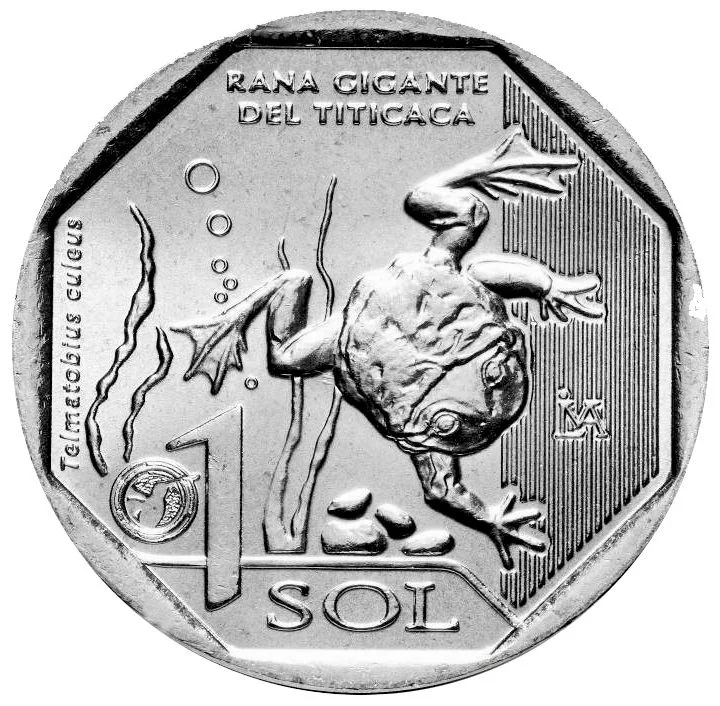
Commemoration: Giant Titicaca Frog
Series: Endangered Fauna from Peru
Peru
Material
Diameter: 25.5 mm
Weight: 7.32 g
Thickness: 1.92 mm
Shape: Round
Composition: Nickel brass
Magnetic: No
Technique: Milled
Alignment: Coin alignment
flip
References
KM: #
Numista: #186839
Value
Exchange value: 1 PEN
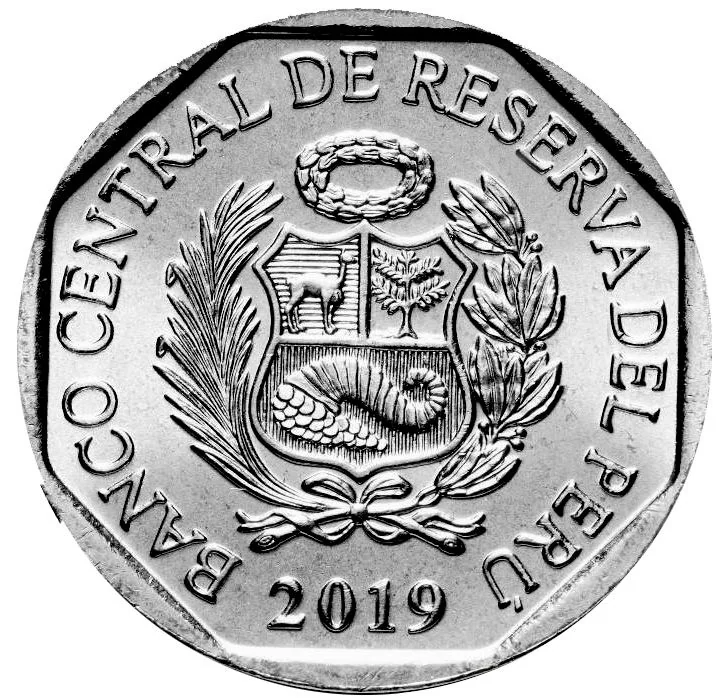
Obverse
Description:
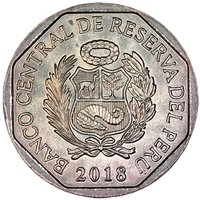
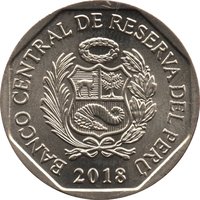
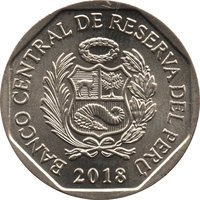
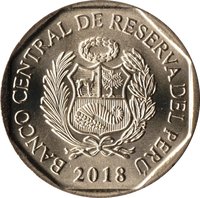
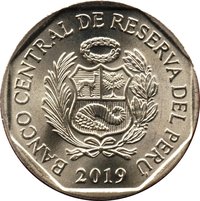
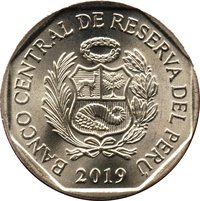
Coat of arms over date.
Inscription:
BANCO CENTRAL DE RESERVA DEL PERÚ
2019
2019
Translation:
CENTRAL RESERVE BANK OF PERU
2019
2019
Script: Latin
Language: Spanish
Designer and engraver: Eduardo Paredes
Reverse
Description:
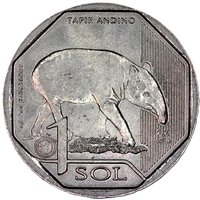
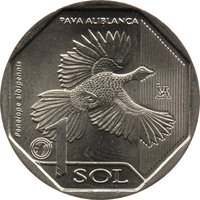
Titicaca water frog. Mintmark: stylized "LIMA". Privy mark: Endangered Fauna of Peru (concentric circles with bird).
Inscription:
RANA GIGANTE
DEL TITICACA
Telmatobius culeus
LIMA
1 SOL
DEL TITICACA
Telmatobius culeus
LIMA
1 SOL
Translation:
Giant Frog
of Titicaca
Telmatobius culeus
LIMA
1 Sol
of Titicaca
Telmatobius culeus
LIMA
1 Sol
Script: Latin
Language: Spanish
Designer and engraver: Eduardo Paredes
Edge
Reeded
Mints
| Name | Mark |
|---|---|
| Lima | (LIMA) |
Mintings
| Year | Mint Mark | Mintage | Quality | Collection |
|---|---|---|---|---|
| 2019 | LIMA | 10,000,000 |
Historical background
In 2019, Peru's currency, the sol (PEN), demonstrated notable resilience and stability despite regional economic turbulence and domestic political uncertainty. Throughout the year, it traded within a relatively narrow band, ending the period with only a modest depreciation of approximately 1.5% against the US dollar. This performance was underpinned by strong macroeconomic fundamentals, including low inflation (within the Central Reserve Bank of Peru's target range of 1-3%), substantial foreign reserves exceeding $68 billion, and a consistent current account surplus driven by robust mineral exports, particularly copper. The Central Bank's credible monetary policy and a history of fiscal prudence provided a solid anchor for the currency, insulating it from the more severe volatility seen in some neighboring economies.
However, this stability was maintained against a backdrop of growing political headwinds. The year was marked by significant institutional conflict between President Martín Vizcarra and the opposition-led Congress, culminating in Vizcarra's dissolution of the legislature in September. While this political crisis triggered brief spikes in volatility and led to some investor caution, the direct impact on the sol was muted and short-lived. Market confidence was largely preserved because the political turmoil did not fundamentally alter Peru's sound economic management or its commitment to open markets and central bank independence.
Looking at the broader financial context, 2019 was also a year of transition in global monetary policy, with the U.S. Federal Reserve shifting from tightening to cutting interest rates. This shift, which typically reduces pressure on emerging market currencies, provided a favorable external environment for the sol. Consequently, Peru ended the year with one of the strongest and most stable currencies in Latin America, a testament to its institutional economic buffers even as its political landscape grew increasingly fragmented and unpredictable.
However, this stability was maintained against a backdrop of growing political headwinds. The year was marked by significant institutional conflict between President Martín Vizcarra and the opposition-led Congress, culminating in Vizcarra's dissolution of the legislature in September. While this political crisis triggered brief spikes in volatility and led to some investor caution, the direct impact on the sol was muted and short-lived. Market confidence was largely preserved because the political turmoil did not fundamentally alter Peru's sound economic management or its commitment to open markets and central bank independence.
Looking at the broader financial context, 2019 was also a year of transition in global monetary policy, with the U.S. Federal Reserve shifting from tightening to cutting interest rates. This shift, which typically reduces pressure on emerging market currencies, provided a favorable external environment for the sol. Consequently, Peru ended the year with one of the strongest and most stable currencies in Latin America, a testament to its institutional economic buffers even as its political landscape grew increasingly fragmented and unpredictable.
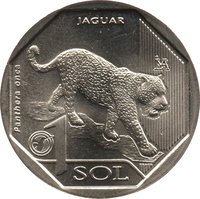
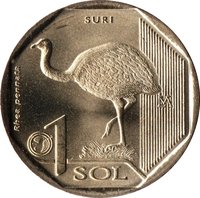
Series: Endangered Fauna from Peru
🌱 Common