

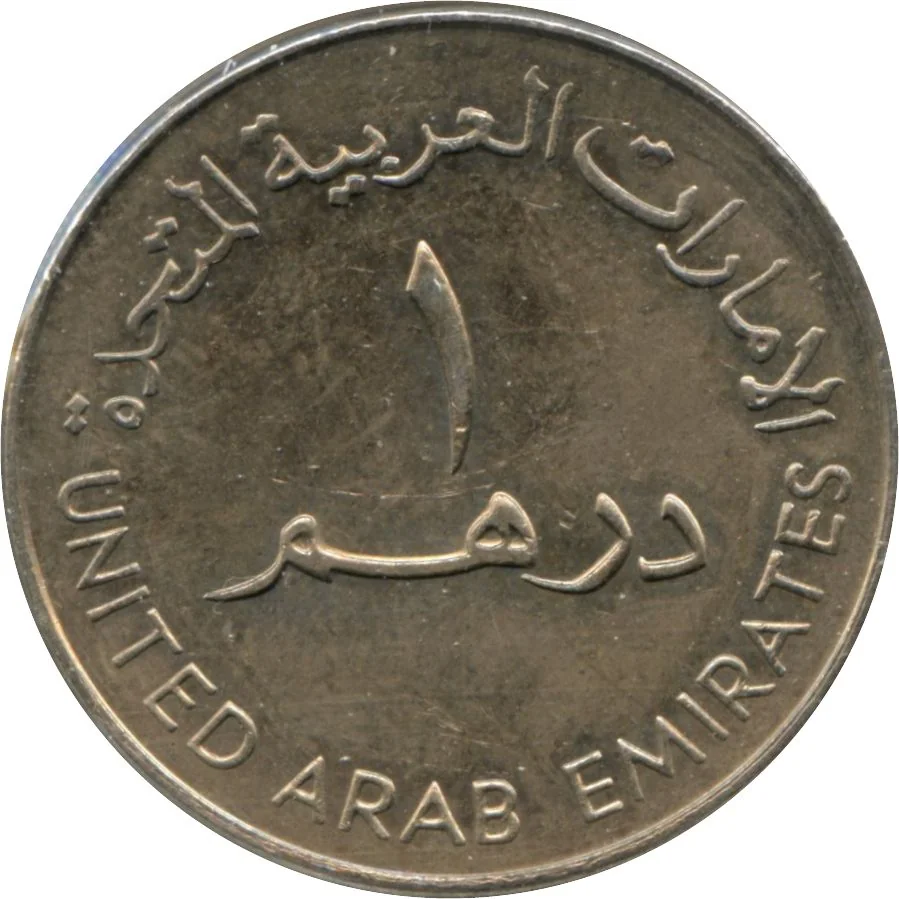
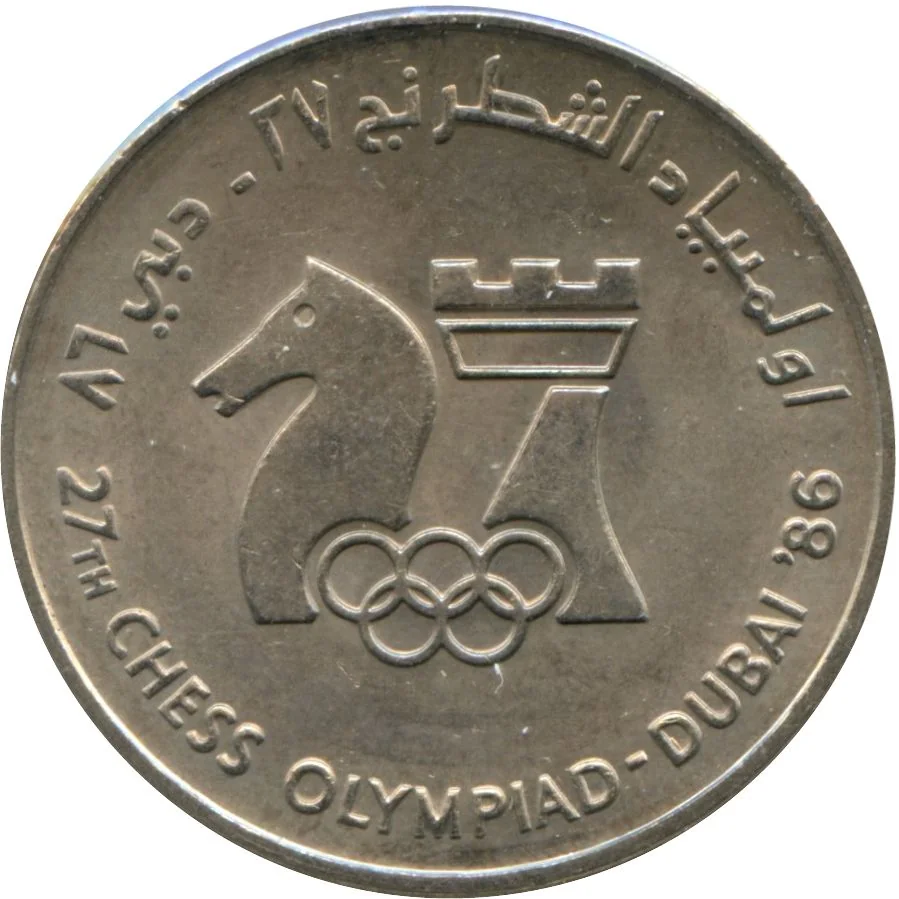
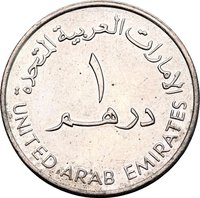
1 Dirham – United Arab Emirates
Circulating commemorative coins
Commemoration: The 27th Chess Olympiad - Dubai 1986
United Arab Emirates
Context

Material
Diameter: 28.5 mm
Weight: 11.31 g
Thickness: 2.3 mm
Shape: Round
Composition: Copper-nickel
Technique: Milled
Alignment: Medal alignment
flip
References
KM: #Click to copy to clipboard10
Numista: #18665
Value
Exchange value: 1 AED
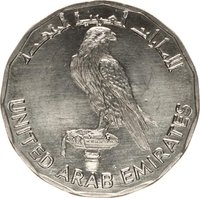
Obverse
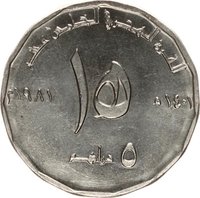
Reverse
Edge
Reeded
Mints
| Name | Mark |
|---|---|
| Royal Canadian Mint of Winnipeg | — |
Mintings
| Year | Mint Mark | Mintage | Quality | Collection |
|---|---|---|---|---|
| 1986 | — | — |
Historical background
In 1986, the United Arab Emirates' currency situation was defined by the stability of the UAE Dirham (AED), which had been firmly pegged to the US Dollar since 1978. This fixed exchange rate of approximately 3.671 dirhams to one dollar was a cornerstone of the country's economic policy, providing crucial predictability for its rapidly growing oil-dependent economy and its burgeoning role as an international trade and finance hub. The peg instilled confidence among foreign investors and facilitated the massive infrastructure projects and development that characterized the era, effectively insulating the UAE from the volatility seen in other regional currencies.
However, this period was not without its challenges. The mid-1980s were marked by a significant decline in global oil prices, which placed considerable strain on the UAE's fiscal revenues. While the currency peg remained unwavering, the economic backdrop pressured the government's budget and highlighted the risks of a hydrocarbon-centric economy. The situation underscored the strategic importance of the dollar peg in maintaining monetary stability during an external price shock, preventing competitive devaluations and capital flight, even as the broader economy adjusted to lower oil income.
Consequently, the currency landscape of 1986 reflected a nation in a phase of managed stability amid external economic headwinds. The dirham's unwavering peg served as an anchor, allowing the federation to navigate the oil price slump without monetary crisis. This experience ultimately reinforced the long-term commitment to the dollar peg, a policy that has remained uninterrupted for decades, and simultaneously prompted deeper discussions about economic diversification—a conversation that would gain substantial momentum in the years following this period.
However, this period was not without its challenges. The mid-1980s were marked by a significant decline in global oil prices, which placed considerable strain on the UAE's fiscal revenues. While the currency peg remained unwavering, the economic backdrop pressured the government's budget and highlighted the risks of a hydrocarbon-centric economy. The situation underscored the strategic importance of the dollar peg in maintaining monetary stability during an external price shock, preventing competitive devaluations and capital flight, even as the broader economy adjusted to lower oil income.
Consequently, the currency landscape of 1986 reflected a nation in a phase of managed stability amid external economic headwinds. The dirham's unwavering peg served as an anchor, allowing the federation to navigate the oil price slump without monetary crisis. This experience ultimately reinforced the long-term commitment to the dollar peg, a policy that has remained uninterrupted for decades, and simultaneously prompted deeper discussions about economic diversification—a conversation that would gain substantial momentum in the years following this period.
🌱 Fairly Common