

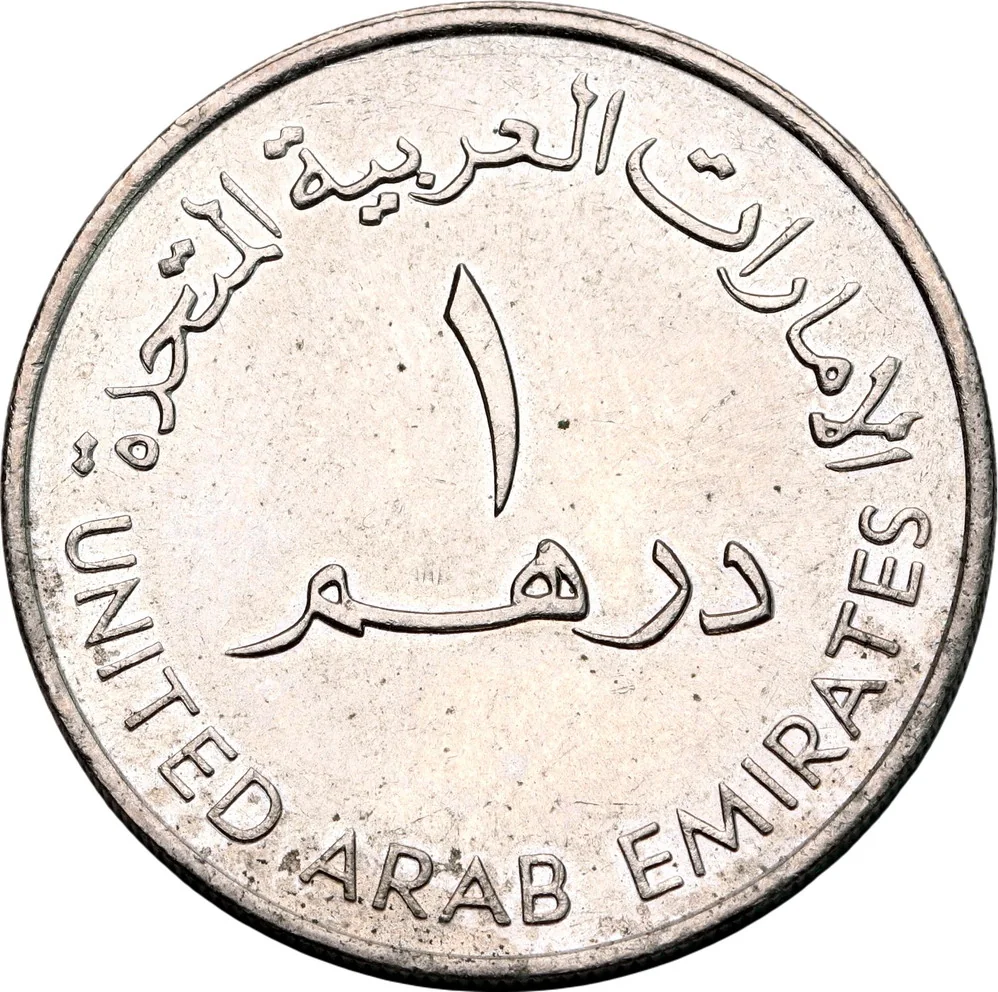
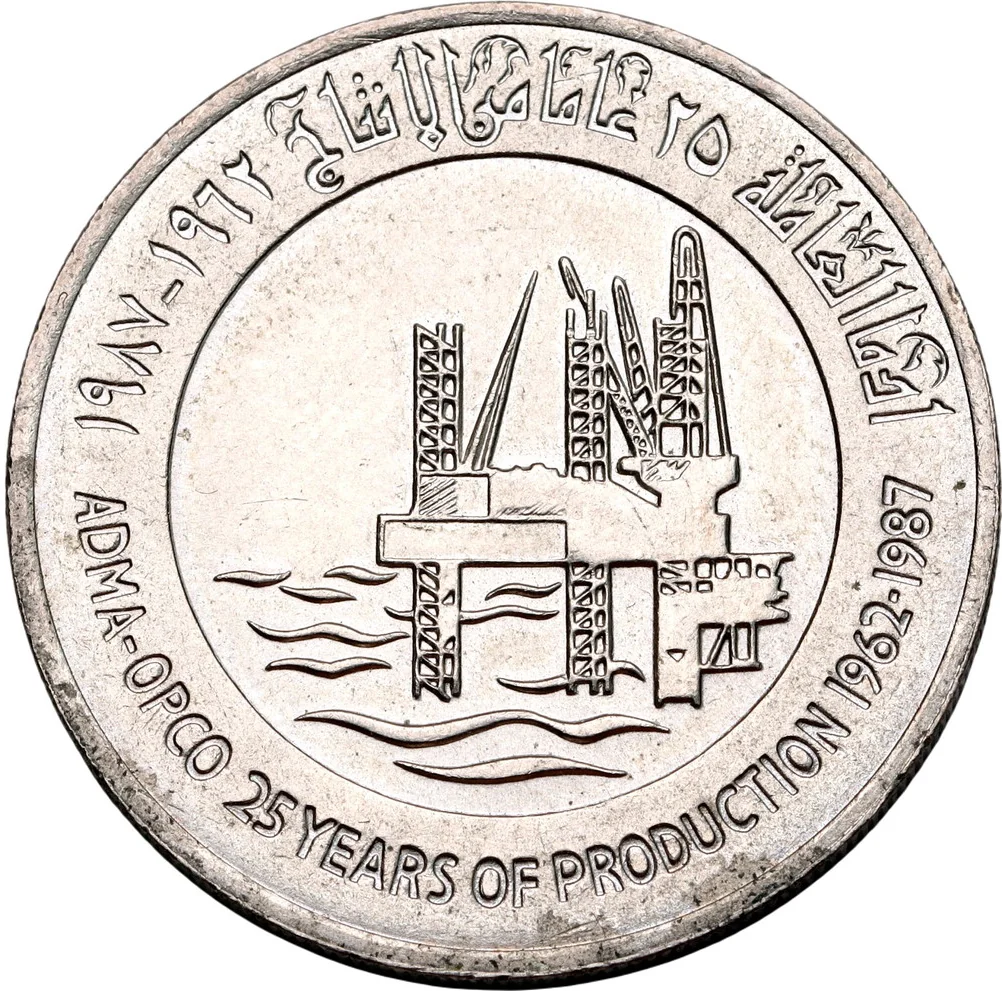
1 dirham (First Offshore Oil Shipment from Abu Dhabi Emirate) – United Arab Emirates
Add to wishlist
Circulating commemorative coins
Commemoration: The 25th Anniversary of the First Offshore Oil Shipment from Abu Dhabi Emirate
United Arab Emirates
Context
Year: 1987
Issuer: United Arab Emirates
Ruler: Zayed bin Sultan Al Nahyan
Currency:
(since 1973)
Total mintage: 300,000
Material
Diameter: 28.5 mm
Weight: 11.31 g
Thickness: 2.3 mm
Shape: Round
Composition: Copper-nickel
Technique: Milled
Alignment: Medal alignment
flip
References
KM: #
Numista: #12122
Value
Exchange value: 1 AED
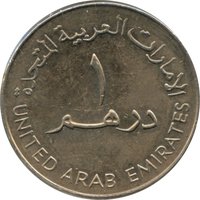
Obverse
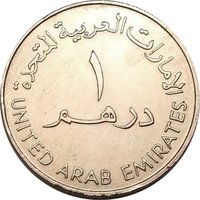
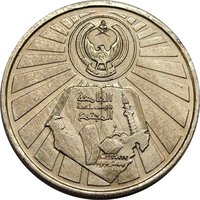
Reverse
Edge
Reeded
Mints
| Name | Mark |
|---|---|
| Royal Canadian Mint of Winnipeg | — |
Mintings
| Year | Mint Mark | Mintage | Quality | Collection |
|---|---|---|---|---|
| 1987 | — | 300,000 |
Historical background
In 1987, the currency situation in the United Arab Emirates was defined by the UAE Dirham's firm peg to the International Monetary Fund's Special Drawing Right (SDR). This basket-of-currencies peg, established in 1978, replaced a previous link to the depreciating U.S. dollar. The primary objective was to stabilize the Dirham's external value amidst global currency fluctuations, particularly following the breakdown of the Bretton Woods system. By anchoring to the SDR—a unit comprising the U.S. dollar, Deutsche Mark, French franc, Japanese yen, and British pound—the UAE Central Bank aimed to reduce volatility in its import costs and maintain predictability for its rapidly developing, trade-dependent economy.
This monetary framework operated within a unique federal context. While the Central Bank, established in 1980, held formal authority, the practical issuance of currency and some aspects of monetary policy were still influenced by the powerful Currency Board and the individual monetary agencies of the larger emirates, particularly Abu Dhabi and Dubai. This period was one of consolidation and coordination as the young federation worked to unify its financial systems. The economy itself was in a phase of adjustment following the oil price collapse of the mid-1980s, which underscored the importance of a stable and credible currency to manage reduced hydrocarbon revenues and sustain non-oil growth.
Consequently, the currency regime of 1987 reflected a strategic and cautious approach. The SDR peg was largely successful in providing stability, but it also meant the Dirham's value moved in tandem with the constituent currencies of the basket, primarily following the U.S. dollar but with moderated swings. This period set the stage for the future; within a decade, as regional trade and investment patterns solidified, the UAE would simplify its peg by directly linking the Dirham to the U.S. dollar in 1997, a policy that remains in place today to ensure stability and facilitate commerce.
This monetary framework operated within a unique federal context. While the Central Bank, established in 1980, held formal authority, the practical issuance of currency and some aspects of monetary policy were still influenced by the powerful Currency Board and the individual monetary agencies of the larger emirates, particularly Abu Dhabi and Dubai. This period was one of consolidation and coordination as the young federation worked to unify its financial systems. The economy itself was in a phase of adjustment following the oil price collapse of the mid-1980s, which underscored the importance of a stable and credible currency to manage reduced hydrocarbon revenues and sustain non-oil growth.
Consequently, the currency regime of 1987 reflected a strategic and cautious approach. The SDR peg was largely successful in providing stability, but it also meant the Dirham's value moved in tandem with the constituent currencies of the basket, primarily following the U.S. dollar but with moderated swings. This period set the stage for the future; within a decade, as regional trade and investment patterns solidified, the UAE would simplify its peg by directly linking the Dirham to the U.S. dollar in 1997, a policy that remains in place today to ensure stability and facilitate commerce.
🌱 Fairly Common