

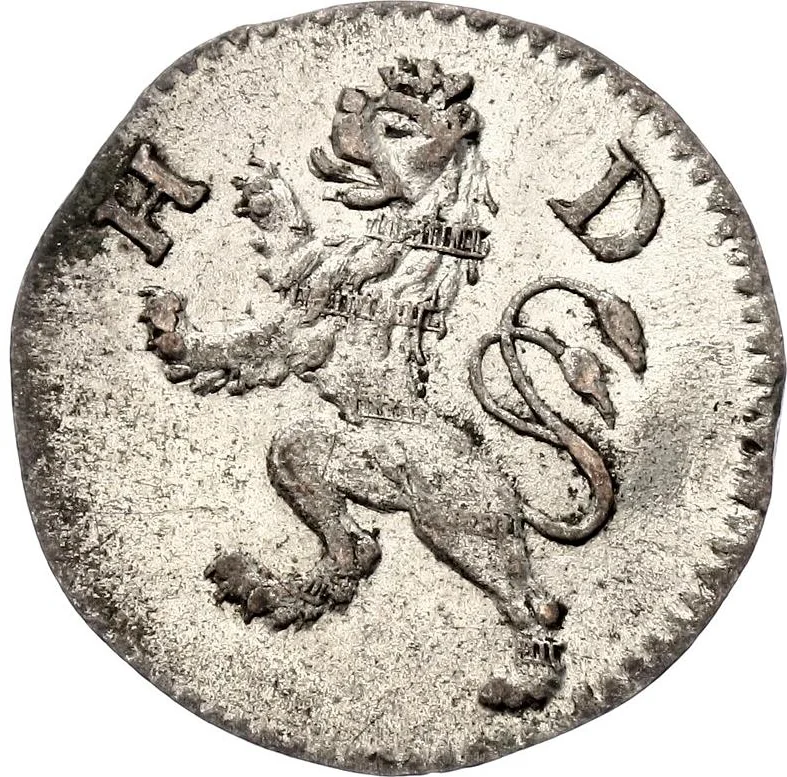
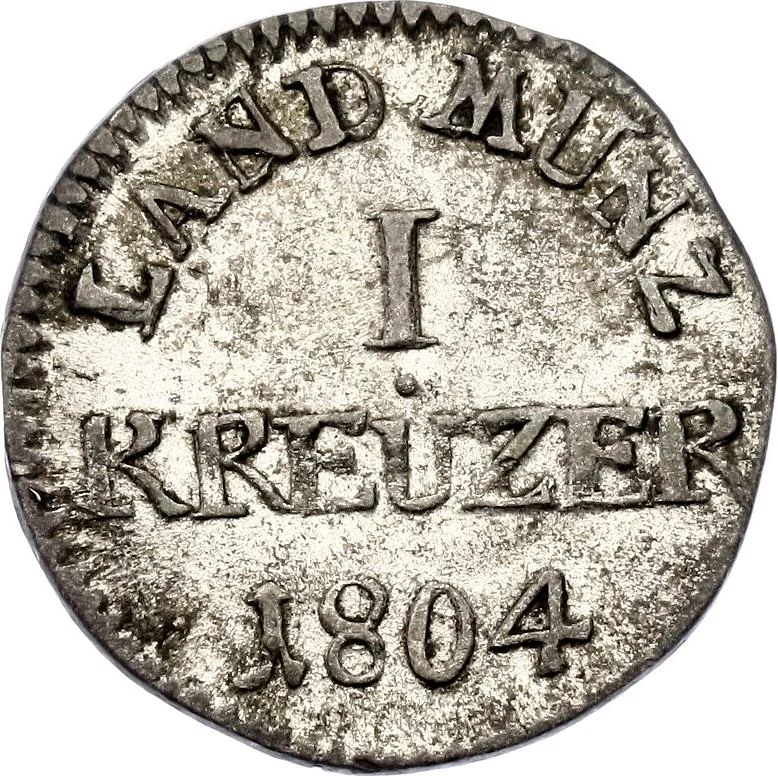
1 Kreuzer – Landgraviate of Hesse-Darmstadt
Context
Years: 1800–1805
Issuer: Landgraviate of Hesse-Darmstadt
Ruler: Louis X
Currency:
(1568—1805)
Demonetized: Yes
Material
References
KM: #Click to copy to clipboard257
Numista: #18664
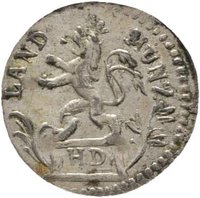
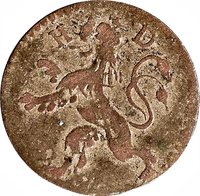
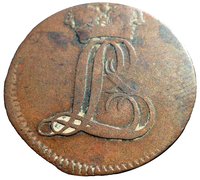
Obverse
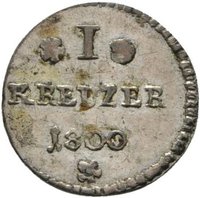
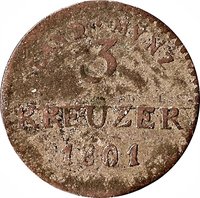
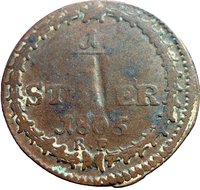
Reverse
Edge
Mintings
| Year | Mint Mark | Mintage | Quality | Collection |
|---|---|---|---|---|
| 1800 | — | — | ||
| 1801 | — | — | ||
| 1802 | — | — | ||
| 1803 | — | — | ||
| 1804 | — | — | ||
| 1805 | — | — |
Historical background
In 1800, the currency situation in the Landgraviate of Hesse-Darmstadt was complex and fragmented, reflecting the broader political and economic fragmentation of the Holy Roman Empire. The landgraviate did not have a single, unified currency but operated within a multi-layered monetary system. Officially, it used the South German Gulden (florin) as its accounting unit, which was subdivided into 60 Kreuzer. However, the actual coins circulating within its territories were a diverse mix, including coins minted by Hesse-Darmstadt itself, those from neighboring German states (like Electoral Hesse, Mainz, and the Palatinate), and even older, debased coins from the wider Empire. This created a constant challenge of valuation and exchange.
The landgraviate's own minting activity was limited and often reactive. While it produced some silver Gulden and smaller Kreuzer coins, its output was insufficient to dominate the local economy. Consequently, the monetary landscape was dominated by foreign coins, their value determined by official "Kurant" (specie) rates set by the government. These rates were frequently updated in published ordinances, attempting to fix the value of dozens of different coin types in relation to the Hesse-Darmstadt Gulden. This system was inherently unstable, as the intrinsic silver content of coins often differed from their official face value, leading to Gresham's Law ("bad money drives out good money") in practice.
This monetary confusion was a significant hindrance to trade and economic development. It facilitated fraud, complicated tax collection, and created uncertainty for merchants and the populace alike. The situation was a source of frustration for Landgrave Ludwig X, who sought greater administrative control. However, a true resolution would only come with sweeping political change. The currency chaos of 1800 thus set the stage for the monetary reforms that would follow Hesse-Darmstadt's integration into the Rhine Confederation under Napoleonic influence after 1806, which began the process of standardization that would ultimately lead to a unified German currency later in the century.
The landgraviate's own minting activity was limited and often reactive. While it produced some silver Gulden and smaller Kreuzer coins, its output was insufficient to dominate the local economy. Consequently, the monetary landscape was dominated by foreign coins, their value determined by official "Kurant" (specie) rates set by the government. These rates were frequently updated in published ordinances, attempting to fix the value of dozens of different coin types in relation to the Hesse-Darmstadt Gulden. This system was inherently unstable, as the intrinsic silver content of coins often differed from their official face value, leading to Gresham's Law ("bad money drives out good money") in practice.
This monetary confusion was a significant hindrance to trade and economic development. It facilitated fraud, complicated tax collection, and created uncertainty for merchants and the populace alike. The situation was a source of frustration for Landgrave Ludwig X, who sought greater administrative control. However, a true resolution would only come with sweeping political change. The currency chaos of 1800 thus set the stage for the monetary reforms that would follow Hesse-Darmstadt's integration into the Rhine Confederation under Napoleonic influence after 1806, which began the process of standardization that would ultimately lead to a unified German currency later in the century.
⭐ Rare