

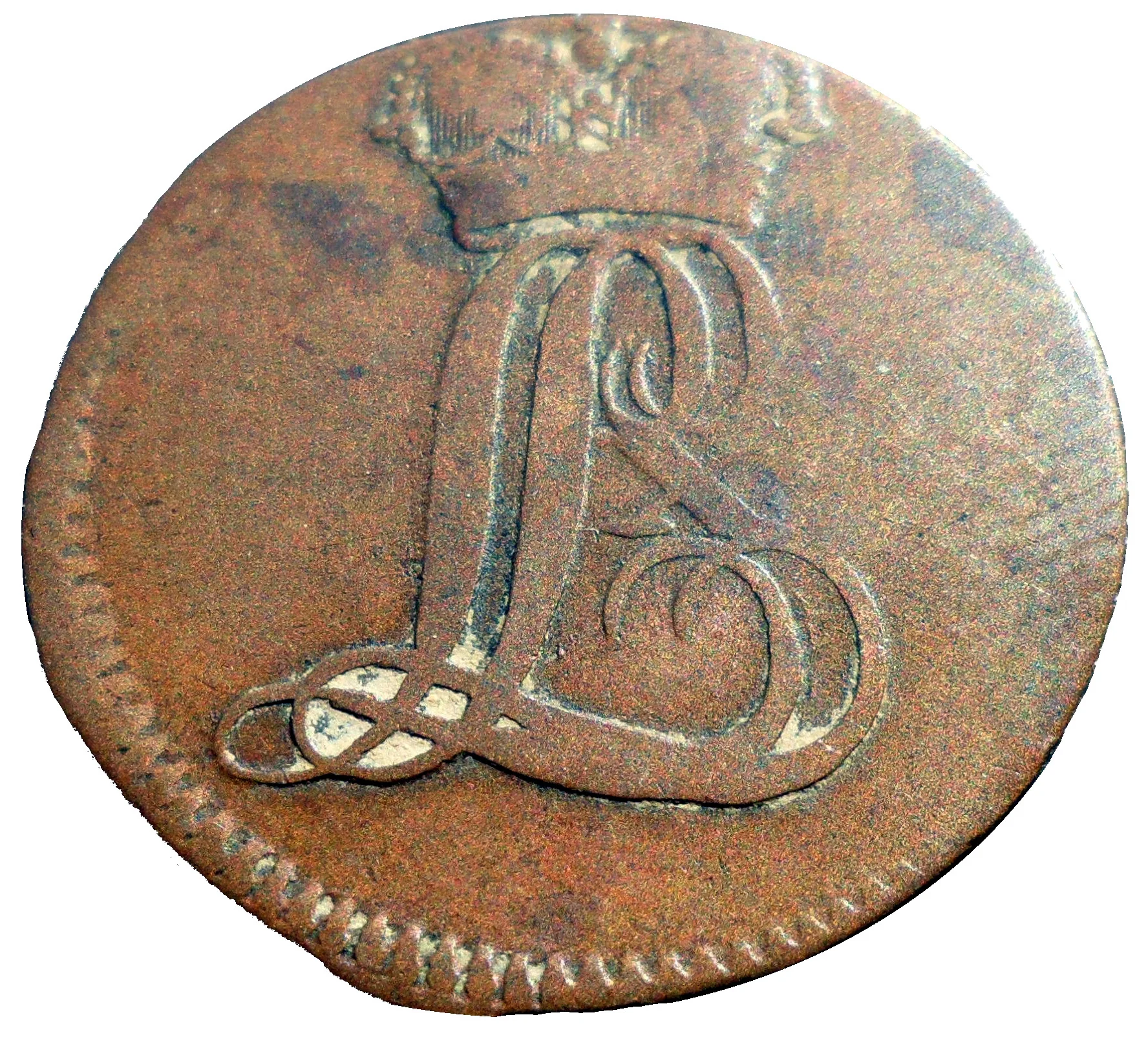
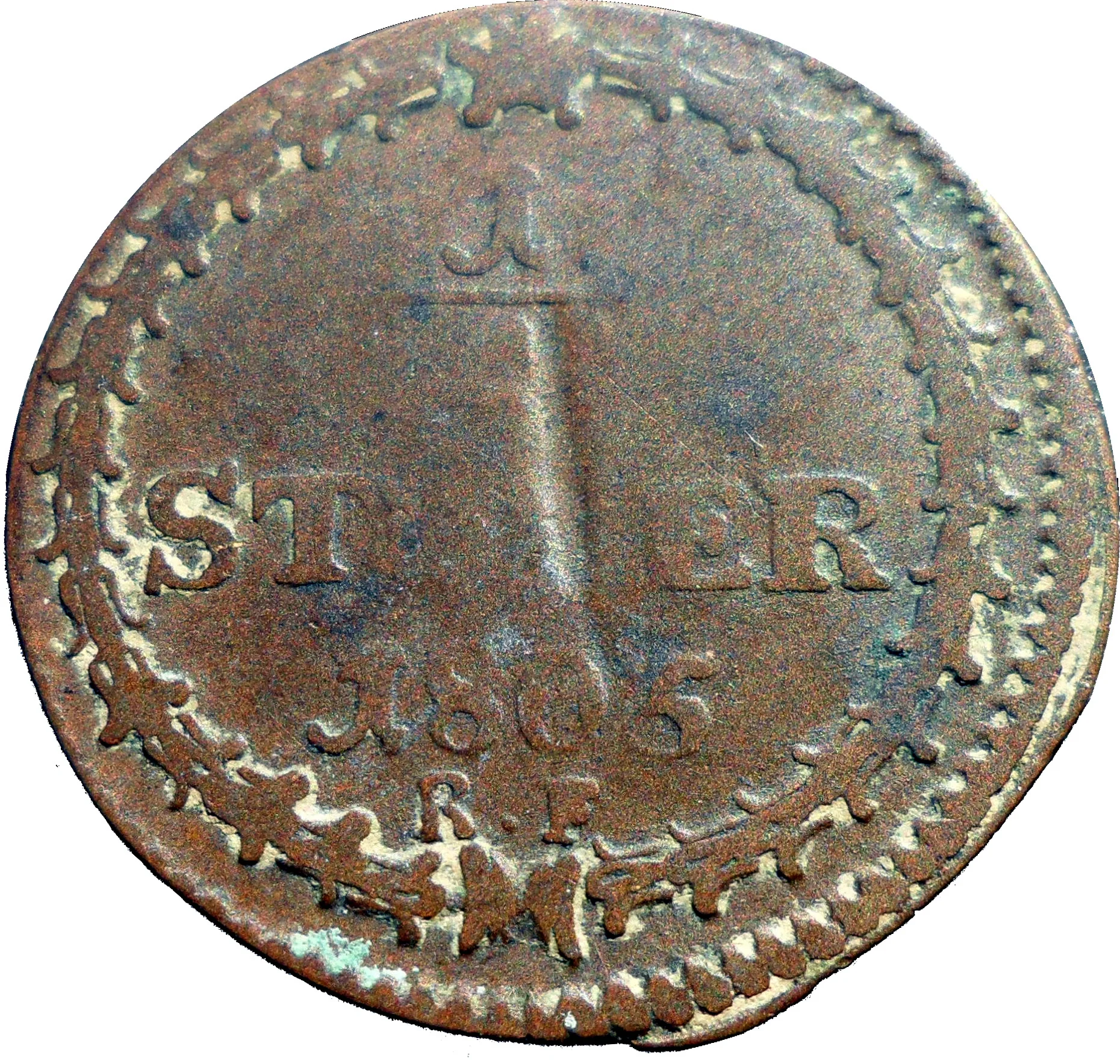
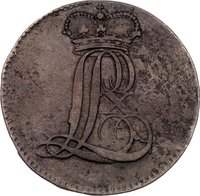
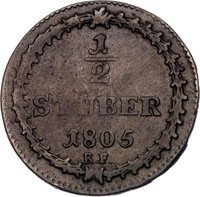
¼ Stüber – Landgraviate of Hesse-Darmstadt
Context
Year: 1805
Issuer: Landgraviate of Hesse-Darmstadt
Ruler: Louis X
Currency:
(1568—1805)
Demonetized: Yes
Material
References
KM: #Click to copy to clipboard258
Numista: #30279
Obverse
Reverse
Edge
Mints
| Name | Mark |
|---|---|
| Darmstadt | — |
Mintings
| Year | Mint Mark | Mintage | Quality | Collection |
|---|---|---|---|---|
| 1805 | — | — |
Historical background
In 1805, the Landgraviate of Hesse-Darmstadt, like much of the Holy Roman Empire, operated within a complex and fragmented monetary system. The primary currency in circulation was the Hesse-Darmstadt Konventionsgulden, pegged to the South German currency standard established by the Convention of 1753. This system defined a gulden as containing a specific amount of fine silver (approximately 9.5 grams), divided into 60 kreuzer. However, the monetary landscape was far from uniform. Alongside these local issues, a plethora of foreign coins circulated freely, including Prussian thalers, French écus, and Austrian conventionsthalers, their values constantly negotiated by merchants and money-changers.
This monetary plurality created significant challenges for trade and public administration. The constant need for exchange and valuation hindered economic efficiency, while the Landgraviate's own limited minting capacity meant it struggled to control its money supply. Furthermore, the political instability of the era, with Napoleonic France exerting immense pressure on the German states, cast a shadow over all financial matters. The impending dissolution of the Holy Roman Empire (1806) threatened to upend the existing monetary conventions that provided a fragile framework for Hesse-Darmstadt's currency.
Consequently, by 1805, Landgrave Ludwig X faced a precarious financial position. The state's currency system was internally coherent on paper but practically cumbersome and externally vulnerable. The need for monetary stability was acute, yet achieving it required navigating the treacherous political shifts of the Napoleonic Wars. This situation would soon force decisive change, leading Hesse-Darmstadt to realign its currency towards the French franc standard after its entry into the Confederation of the Rhine in 1806, a move that symbolized the broader transition from old Germanic structures to new European hegemonies.
This monetary plurality created significant challenges for trade and public administration. The constant need for exchange and valuation hindered economic efficiency, while the Landgraviate's own limited minting capacity meant it struggled to control its money supply. Furthermore, the political instability of the era, with Napoleonic France exerting immense pressure on the German states, cast a shadow over all financial matters. The impending dissolution of the Holy Roman Empire (1806) threatened to upend the existing monetary conventions that provided a fragile framework for Hesse-Darmstadt's currency.
Consequently, by 1805, Landgrave Ludwig X faced a precarious financial position. The state's currency system was internally coherent on paper but practically cumbersome and externally vulnerable. The need for monetary stability was acute, yet achieving it required navigating the treacherous political shifts of the Napoleonic Wars. This situation would soon force decisive change, leading Hesse-Darmstadt to realign its currency towards the French franc standard after its entry into the Confederation of the Rhine in 1806, a move that symbolized the broader transition from old Germanic structures to new European hegemonies.
💎 Very Rare