

1 skilling – Norway
Add to wishlist
Norway
Context
Years: 1824–1834
Issuer: Norway
Ruler: Charles III John
Currency:
(1816—1875)
Demonetized: Yes
Total mintage: 1,638,000
Material
References
KM: #
Numista: #18631
Obverse
Description:
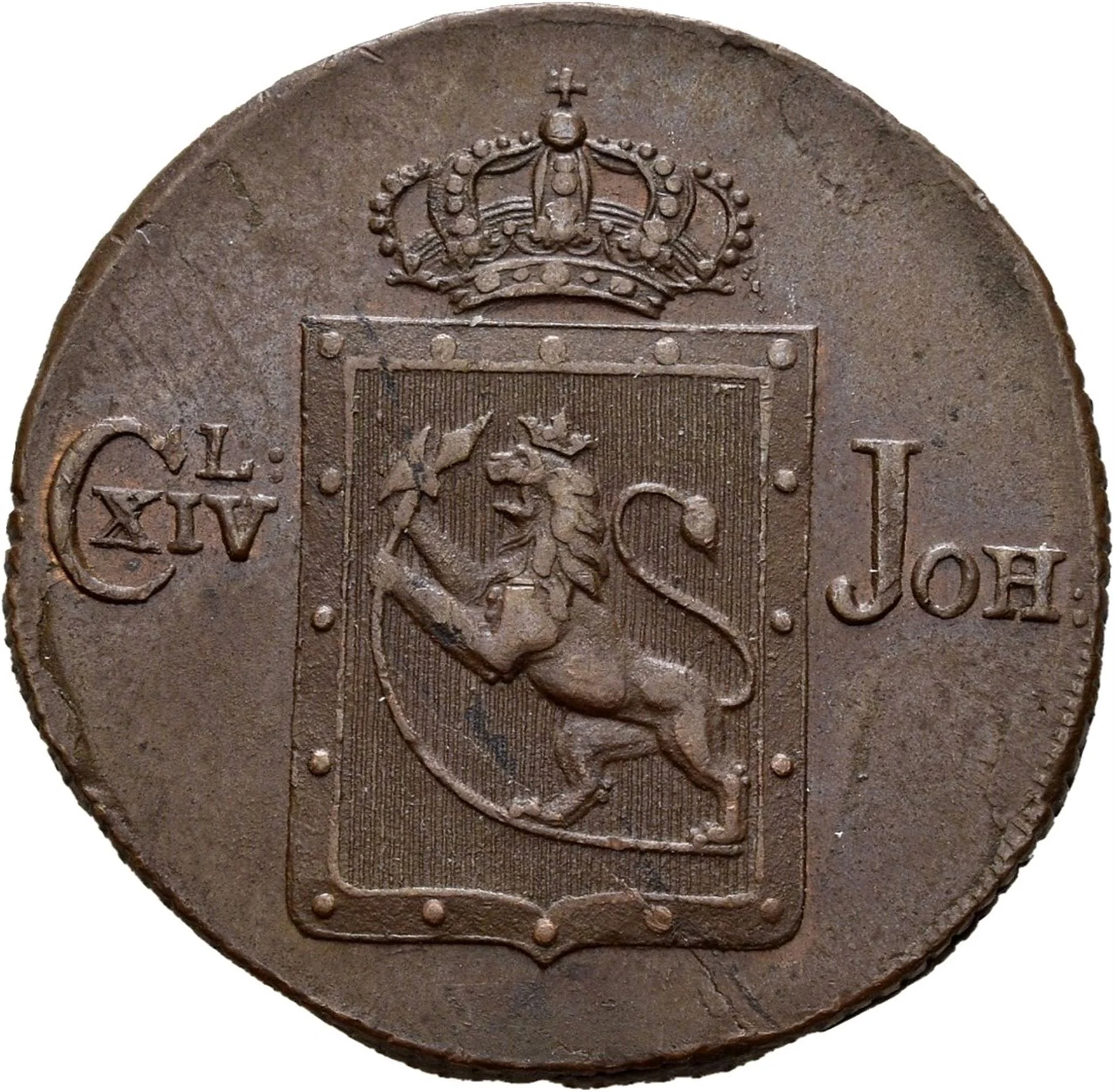
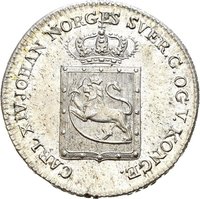
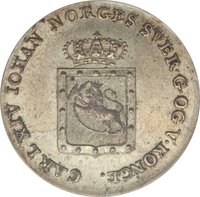
Crowned rectangular shield with beaded border, containing a crowned Norwegian lion facing left and holding a halberd on a vertically lined field. Inscription divided by shield. Milled rim.
Inscription:
CL: XIV | JOH:
Translation:
By the Grace of God, John, King of England, France, and Lord of Ireland.
Script: Latin
Language: Latin
Reverse
Description:
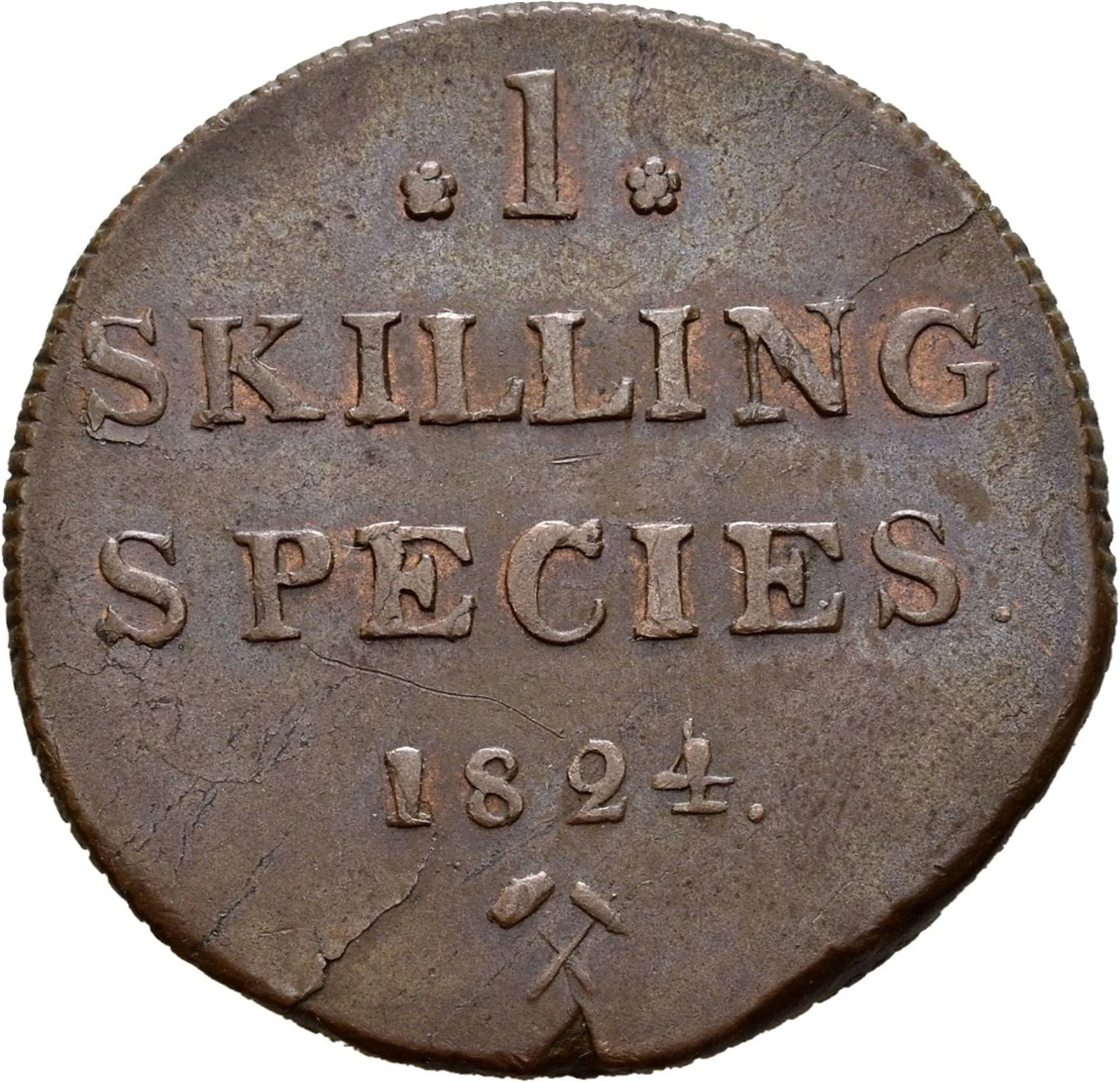
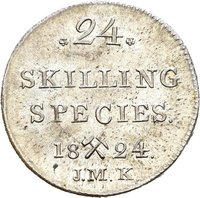
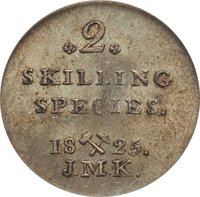
Value and date in four lines.
Mintmark under date.
Milled rim.
Mintmark under date.
Milled rim.
Inscription:
🏵1🏵
SKILLING
SPECIES.
1824.
⚒
SKILLING
SPECIES.
1824.
⚒
Script: Latin
Edge
Mints
| Name | Mark |
|---|---|
| Norwegian Mint | — |
Mintings
| Year | Mint Mark | Mintage | Quality | Collection |
|---|---|---|---|---|
| 1824 | — | — | ||
| 1825 | — | — | ||
| 1827 | — | 33,600 | ||
| 1828 | — | 38,400 | ||
| 1831 | — | 1,440,000 | ||
| 1832 | — | — | ||
| 1833 | — | 126,000 | ||
| 1834 | — | — |
Historical background
In 1824, Norway found itself in a complex monetary situation, navigating the aftermath of its union with Sweden (established in 1814) and a legacy of financial instability. The country operated on a dual-currency system, a common but cumbersome arrangement of the time. The primary unit was the riksdaler specie, a silver-based coin, but daily transactions were often conducted in riksdaler courant, a less valuable paper currency issued by the Norges Bank (founded in 1816). The exchange rate between the two was fixed but reflected the persistent challenge of maintaining sufficient silver reserves to back the paper money.
This period was marked by deflation and economic strain. The Norges Bank, in an effort to stabilize the currency and establish trust, had pursued a strict policy to strengthen the riksdaler courant towards parity with silver. While successful in increasing the currency's value, this policy had the unintended consequence of making Norwegian exports more expensive and contributed to a credit crunch. Farmers, fishermen, and merchants, particularly in rural areas, felt significant hardship due to falling prices for their goods and scarce, expensive credit.
Consequently, 1824 fell within a decade of intense political debate over monetary policy. The "currency question" divided the Norwegian parliament, the Storting. A powerful agrarian opposition, led by Christian Magnus Falsen, vehemently criticized the bank's tight-money policies, arguing they sacrificed the real economy for abstract financial stability. This tension set the stage for future political battles, which would eventually lead to a legislative compromise in 1842 that devalued the riksdaler courant and established a new, more manageable silver standard, aiming to balance monetary solidity with economic growth.
This period was marked by deflation and economic strain. The Norges Bank, in an effort to stabilize the currency and establish trust, had pursued a strict policy to strengthen the riksdaler courant towards parity with silver. While successful in increasing the currency's value, this policy had the unintended consequence of making Norwegian exports more expensive and contributed to a credit crunch. Farmers, fishermen, and merchants, particularly in rural areas, felt significant hardship due to falling prices for their goods and scarce, expensive credit.
Consequently, 1824 fell within a decade of intense political debate over monetary policy. The "currency question" divided the Norwegian parliament, the Storting. A powerful agrarian opposition, led by Christian Magnus Falsen, vehemently criticized the bank's tight-money policies, arguing they sacrificed the real economy for abstract financial stability. This tension set the stage for future political battles, which would eventually lead to a legislative compromise in 1842 that devalued the riksdaler courant and established a new, more manageable silver standard, aiming to balance monetary solidity with economic growth.
💎 Very Rare