

2 Drachmai – Greece
Greece
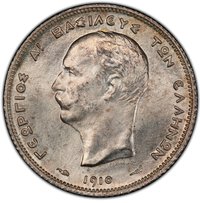
Obverse
Description:
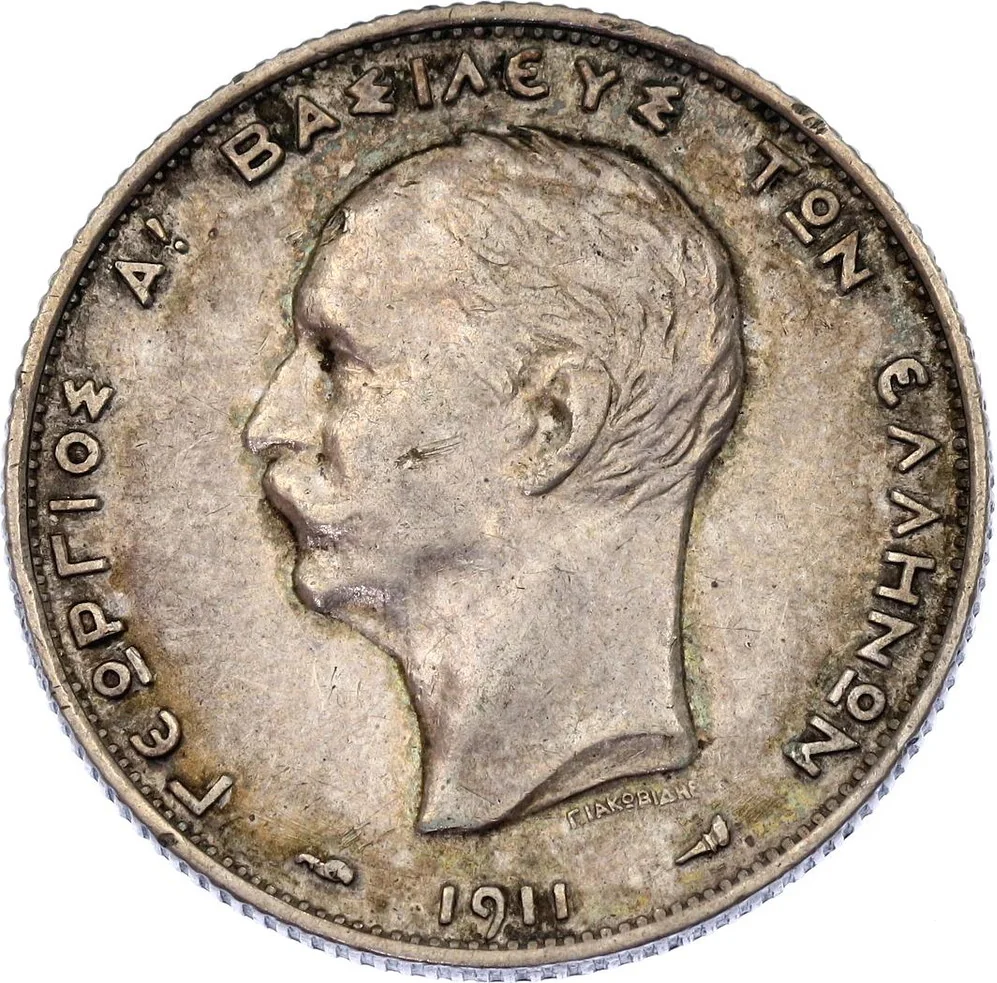
Portrait of King George I, left-facing, with date beneath.
Inscription:
ΓΕΩΡΓΙΟΣ Α! ΒΑΣΙΛΕΥΣ ΤΩΝ ΕΛΛΗΝΩΝ
Γ. ΙΑΚΩΒΙΔΗΣ
1911
Γ. ΙΑΚΩΒΙΔΗΣ
1911
Translation:
GEORGE I KING OF THE HELLENES
G. IAKOVIDES
1911
G. IAKOVIDES
1911
Script: Greek
Language: Greek
Engraver: Georgios Jakobides
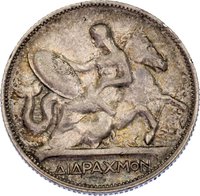
Reverse
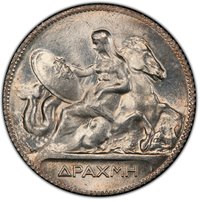
Description:
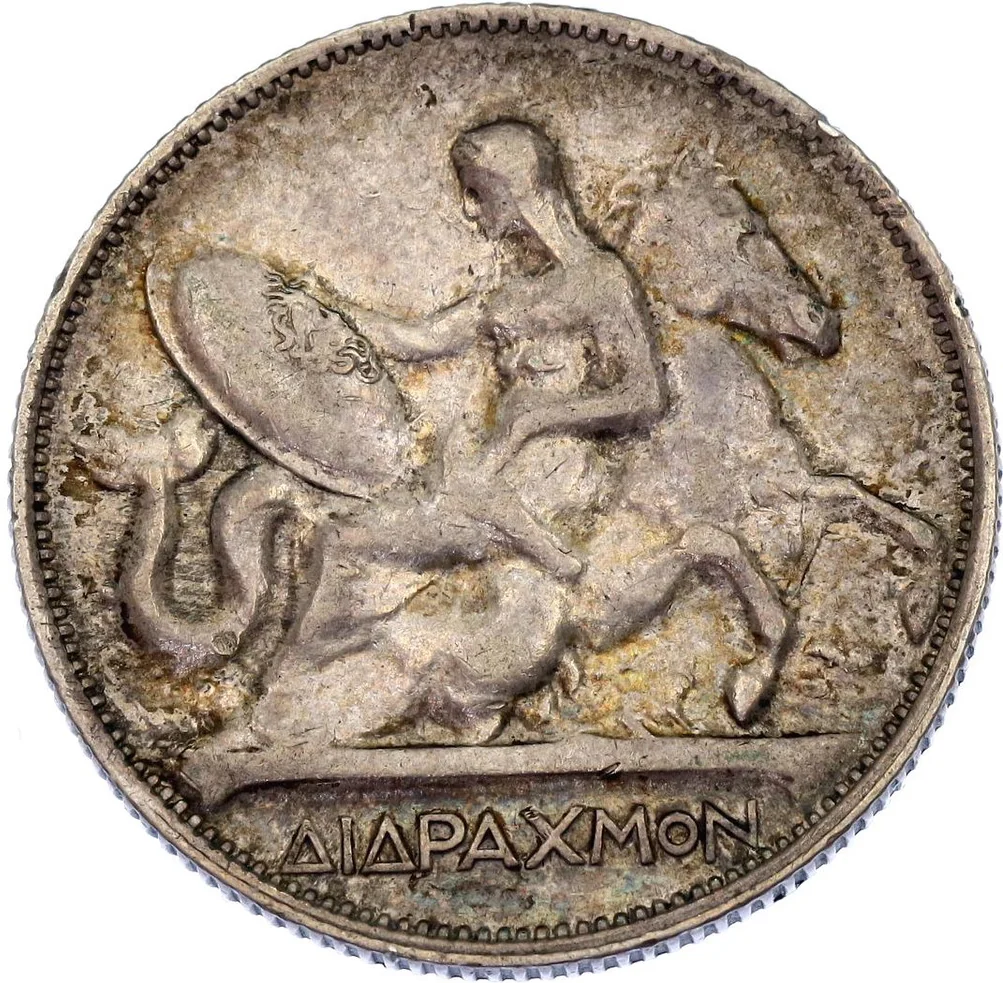
Thetis on a seahorse, holding Achilles' shield.
Inscription:
ΔΙΔΡΑΧΜΟΝ
Translation:
A two-drachma piece
Script: Greek
Language: Ancient Greek
Engraver: Georgios Jakobides
Edge
Reeded
Mints
| Name | Mark |
|---|---|
| Monnaie de Paris | — |
Mintings
| Year | Mint Mark | Mintage | Quality | Collection |
|---|---|---|---|---|
| 1911 | — | 1,500,000 |
Historical background
In 1911, Greece operated under the Gold Standard as part of the Latin Monetary Union (LMU), a multinational agreement it had joined in 1868. This system theoretically fixed the value of the Greek drachma to gold and made it interchangeable with the currencies of other member nations like France, Italy, and Belgium. However, Greece's fiscal position was chronically weak, characterized by persistent budget deficits, a large public debt (much of it owed to foreign creditors), and an over-reliance on high-interest loans to finance state operations and infrastructure projects. The country's economy was primarily agricultural and lacked the robust industrial base of its LMU partners, making it vulnerable to trade imbalances.
Despite the formal gold peg, Greece had been in a state of de facto monetary suspension since the 1880s. The government, unable to maintain sufficient gold reserves, repeatedly issued forced-course fiat paper money to cover its expenses. While these banknotes were legally accepted at par with gold drachmas domestically, they were heavily discounted abroad, leading to a significant divergence between the internal and external value of the drachma. This created a complex and fragile dual system where the gold standard existed in law but not fully in practice, undermining international confidence in Greek currency.
The situation culminated in the financial crisis of 1911-1912, which forced the government to seek a major international loan. The resulting Loan of 1911, negotiated under strict foreign supervision, imposed severe austerity measures and established the International Financial Commission (IFC). This body, controlled by Greece's creditors, took direct control of specific state revenues (like customs and monopolies) to ensure debt service. Thus, on the eve of the Balkan Wars, Greece's currency system was nominally on gold but was functionally managed under foreign oversight, with its fiscal sovereignty significantly curtailed.
Despite the formal gold peg, Greece had been in a state of de facto monetary suspension since the 1880s. The government, unable to maintain sufficient gold reserves, repeatedly issued forced-course fiat paper money to cover its expenses. While these banknotes were legally accepted at par with gold drachmas domestically, they were heavily discounted abroad, leading to a significant divergence between the internal and external value of the drachma. This created a complex and fragile dual system where the gold standard existed in law but not fully in practice, undermining international confidence in Greek currency.
The situation culminated in the financial crisis of 1911-1912, which forced the government to seek a major international loan. The resulting Loan of 1911, negotiated under strict foreign supervision, imposed severe austerity measures and established the International Financial Commission (IFC). This body, controlled by Greece's creditors, took direct control of specific state revenues (like customs and monopolies) to ensure debt service. Thus, on the eve of the Balkan Wars, Greece's currency system was nominally on gold but was functionally managed under foreign oversight, with its fiscal sovereignty significantly curtailed.
🌱 Fairly Common