

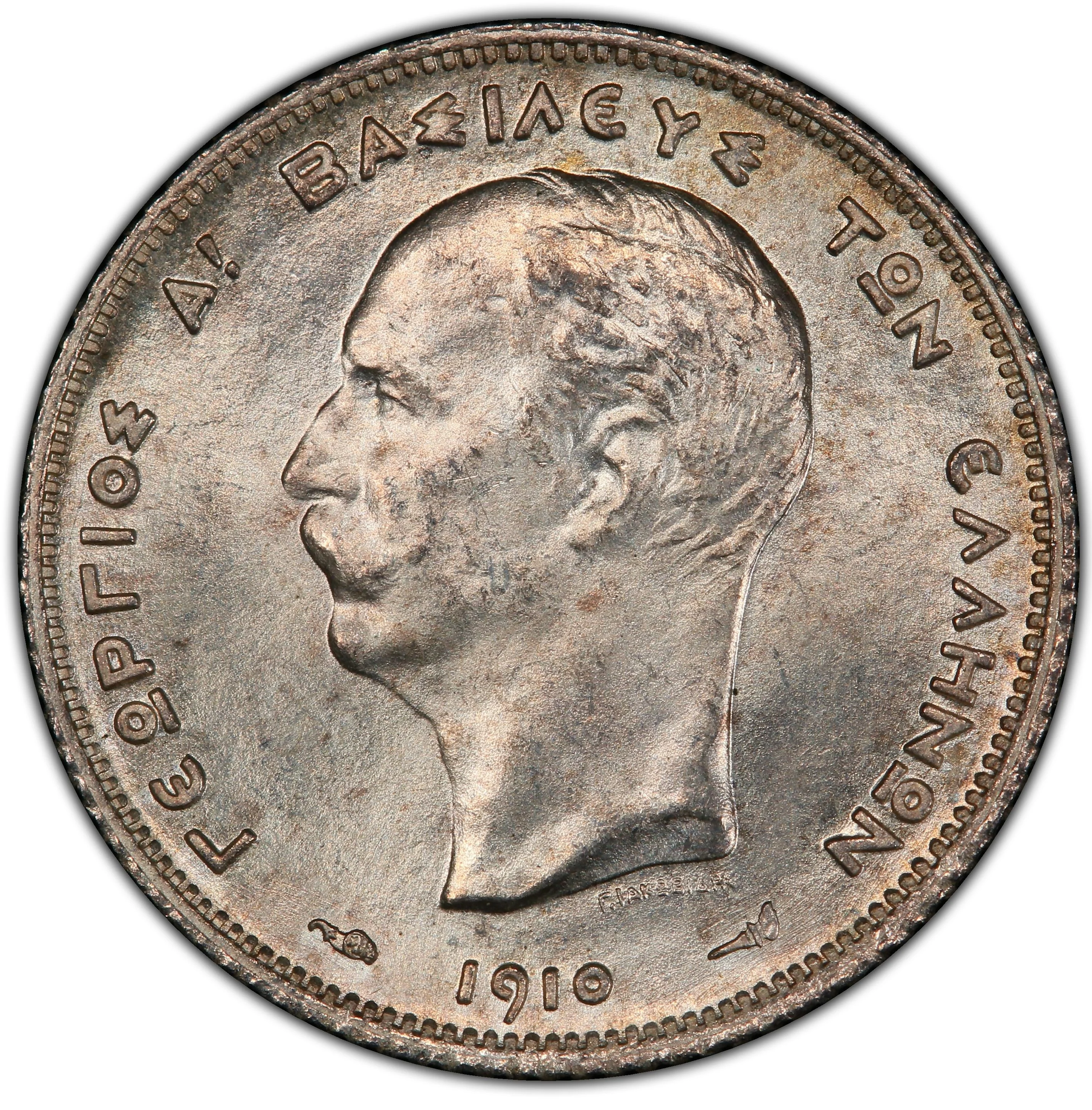
Obverse
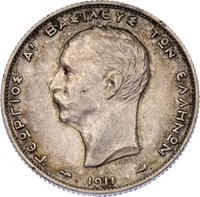
Description:
Portrait of King George I, left-facing, with date beneath.
Inscription:
ΓΕΩΡΓΙΟΣ Α! ΒΑΣΙΛΕΥΣ ΤΩΝ ΕΛΛΗΝΩΝ
Γ. ΙΑΚΩΒΙΔΗΣ
1910
Γ. ΙΑΚΩΒΙΔΗΣ
1910
Translation:
GEORGE I KING OF THE GREEKS
G. IAKOBIDES
1910
G. IAKOBIDES
1910
Script: Greek
Language: Greek
Engraver: Georgios Jakobides
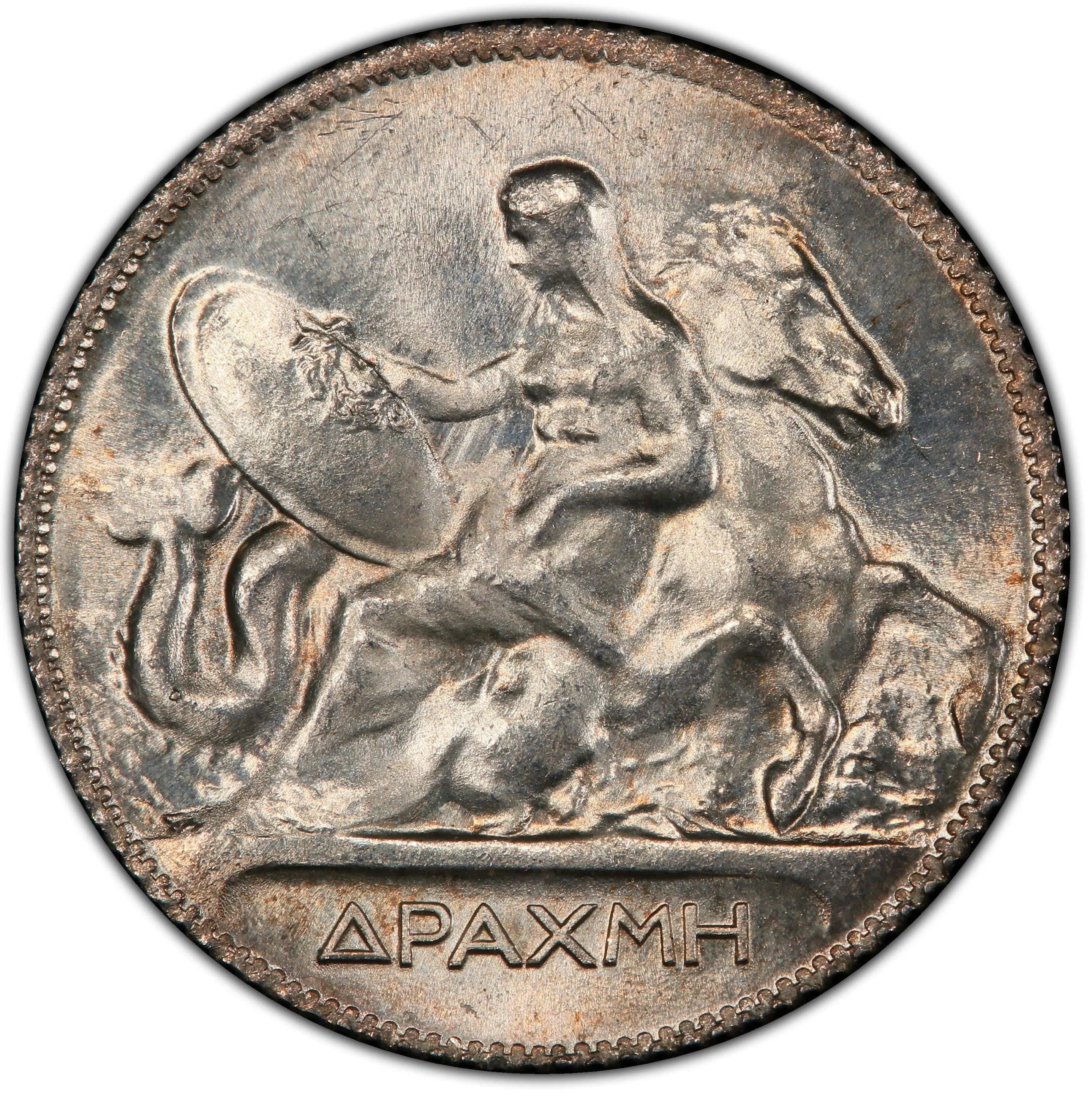
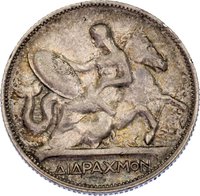
Reverse
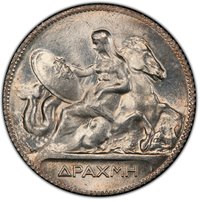
Description:
Thetis on a sea horse, holding Achilles' shield, with the denomination below.
Inscription:
ΔΡΑΧΜΗ
Translation:
Drachma
Script: Greek
Language: Greek
Engraver: Georgios Jakobides
Edge
Milled
Mints
| Name | Mark |
|---|---|
| Monnaie de Paris | — |
Mintings
| Year | Mint Mark | Mintage | Quality | Collection |
|---|---|---|---|---|
| 1910 | — | 4,570,159 | ||
| 1911 | — | 1,881,817 |
Historical background
In 1910, Greece operated under the Greek drachma, which was part of the Latin Monetary Union (LMU). This was a continental system, established in 1865, that aimed to standardize currencies by fixing them to a bimetallic (gold and silver) standard. For Greece, membership was both a symbol of European modernity and a practical mechanism to facilitate trade and investment. However, the country's participation was fraught with difficulty. Chronic fiscal deficits, largely due to military spending and economic instability, led Greece to issue excessive quantities of low-quality silver coinage, which violated LMU rules and put downward pressure on the currency's value.
The state's finances were precarious, burdened by debt from the 1893 default and the costs of the ongoing "Megali Idea" (Great Idea) – the nationalist project to expand Greek territory. This fiscal mismanagement had direct monetary consequences. By 1910, Greece had been officially relegated to a "limping" membership within the LMU; its coins were no longer automatically accepted in other member states, and the drachma's exchange value often fluctuated below its official parity. Internally, this period saw a circulation of multiple currencies, including Turkish liras, British sovereigns, and French francs, especially for large transactions, indicating a lack of full public confidence in the national currency.
The year 1910 itself was a pivotal moment, as it marked the rise of Eleftherios Venizelos to political power following the Goudi coup. His ascension signaled the beginning of a major reform era. While the immediate currency situation in 1910 was one of weakness and semi-exclusion from the LMU, the new government recognized that monetary stability was foundational for national progress. Therefore, the background of 1910 sets the stage for the subsequent financial reforms of the Venizelos period, which aimed to restore the drachma's credibility, stabilize state finances, and fully reintegrate Greece into the international monetary system.
The state's finances were precarious, burdened by debt from the 1893 default and the costs of the ongoing "Megali Idea" (Great Idea) – the nationalist project to expand Greek territory. This fiscal mismanagement had direct monetary consequences. By 1910, Greece had been officially relegated to a "limping" membership within the LMU; its coins were no longer automatically accepted in other member states, and the drachma's exchange value often fluctuated below its official parity. Internally, this period saw a circulation of multiple currencies, including Turkish liras, British sovereigns, and French francs, especially for large transactions, indicating a lack of full public confidence in the national currency.
The year 1910 itself was a pivotal moment, as it marked the rise of Eleftherios Venizelos to political power following the Goudi coup. His ascension signaled the beginning of a major reform era. While the immediate currency situation in 1910 was one of weakness and semi-exclusion from the LMU, the new government recognized that monetary stability was foundational for national progress. Therefore, the background of 1910 sets the stage for the subsequent financial reforms of the Venizelos period, which aimed to restore the drachma's credibility, stabilize state finances, and fully reintegrate Greece into the international monetary system.
🌱 Common