

10 fillér – Hungary
Add to wishlist
Hungary
Context
Years: 1915–1920
Issuer: Hungary
Ruler: Charles IV
Currency:
(1892—1918)
Demonetization: 1 January 1927
Total mintage: 18,050,000
Material
References
KM: #
Numista: #10041
Obverse
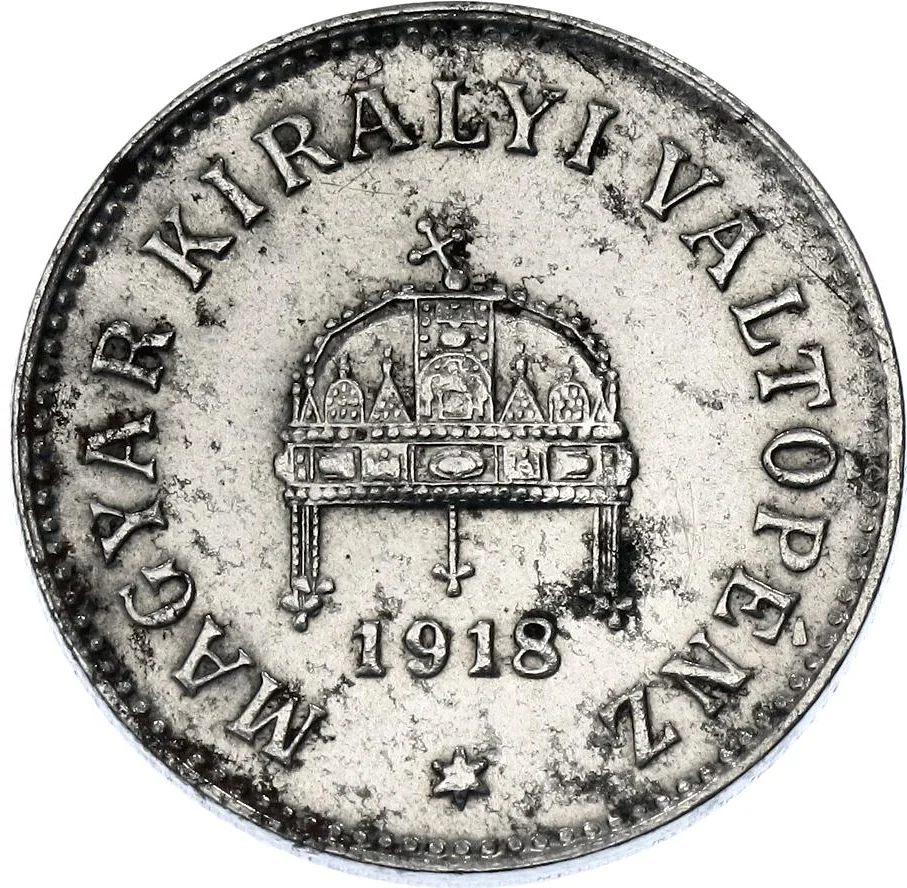
Description:
Varieties available.
Inscription:
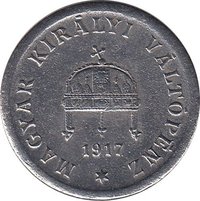
MAGYAR KIRÁLYI VÁLTÓPÉNZ *
1918
1918
Translation:
ROYAL HUNGARIAN CHANGE COIN *
1918
1918
Script: Latin
Language: Hungarian
Engraver: Richard Adolf Zutt
Reverse
Description:
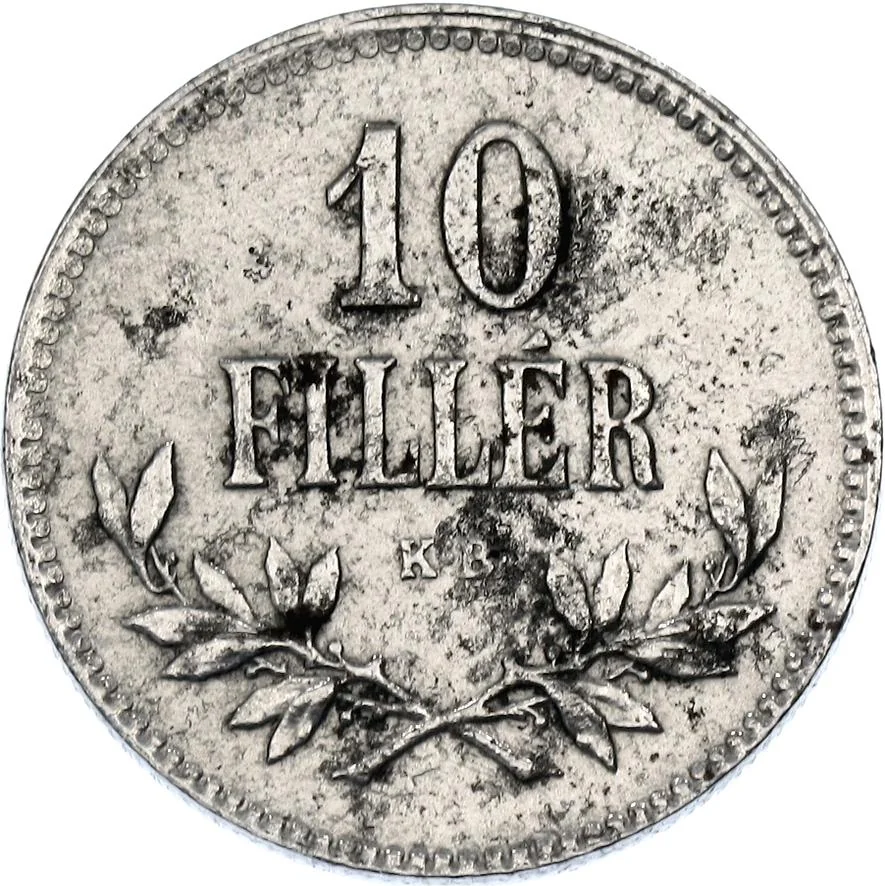
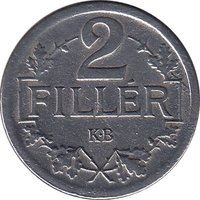
The upper section bears inscriptions, the lower has two intersecting branches, and the entire piece is bordered by dots.
Inscription:
10
FILLÉR
K·B
FILLÉR
K·B
Translation:
Ten Fillér
K. B.
K. B.
Script: Latin
Engraver: Richard Adolf Zutt
Edge
Reeded
Mints
| Name | Mark |
|---|---|
| Kremnica | KB |
Mintings
Historical background
By 1915, Hungary's currency situation was defined by the strains of the First World War, operating within the dual monetary system of the Austro-Hungarian Empire. Officially, the currency was the Austro-Hungarian gulden (or florin), issued by the Austro-Hungarian Bank, which was obligated to maintain gold convertibility. However, the outbreak of war in 1914 led to the immediate suspension of this gold standard, severing the direct link between paper banknotes and precious metal reserves. This allowed the government to finance the enormous cost of the war not through taxes, but primarily through the printing of money, leading to the first signs of inflationary pressure.
The Hungarian economy was effectively placed on a war footing, with price controls and rationing introduced for essential goods to manage scarcity and suppress visible inflation. Despite these measures, the underlying monetary expansion was relentless. The volume of banknotes in circulation began a sharp increase, as the government relied on loans from the central bank to cover its deficits. This growth in the money supply, coupled with severe shortages of consumer goods as production shifted to military needs, created a growing imbalance. While price controls masked the full effect in official statistics, a thriving black market emerged where goods were traded at significantly higher prices, indicating the true erosion of the krone's purchasing power.
Consequently, 1915 represents the early but decisive phase of wartime inflation that would eventually spiral into hyperinflation after the war's end. The monetary foundations were being undermined, though the full economic consequences were still being held somewhat in check by authoritarian wartime controls. The autonomy of the Hungarian financial institutions was limited, as monetary policy was directed from Vienna to serve the empire's overall war effort, setting the stage for the severe economic dislocation and currency collapse that would accompany the empire's dissolution in 1918-1919.
The Hungarian economy was effectively placed on a war footing, with price controls and rationing introduced for essential goods to manage scarcity and suppress visible inflation. Despite these measures, the underlying monetary expansion was relentless. The volume of banknotes in circulation began a sharp increase, as the government relied on loans from the central bank to cover its deficits. This growth in the money supply, coupled with severe shortages of consumer goods as production shifted to military needs, created a growing imbalance. While price controls masked the full effect in official statistics, a thriving black market emerged where goods were traded at significantly higher prices, indicating the true erosion of the krone's purchasing power.
Consequently, 1915 represents the early but decisive phase of wartime inflation that would eventually spiral into hyperinflation after the war's end. The monetary foundations were being undermined, though the full economic consequences were still being held somewhat in check by authoritarian wartime controls. The autonomy of the Hungarian financial institutions was limited, as monetary policy was directed from Vienna to serve the empire's overall war effort, setting the stage for the severe economic dislocation and currency collapse that would accompany the empire's dissolution in 1918-1919.
🌱 Common