

20 crowns – Hungary
Add to wishlist
Hungary
Context
Material
References
KM: #
Numista: #33864
Value
Bullion value: $941.25
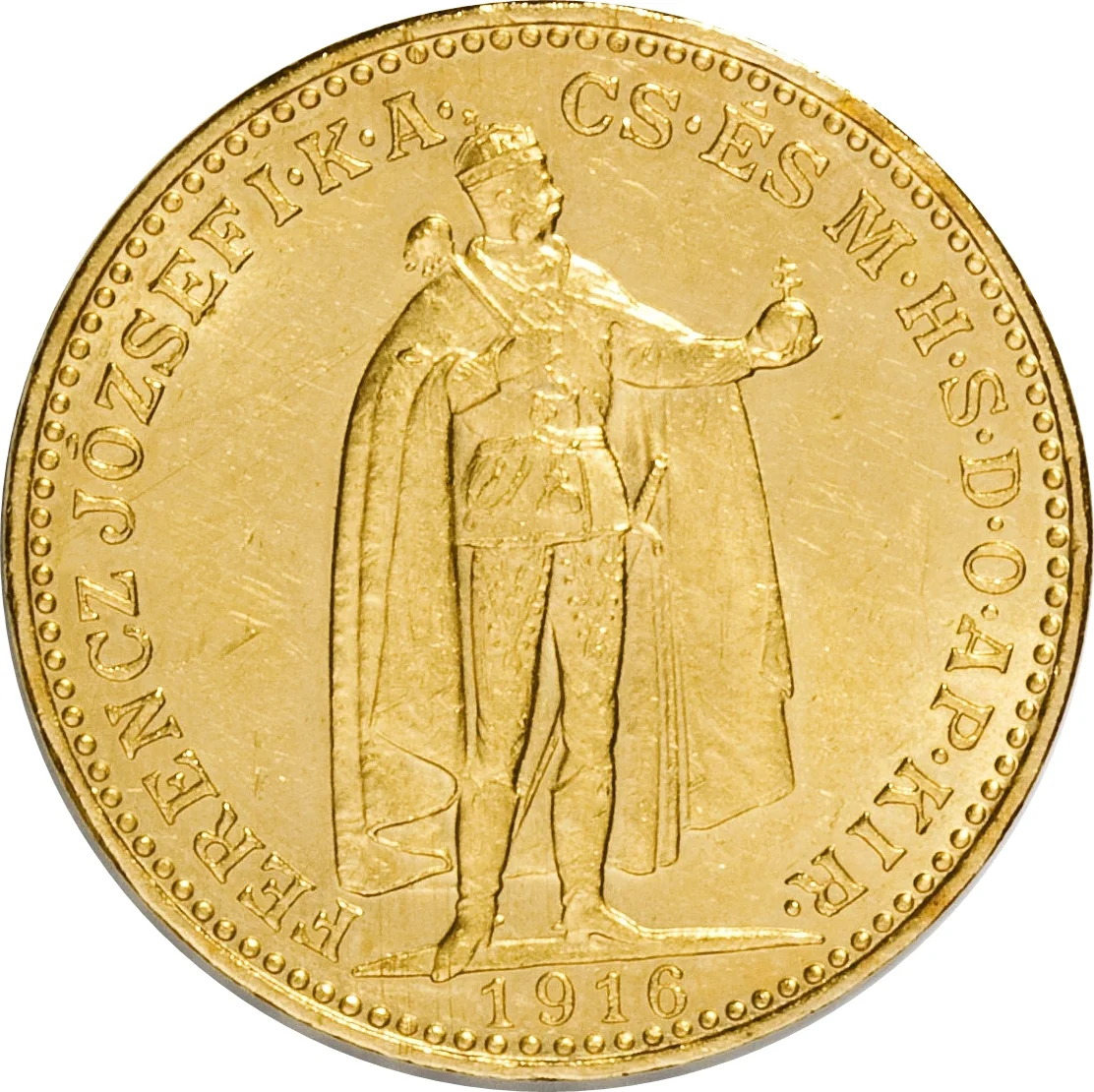
Obverse
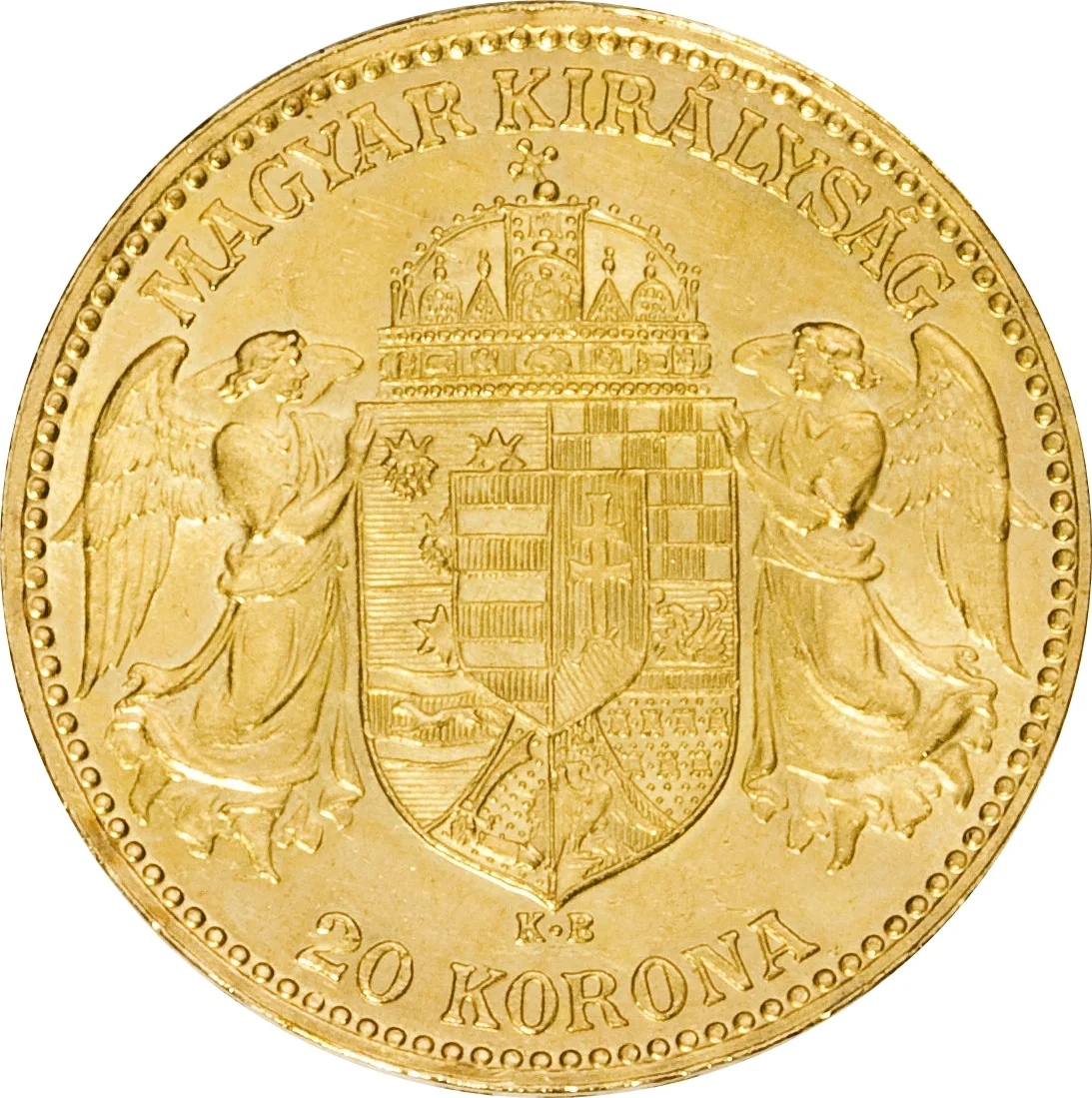
Reverse
Description:
Emperor Franz Joseph I standing.
Inscription:
FERENCZ.JÓZSEF I.K.A.CS ÉS M.H.S.D.O.AP.KIR.
1914
1914
Translation:
Francis Joseph the First, by the Grace of God, Emperor of Austria, Apostolic King of Hungary, Croatia, Slavonia, and Dalmatia.
1914
1914
Script: Latin
Engraver: Josef Reisner
Edge
Inscribed text
Legend:
BIZALMAM AZ ŐSI ERÉNYBEN
Translation:
My trust is in ancient virtue.
Language: Hungarian
Categories
| Person> Military leader |
| Symbols> Coat of Arms |
Mints
| Name | Mark |
|---|---|
| Kremnica | KB |
Historical background
In 1914, Hungary operated within the complex monetary framework of the Austro-Hungarian Empire, sharing a central bank and a unified currency. The Austro-Hungarian Bank, headquartered in Vienna, issued the krone (or korona in Hungarian), which was the sole legal tender throughout the Dual Monarchy. This system reflected the political compromise of 1867, granting Hungary significant internal autonomy but keeping crucial economic levers, like monetary policy and foreign exchange operations, under joint imperial control. While Hungarian banknotes carried distinctive Hungarian-language text and symbols, they were functionally identical to their Austrian counterparts.
The krone was officially on a gold standard, meaning its value was pegged to a fixed quantity of gold, which theoretically ensured stability and facilitated international trade. However, by the eve of World War I, the empire's finances were under strain due to military expenditures and political tensions. The gold cover for the currency had been gradually weakening, making the system more vulnerable to shock. Furthermore, Hungary's own economy, while agriculturally robust and industrially developing, was deeply integrated into the imperial structure, leaving its monetary fate tied to Vienna's decisions and the empire's overall fiscal health.
When war broke out in July 1914, the immediate financial crisis led to the suspension of gold convertibility. The Austro-Hungarian Bank began financing the war effort by printing money without sufficient backing, a process that started the severe inflation which would cripple the krone during and after the war. Thus, in 1914, Hungary stood at the precipice of a dramatic monetary transition—from the seemingly stable, shared imperial currency to an era of inflationary finance that would ultimately lead to the krone's collapse and the subsequent introduction of an independent Hungarian currency in the 1920s.
The krone was officially on a gold standard, meaning its value was pegged to a fixed quantity of gold, which theoretically ensured stability and facilitated international trade. However, by the eve of World War I, the empire's finances were under strain due to military expenditures and political tensions. The gold cover for the currency had been gradually weakening, making the system more vulnerable to shock. Furthermore, Hungary's own economy, while agriculturally robust and industrially developing, was deeply integrated into the imperial structure, leaving its monetary fate tied to Vienna's decisions and the empire's overall fiscal health.
When war broke out in July 1914, the immediate financial crisis led to the suspension of gold convertibility. The Austro-Hungarian Bank began financing the war effort by printing money without sufficient backing, a process that started the severe inflation which would cripple the krone during and after the war. Thus, in 1914, Hungary stood at the precipice of a dramatic monetary transition—from the seemingly stable, shared imperial currency to an era of inflationary finance that would ultimately lead to the krone's collapse and the subsequent introduction of an independent Hungarian currency in the 1920s.
💎 Extremely Rare