

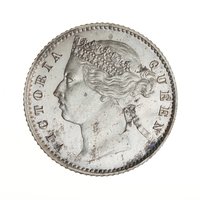
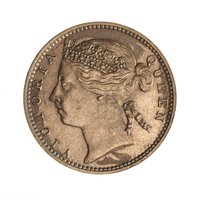
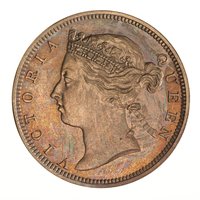
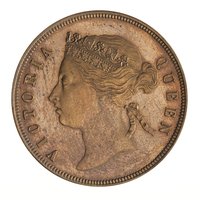
Obverse
Description:
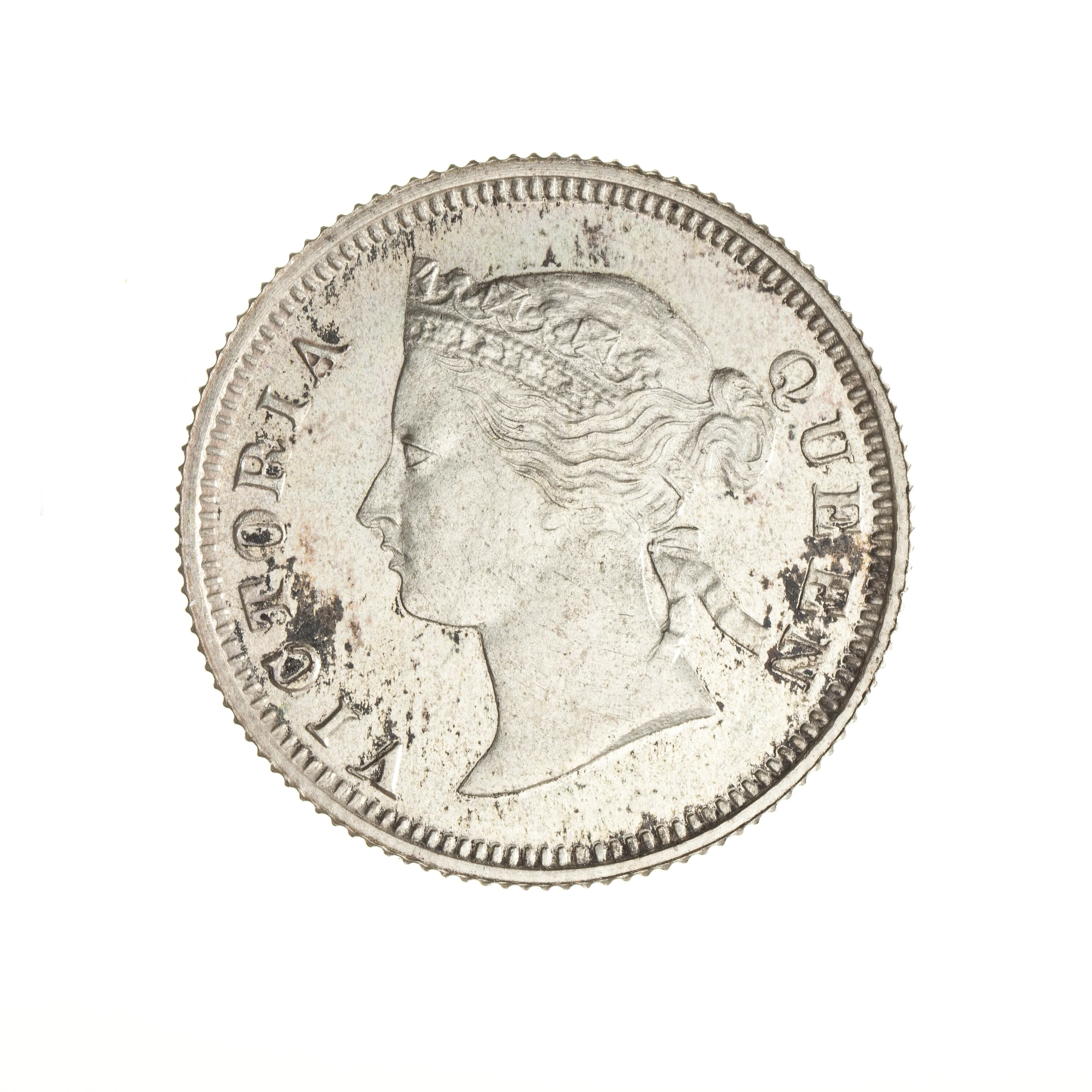
Portrait of Queen Victoria
Inscription:
QUEEN VICTORIA
Script: Latin
Engraver: Leonard Charles Wyon
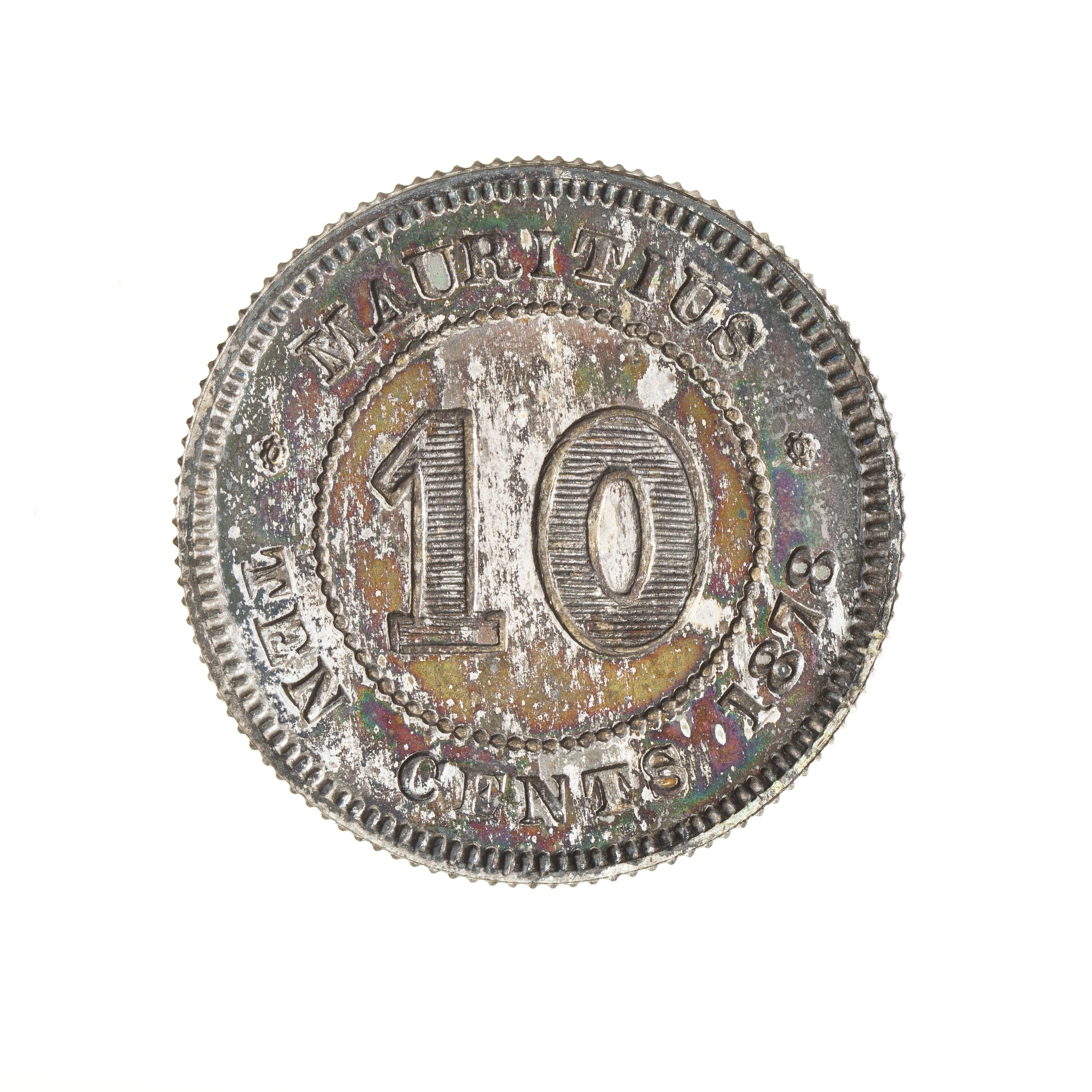
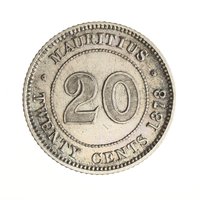
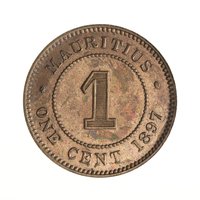
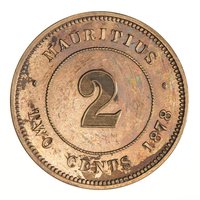
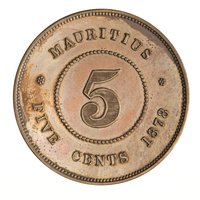
Reverse
Edge
Reeded (KM#10.1) or smooth (KM#10.2).
Mints
| Name | Mark |
|---|---|
| Royal Mint (Tower Hill) | — |
| Heaton and Sons / The Mint Birmingham | H |
Mintings
Historical background
In 1877, Mauritius was operating under a complex and often chaotic currency system, a legacy of its colonial history and diverse trade networks. The official currency was the Mauritian rupee, introduced in 1877 itself to replace the Indian rupee, which had circulated alongside a multitude of other coins. These included British sovereigns, French francs, Spanish dollars, and even local token coinage, leading to confusion and inefficiency in commerce. The island's economy, heavily dependent on the sugar trade with international markets, required a more stable and unified monetary standard to facilitate smoother transactions and attract investment.
The driving force behind the 1877 change was the devaluation of the Indian rupee, to which the Mauritian currency was pegged. This devaluation caused significant economic disruption on the island, increasing the cost of essential imports and creating uncertainty for planters and merchants. Consequently, the Mauritian government, under British colonial administration, passed the "Mauritius Coinage Ordinance" in 1876 (effective 1877). This law established a distinct Mauritian rupee, divorcing it from the fluctuating Indian rupee and pegging it directly to the British sterling at a fixed rate of 1 Mauritian rupee = 2 shillings (or 10.5 rupees to 1 British sovereign).
This reform successfully created a stable and decimalized currency system, with the rupee divided into 100 cents. The new coinage, minted in England, featured the portrait of Queen Victoria and began to systematically replace the old mixed currency in circulation. The 1877 reform is therefore a pivotal moment in Mauritian economic history, marking the transition from a fragmented monetary past to a unified, sterling-aligned system that provided the stability needed for the late 19th-century sugar boom and laid the foundation for the modern currency.
The driving force behind the 1877 change was the devaluation of the Indian rupee, to which the Mauritian currency was pegged. This devaluation caused significant economic disruption on the island, increasing the cost of essential imports and creating uncertainty for planters and merchants. Consequently, the Mauritian government, under British colonial administration, passed the "Mauritius Coinage Ordinance" in 1876 (effective 1877). This law established a distinct Mauritian rupee, divorcing it from the fluctuating Indian rupee and pegging it directly to the British sterling at a fixed rate of 1 Mauritian rupee = 2 shillings (or 10.5 rupees to 1 British sovereign).
This reform successfully created a stable and decimalized currency system, with the rupee divided into 100 cents. The new coinage, minted in England, featured the portrait of Queen Victoria and began to systematically replace the old mixed currency in circulation. The 1877 reform is therefore a pivotal moment in Mauritian economic history, marking the transition from a fragmented monetary past to a unified, sterling-aligned system that provided the stability needed for the late 19th-century sugar boom and laid the foundation for the modern currency.
Series: 1877 Mauritius circulation coins
🌱 Fairly Common